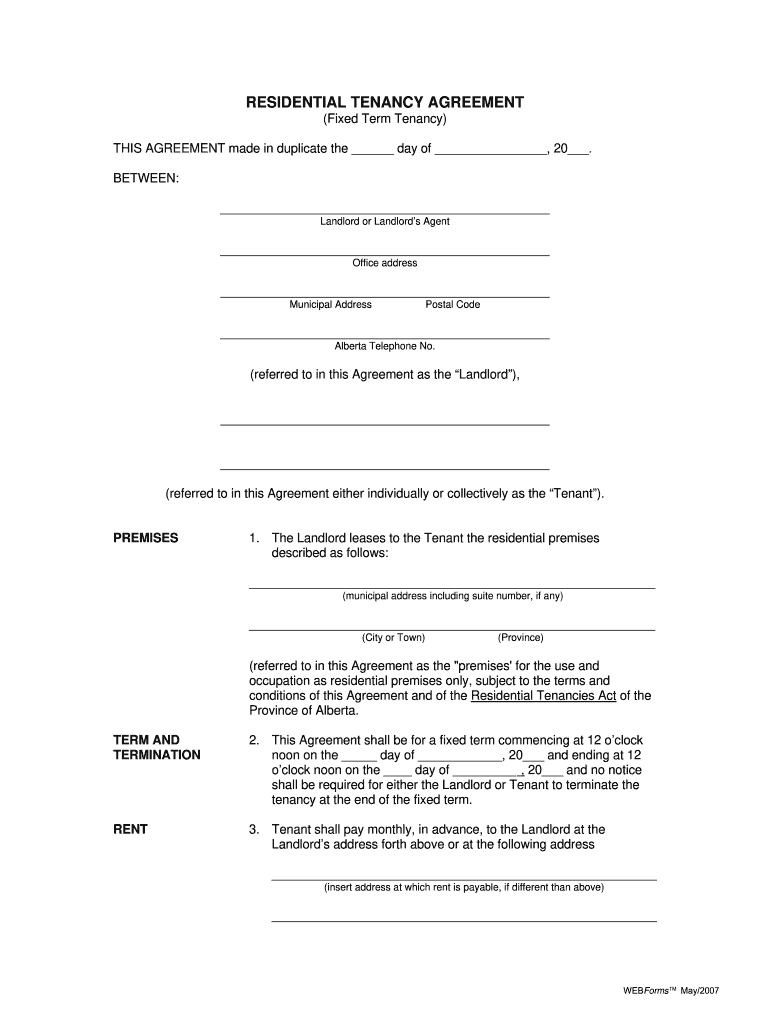
Ord’s Agent _______________________________________________ Office address _______________________________________________ Municipal Address Postal Code _______________________________________________ Alberta Telephone No. (referred to in this Agreement as the “Landlord”), _______________________________________________ _______________________________________________ (referred to in this Agreement either individually or collectively as the “Tenant”). PREMISES 1. The Landlord l.
Loading

Open form follow the instructions

Easily sign the form with your finger

Send filled & signed form or save
How to fill out the Canada CREB Residential Tenancy Agreement online
Filling out the Canada CREB Residential Tenancy Agreement online can simplify the leasing process for both landlords and tenants. This guide provides clear instructions to help you understand and complete the agreement accurately.
Follow the steps to complete the agreement efficiently.
- Press the ‘Get Form’ button to access the Canada CREB Residential Tenancy Agreement and open it for editing.
- Begin by filling in the date of the agreement at the top of the document, specifying the day and month, along with the year.
- Next, describe the residential premises being leased by providing the complete municipal address and the city or town.
- Specify the monthly rent amount and the date it is due. Be clear about the payment address if it differs from the landlord's office address.
- If applicable, fill out the parking details, including any associated fees, and specify if a plug-in is included.
- Provide details about other occupants permitted to live in the rental premises, along with the maximum number of persons allowed.
- Ensure both parties understand the inspection protocol by detailing the requirements for property inspection upon moving in and out.
- Finalize the document by signing it in the presence of a witness. Both the landlord and tenant should sign and date the agreement.
Start filling out your Canada CREB Residential Tenancy Agreement online today for a smooth rental process.
Experience a faster way to fill out and sign forms on the web. Access the most extensive library of templates available.
Related content
Feb 14, 2025 — • Exempt facility bonds for qualified residential rental projects...
by M Kinsley · 2009 · Cited by 14 — Operating Lease Agreements. An operating lease...
4 days ago — On July 8, 2015, Tottenham's new stadium signed a 10 -year contract with...
Get answers to your most pressing questions about US Legal Forms API.
Do tenants have to clean when moving out in BC?
Yes, tenants are generally expected to clean the rental property upon moving out in BC. This includes removing personal belongings, tidying up, and ensuring the space is left in good condition. Such practices are standard and are in line with the expectations outlined in the Canada CREB Residential Tenancy Agreement to promote fairness.
What is the form to end tenancy in Ontario?
To end tenancy in Ontario, you must use the appropriate form, known as the N9 form. This form allows tenants to provide written notice to their landlords about their intent to vacate the premises. It's crucial to adhere to the guidelines, which align with the standards set in the Canada CREB Residential Tenancy Agreement for consistency.
Do you need a tenancy agreement in BC?
Yes, having a tenancy agreement in BC is important for both landlords and tenants. This document clearly outlines the terms and conditions of the rental arrangement, providing legal protection for both parties. Utilizing the Canada CREB Residential Tenancy Agreement can help facilitate a smoother rental experience.
What documents can a landlord ask for BC?
In British Columbia, landlords can request identification documents such as driver's licenses or ID cards from prospective tenants. Additionally, they may ask for proof of income or previous rental references. These documents help ensure a transparent process that complements the provisions found in the Canada CREB Residential Tenancy Agreement.
What is the difference between a lease and a rental agreement in Canada?
In Canada, the primary difference between a lease and a rental agreement lies in the duration. A lease typically covers a longer period, usually six months to a year, while a rental agreement is often month-to-month. Both documents stipulate terms, but understanding their distinctions can aid landlords and tenants in navigating the Canada CREB Residential Tenancy Agreement effectively.
How to write a lease agreement in Canada?
To write a lease agreement in Canada, first ensure you gather all necessary information like tenant and landlord names, property details, and rental terms. Clearly outline the duration of the lease, payment expectations, and rules regarding property use. You may want to consult the Canada CREB Residential Tenancy Agreement for standardized practices and to avoid any potential pitfalls.
How do you write a tenancy?
Writing a tenancy involves outlining the rights and responsibilities of both parties. Begin by including the names and addresses of both the landlord and tenant. Then, detail the property, rental amount, duration, and any specific rules. It's beneficial to refer to the Canada CREB Residential Tenancy Agreement to structure your document correctly.
How to fill out a BC tenancy agreement?
Filling out a BC tenancy agreement can be straightforward when you follow the guidelines. Start by entering accurate personal information for both the landlord and tenant. Next, specify the details of the property, including the address and rental amount. Finally, ensure you include all necessary terms and conditions, aligning with the Canada CREB Residential Tenancy Agreement for clarity.
Is a handwritten lease agreement legally binding?
A handwritten lease agreement can be legally binding if it meets the necessary criteria, such as mutual consent and acknowledgment of the terms. When drafting a lease, ensure that it incorporates elements consistent with the Canada CREB Residential Tenancy Agreement. Clear communication and thorough documentation help reinforce the agreement's validity.
What makes an agreement not legally binding?
An agreement can be deemed not legally binding when it lacks mutual consent, clarity, or essential terms, such as a defined duration or rental amount. Additionally, if one party is under duress or if the agreement is not written, the Canada CREB Residential Tenancy Agreement may not hold up in court. Understanding these aspects will help avoid misunderstandings.
Use professional pre-built templates to fill in and sign documents online faster. Get access to thousands of forms.
If you believe that this page should be taken down, please follow our DMCA take down process here.