Loading
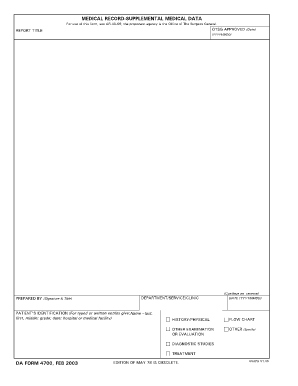
Get Medical Record Supplemental Medical Data
How it works
-

Open form follow the instructions
-

Easily sign the form with your finger
-

Send filled & signed form or save
How to fill out the Medical Record Supplemental Medical Data online
Completing the Medical Record Supplemental Medical Data form is essential for maintaining accurate medical records. This guide will provide you with clear, step-by-step instructions to help you fill out the form accurately and efficiently in an online format.
Follow the steps to complete your form online.
- Click ‘Get Form’ button to obtain the form and open it in the online editor.
- Begin by entering the report title in the designated field, ensuring you use the proper date format (YYYYMMDD) as required.
- Fill in the department, service, or clinic name in the corresponding section, providing specific details relevant to your records.
- Provide your name, including first, middle initial, and last name, along with your grade, current date, and the hospital or medical facility where the records are held.
- Complete the date field again in the format YYYYMMDD, ensuring all entries are accurate.
- Document any relevant history or physical observations using clear and concise language.
- Utilize the flow chart section as necessary to illustrate important aspects of the patient's case.
- If applicable, fill out any additional examination or evaluations in the designated area, and specify the nature of other evaluations as needed.
- Detail any diagnostic studies conducted, ensuring to include meaningful results or relevant information.
- Conclude by outlining the treatment provided and any follow-up actions required, ensuring clarity and completeness.
- Once all sections are thoroughly completed, review your entries for accuracy. You can then save changes, download, print, or share the form as needed.
Ensure your medical records are complete by filling out the necessary documents online today.
In general, a medical history includes an inquiry into the patient's medical history, past surgical history, family medical history, social history, allergies, and medications the patient is taking or may have recently stopped taking.