Minimum specifications; in absence of OEM specification CCMTA tolerances shall be applied. 4. Using micrometers, dial indicator or drum gauges check rotors/drums for lateral run out and maximum wear limits. Also check for cracks, groves, uneven friction surface and hot spots, etc. Rotors/drums are to be measured and recorded in millimetres or thousands of an inch. 5. Measure the brake lining in fractions of an inch or millimetres and record; record the measurement of the pad/shoe with the least.
Open form follow the instructions
Easily sign the form with your finger
Send filled & signed form or save
How to fill out the Canada Internal Brake Component Inspection Form - Nova Scotia online
Filling out the Canada Internal Brake Component Inspection Form - Nova Scotia is an important process for ensuring the safety and compliance of vehicles. This guide provides clear, step-by-step instructions to help users complete the form accurately and efficiently online.
Follow the steps to complete the inspection form online.
- Click the ‘Get Form’ button to obtain the form and open it in your preferred editor.
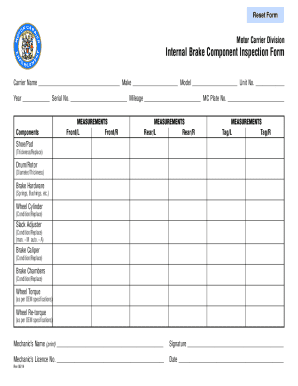
- Begin by filling in the carrier name, vehicle make, model, unit number, year, serial number, mileage, and motor carrier plate number. Ensure all information is accurate as this data is essential for the inspection report.
- Measure the brake components as specified. Record the measurements for the front left, front right, rear left, and rear right brakes. Pay attention to the thickness of shoes/pads and the diameter/thickness of drums/rotors.
- Next, evaluate the brake hardware, wheel cylinder, slack adjuster, brake caliper, brake chambers, and wheel torque. Note their condition and whether they need replacing as indicated on the form.
- Have the inspecting technician print their name in the designated area, sign the form, and include their license number. This verifies that the inspection has been conducted by a certified professional.
- Finally, enter the date of the inspection. After completing all fields, save any changes made to the form. You can then choose to download, print, or share the completed inspection form.
Complete the Canada Internal Brake Component Inspection Form online now to ensure your vehicle's safety and compliance.
Experience a faster way to fill out and sign forms on the web. Access the most extensive library of templates available.
Related content
Mar 16, 2016 — FMCSA's acceptance of NOM 68 means that Mexico-domiciled motor carriers...
Mar 27, 2003 — This report was prepared in accordance with International Civil Aviation...
CONGRATULATIONS. Congratulations on acquiring your new Mazda product. Please take the time...
Get answers to your most pressing questions about US Legal Forms API.
How do I do my own brake inspection?
To perform your own brake inspection, start by visually checking the brake pads for wear and tear. You should also inspect the brake fluid levels and the condition of the brake lines. If you’re unsure, using the Canada Internal Brake Component Inspection Form - Nova Scotia can guide you through the necessary checks and even help track your findings.
What is a 7 point safety check?
A 7 point safety check covers essential components of your vehicle, focusing on brakes, lights, tires, steering, and suspension, among others. This checklist helps identify potential problems that could affect your safety on the road. Conducting a 7 point safety check regularly can prevent larger repairs. For documentation, you might want to use the Canada Internal Brake Component Inspection Form - Nova Scotia.
What is required for vehicle inspection in Nova Scotia?
The requirements for vehicle inspection in Nova Scotia include having your vehicle's registration and proof of insurance. Additionally, your vehicle should be clean and accessible for a thorough inspection. Utilizing the Canada Internal Brake Component Inspection Form - Nova Scotia can aid in organizing the necessary information and ensure compliance.
What services are offered by Scotia vehicle inspection?
Scotia vehicle inspection offers comprehensive services, including safety checks, emissions testing, and brake inspections. Their goal is to keep your vehicle compliant with provincial regulations and ensure your safety on the road. You may also find tools, like the Canada Internal Brake Component Inspection Form - Nova Scotia, helpful in recording inspection results and tracking maintenance.
What is required for inspection in Nova Scotia?
For vehicle inspections in Nova Scotia, you need your vehicle registration and its insurance details. Additionally, vehicles must be in a condition that allows thorough checking of the safety features, including the brakes. Completing the Canada Internal Brake Component Inspection Form - Nova Scotia can streamline this process and make it easier to keep track of your inspection records.
What does a brake inspection consist of?
A brake inspection involves several critical checks to ensure your vehicle is safe to drive. Technicians examine brake pads, discs, fluid levels, and even the entire brake system for any issues. It's important to conduct this inspection regularly to avoid costly repairs down the line. You can document findings using the Canada Internal Brake Component Inspection Form - Nova Scotia.
How often should I have a vehicle inspection in Nova Scotia?
In Nova Scotia, you should have your vehicle inspected at least once a year. It's essential for maintaining safety standards and ensuring your vehicle runs efficiently. Regular inspections help catch issues early and offer peace of mind. For accurate records, consider using the Canada Internal Brake Component Inspection Form - Nova Scotia.
What is the 30 30 30 rule for brakes?
The 30 30 30 rule for brakes suggests that drivers check their brake components every 30 days, for 30 minutes, using the checklist from the Canada Internal Brake Component Inspection Form - Nova Scotia. This regular maintenance helps catch potential issues before they become serious. Keeping your brakes in top shape enhances your safety on the road.
Can I inspect my own brakes?
Yes, you can inspect your own brakes, but it’s important to follow safety guidelines. Ensuring your vehicle is securely lifted is vital before starting the inspection. For a more thorough and secure process, consider leveraging the Canada Internal Brake Component Inspection Form - Nova Scotia to guide your inspection.
How do you perform a basic brake inspection?
To perform a basic brake inspection, start by checking the brake pads and rotors for wear. Next, assess the brake fluid level to ensure it is at the recommended level. Finally, inspect the brake lines and hoses for any signs of leaks or damages that may affect performance.
Use professional pre-built templates to fill in and sign documents online faster. Get access to thousands of forms.
If you believe that this page should be taken down, please follow our DMCA take down process here.