Loading

Open form follow the instructions

Easily sign the form with your finger

Send filled & signed form or save
How to fill out the Domiciliary Letter online
Filling out the Domiciliary Letter online can be a straightforward process. This guide provides detailed instructions to ensure that you complete the form accurately and efficiently.
Follow the steps to fill out the Domiciliary Letter correctly.
- Click the ‘Get Form’ button to obtain the Domiciliary Letter. This will open the document for you to complete.
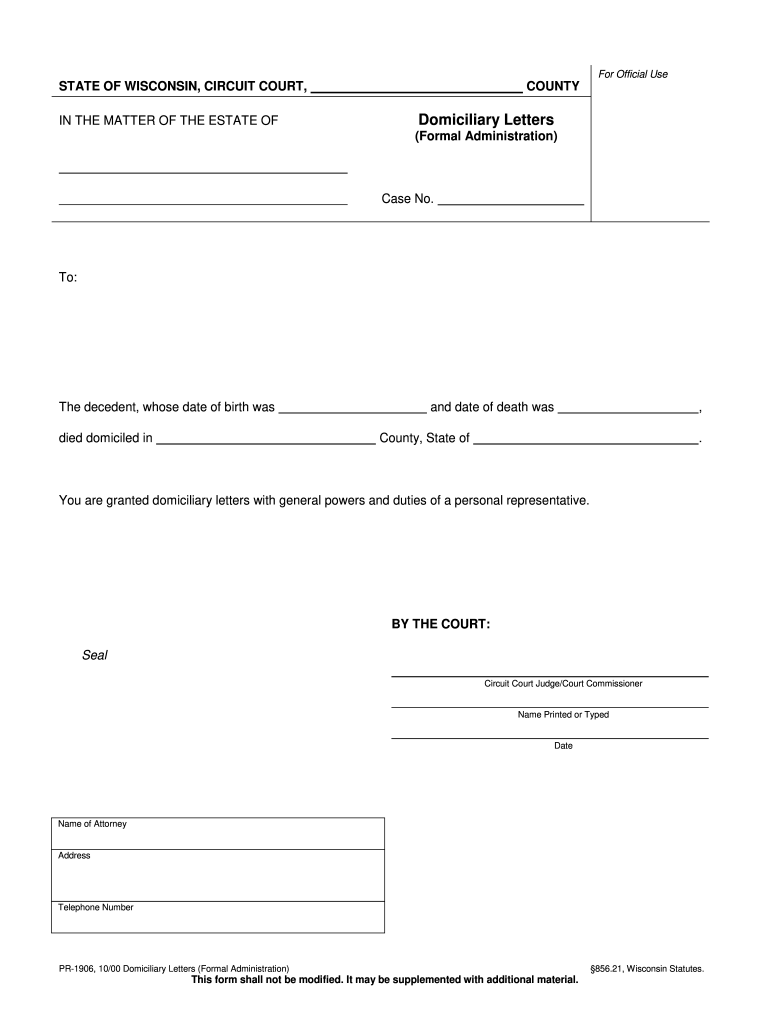
- In the first section of the form, fill in the details of the decedent, including their date of birth and date of death. Both dates are crucial to establish the legitimacy of the document.
- Indicate the county and state where the decedent was domiciled. This information helps determine the jurisdiction of the case.
- Review the text granting domiciliary letters with general powers and duties of a personal representative. Ensure that you understand the responsibilities associated with this role.
- Provide the name of the Circuit Court Judge or Court Commissioner, and ensure to include their signature if necessary.
- Fill in the printed or typed name of the judge or commissioner, along with the date of signing the document.
- Enter the name, address, and telephone number of the attorney associated with the case, if applicable. This ensures that all parties can be contacted if needed.
- After filling out the form, carefully review all the details for accuracy. Check that there are no spelling errors or omissions.
- Once you are satisfied with the completed form, you can save changes, download, print, or share the Domiciliary Letter as needed.
Start completing your Domiciliary Letter online today for a smooth filing experience.
Experience a faster way to fill out and sign forms on the web. Access the most extensive library of templates available.
Related content
Domiciliary Letters ... The decedent, with date of birth and date of death. , was...
by LH Averill Jr · 1975 · Cited by 12 — 236 This affidavit must recite the date of...
lodging patients in acute, long term, or domiciliary areas of the hospital. Beds in labor...
Get answers to your most pressing questions about US Legal Forms API.
How to file a will in Wisconsin?
To file a will in Wisconsin, you must submit it to the probate court in the county where the decedent resided. It's typically necessary to file the will within 30 days of the death. Having the proper forms and understanding the process can help ensure compliance with legal requirements. USLegalForms offers helpful guidance and access to necessary documents for filing in Wisconsin.
How much does an estate have to be worth to go to probate in Wisconsin?
In Wisconsin, estates valued over $50,000 generally must go through probate, although this threshold can differ for certain types of estates. If the estate is less than this amount, it may qualify for a simpler process known as informal probate or even no probate at all. Navigating these rules can be complex, so consider consulting a legal resource like USLegalForms for clarity on your specific situation.
How to obtain a copy of a will in Wisconsin?
To obtain a copy of a will in Wisconsin, you should contact the probate court where the will was filed. Generally, wills become public documents once they are admitted to probate. If you need assistance or specific forms to request a copy, platforms like USLegalForms can provide handy templates and guidance for your needs.
What is a PR 1819 form in Wisconsin?
The PR 1819 form in Wisconsin is used as a petition for a domiciliary letter of administration. This specific form outlines details about the deceased and the petitioner. Proper completion of this form is key to initiating the probate process. If you need help filling it out, checking resources on USLegalForms could be beneficial.
How do I get a domiciliary letter in Wisconsin?
Getting a domiciliary letter in Wisconsin involves submitting a petition to the local probate court along with the required documents. These documents typically include the most current will, a copy of the death certificate, and potentially other forms as instructed by the court. The process may seem daunting, but you can streamline it with assistance from platforms like USLegalForms.
How to obtain a domiciliary letter in Wisconsin?
To obtain a domiciliary letter in Wisconsin, you must file a petition in the probate court of the county where the deceased resided. You will need to provide necessary documentation, such as the will and death certificate. Once the court reviews your request, it may issue the domiciliary letter. For complete guidance through this process, consider using the resources available on USLegalForms.
What is the meaning of letter of probate?
A letter of probate is a legal document issued by a probate court. It confirms the authority of the executor or administrator to manage a deceased person's estate. The document often serves as a crucial step in the probate process, allowing the executor to act in the best interests of the estate. Understanding this term can lead to smoother handling of estate matters, especially when dealing with a domiciliary letter.
What is a domiciliary letter in Wisconsin?
In Wisconsin, a domiciliary letter refers to a legal document issued by a probate court to facilitate the administration of an estate from another state. It validates the authority of an executor overseeing assets that may be outside of Wisconsin. Overall, these letters streamline the probate process and ensure that all legal actions align with Wisconsin laws.
What triggers probate in Wisconsin?
Probate in Wisconsin is triggered when a person dies and has assets that require legal settlement. This process typically begins when the deceased's will is filed with the probate court. Certain assets, like real estate or significant bank accounts, often necessitate going through probate to ensure proper distribution among heirs and claimants.
Do you need an attorney to settle an estate in Wisconsin?
While you are not required to hire an attorney to settle an estate in Wisconsin, doing so is highly recommended. An attorney can help navigate the complexities of probate law, ensuring compliance with state requirements. Additionally, utilizing a service like USLegalForms can provide you with the necessary forms and guidance throughout the process.
Use professional pre-built templates to fill in and sign documents online faster. Get access to thousands of forms.
If you believe that this page should be taken down, please follow our DMCA take down process here.