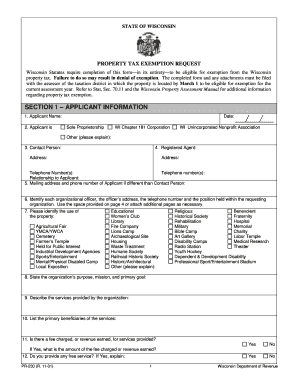
So may result in denial of exemption. The completed form and any attachments must be filed with the assessor of the taxation district in which the property is located by March 1 to be eligible for exemption for the current assessment year. Refer to Stat, Sec. 70.11 and the Wisconsin Property Assessment Manual for additional information regarding property tax exemption. SECTION 1 APPLICANT INFORMATION 1. Applicant Name: 2. Applicant is Date: Sole Proprietorship WI Chapter 181 Corporation.
Open form follow the instructions
Easily sign the form with your finger
Send filled & signed form or save
How to fill out the WI PR-230 online
The Wisconsin Property Tax Exemption Request (WI PR-230) is a crucial form for organizations seeking exemption from property tax obligations. Filling it out accurately and completely is essential to ensure eligibility for tax exemption.
Follow the steps to complete the WI PR-230 online.
- Click ‘Get Form’ button to access the form and open it in your preferred online editor.
- In Section 1, provide applicant information. Fill out the applicant name, select the type of applicant (such as sole proprietorship or nonprofit association), contact person, and mailing address. Ensure to include the telephone number and relationship to the applicant.
- Continue in Section 1 by identifying all organizational officers, their addresses, telephone numbers, and positions held. If necessary, use additional pages for this information.
- Indicate the use of the property from the list provided, specifying if it serves educational, religious, charitable, or other qualifying purposes.
- Explain the organization’s purpose and mission in detail, along with the services it offers and the primary beneficiaries of those services.
- Answer questions regarding fees, revenue, and any free services provided, including the percentage of recipients receiving free or reduced-rate services.
- In Section 2, provide the subject property information, including the property address, tax parcel number, acreage, and estimated fair market value. If an appraisal has been conducted, include details of the appraiser and appraisal purpose.
- State the relationship between the owner and the applicant and explain how the applicant uses the subject property. Supporting details on property use and eligibility for tax exemption should be included.
- In Section 3, identify all entities or individuals who occupy or use the subject property, detailing their respective agreements and how they utilize the property.
- Compile all necessary attachments, including proof of the organization’s nonprofit status and other relevant documents as outlined in Section 4.
- Finally, you will need to complete the affidavit at the end of the form, certifying the accuracy of the information provided. Ensure the form is signed and dated by an authorized individual.
- Once completed, save any changes made to the document, then download, print, or share the WI PR-230 form as required.
Complete and submit your documents online to ensure timely filing for property tax exemption.
Experience a faster way to fill out and sign forms on the web. Access the most extensive library of templates available.
Related content
This form is for property tax exemption requests. It must be filed with the assessor by...
A first course introducing students to the fundamentals of computational problem-solving...
6 - Este aparelho não se destina à utilização por pessoas (inclusive crianças) com...
Get answers to your most pressing questions about US Legal Forms API.
Why would a homestead application be denied?
A homestead application can be denied for various reasons, including incomplete information, failure to meet residency or income criteria, or missing deadlines. It's vital to double-check all required documents and ensure that your application aligns with the standards outlined, such as those mentioned in the WI PR-230 guidelines. If your application is denied, you can usually appeal the decision or reapply with the necessary corrections.
Who qualifies for the Michigan homestead property tax credit?
In Michigan, to qualify for the homestead property tax credit, you must live in the home as your primary residence and meet income requirements. The credit is intended for homeowners, including seniors and low-income households, ensuring they receive essential tax relief. If you think you qualify, starting with the application process is straightforward and can yield significant savings.
What qualifies you for the homestead credit?
To qualify for the homestead credit, you must occupy the property as your principal residence, meet income limits, and own the property as required by state law. Providing complete and accurate information on your application form is essential, especially if you include benefits associated with the WI PR-230. Checking with your local tax authority can give you tailored guidance.
Why do I not qualify for homestead tax credit?
Not qualifying for a homestead tax credit can happen for several reasons, such as failing to meet residency requirements or income limits set by the state. Additionally, if your property does not meet specific criteria defined in the guidelines, your application may be denied. If you have questions, reviewing your local regulations or joining programs like the ones associated with WI PR-230 can provide clarity.
At what age in Wisconsin do you stop paying property taxes?
In Wisconsin, there is no specific age at which you stop paying property taxes entirely; however, there are programs that can help reduce your burden. For seniors over the age of 65, eligibility for various property tax credits, like the WI PR-230 exemption, may apply. It's advisable to check your local assessor’s office for more details on available programs.
How do I apply for property tax exemption in Wisconsin?
Applying for a property tax exemption in Wisconsin involves submitting Form PI-501, along with the WI PR-230 form if you are claiming a homestead exemption. Your application should include proof of residency and the type of exemption you are requesting. Remember, meeting the application deadlines is crucial for consideration.
What qualifies for homestead in MN?
Homestead qualification in Minnesota requires that the property is owned and occupied by the owner as their primary residence. Typically, applicants must demonstrate they meet income limits and residency requirements, which are defined each year. If you're considering applying for a homestead exemption, reviewing the specific guidelines can help ensure you're eligible.
How to apply for sales tax exemption in Wisconsin?
To apply for a sales tax exemption in Wisconsin, you need to complete the appropriate exemption certificate, commonly referred to as WI PR-230. This form requires some basic information about your organization and the type of purchases you need to exempt. After filling it out, submit the certificate to your supplier to avoid paying sales tax on qualifying purchases.
At what point do seniors stop paying taxes?
Seniors do not outright stop paying taxes, but various exemptions and credits can reduce their tax obligations significantly. In Wisconsin, taxes may continue based on income and property ownership, though programs exist to alleviate financial burdens for those in need. Understanding these options is crucial for financial planning in your later years. Checking out the guidelines in the WI PR-230 can help you identify any available relief options.
How do I get property tax exemption in Wisconsin?
To obtain a property tax exemption in Wisconsin, you must complete the necessary application forms, such as WI PR-230, and submit them to your local assessing office. Eligibility criteria can vary, but commonly include income limits and specific property use. Make sure to include all required documentation to support your application. Using platforms like US Legal Forms can simplify this process by providing you with ready-to-use forms and guidance.
Use professional pre-built templates to fill in and sign documents online faster. Get access to thousands of forms.
If you believe that this page should be taken down, please follow our DMCA take down process here.
This form is available in several versions. Select the version you need from the drop-down list below.