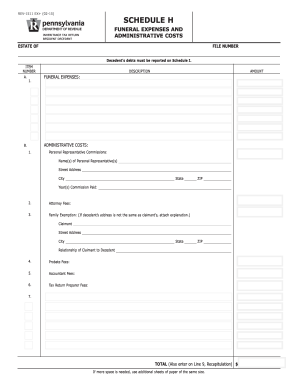
E I. ITEM NUMBER A. 1. DESCRIPTION AMOUNT FUNERAL EXPENSES: ADMINISTRATIVE COSTS: B. 1. Personal Representative Commissions: Name(s) of Personal Representative(s) Street Address City State ZIP Year(s) Commission Paid: 2. Attorney Fees: 3. Family Exemption: (If decedent s address is not the same as claimant s, attach explanation.) Claimant Street Address City State ZIP Relationship of Claimant to Decedent 4. Probate Fees: 5. Accountant Fees: 6. Tax Return Preparer Fees:.
Open form follow the instructions
Easily sign the form with your finger
Send filled & signed form or save
How to fill out the PA REV-1511 online
The PA REV-1511 form is an essential document for reporting funeral expenses and administrative costs related to an estate for Pennsylvania inheritance tax purposes. This guide provides step-by-step instructions to help users navigate the online filling process with ease and confidence.
Follow the steps to complete the PA REV-1511 form effectively.
- Click ‘Get Form’ button to access the PA REV-1511 and open it in your online editor.
- Begin by entering the estate's information, including the decedent's name and the corresponding file number at the top of the form.
- In the section for funeral expenses, detail the costs incurred. Provide a description and corresponding amount for each listed expense.
- Proceed to the administrative costs section. Here, you will be required to list and describe various fees, including personal representative commissions, attorney fees, family exemption details, probate fees, accountant fees, and tax return preparer fees.
- Ensure every amount is accurately recorded, particularly the total amount, which should also be entered on Line 9 of the recapitulation section.
- If additional space is needed, use extra sheets of paper of the same size to include further details.
- Once all fields are completed, review your entries to ensure accuracy before proceeding to save your changes, download, print, or share the completed form.
Complete your PA REV-1511 form online today for efficient processing of your estate’s needs.
Experience a faster way to fill out and sign forms on the web. Access the most extensive library of templates available.
Related content
Family Exemption: (If decedent's address is not the same as claimant's, attach...
by SB Burbank · 2006 · Cited by 39 — Stephen B. Burbank Alternative Career Resolution...
Mar 6, 2019 — When using this equipment, thoroughly read this manual and the associated...
Get answers to your most pressing questions about US Legal Forms API.
How do I file an inheritance tax return in PA?
To file an inheritance tax return in Pennsylvania, start by obtaining the PA REV-1511 form. Collect complete information about the deceased's assets and liabilities, and fill out the form carefully. After reaching the final step, submit the completed return to the Pennsylvania Department of Revenue. Using services such as US Legal Forms can help ensure you follow the correct procedures and meet all deadlines.
Who must file the PA Rev 1500?
The PA Rev 1500 form must be filed by the executor or administrator of an estate when certain thresholds are met. Specifically, this form is required if the estate's total value exceeds the exemption limit set by Pennsylvania law. Completing this form accurately is crucial for compliance with state regulations. If you're unsure, resources like US Legal Forms can offer structured guidance.
Is PA inheritance tax deductible on federal returns?
Unfortunately, the PA inheritance tax is not deductible on federal tax returns. The IRS does not allow state inheritance taxes to be deducted when calculating your federal tax obligations. This distinction is important as you plan your overall tax strategy. It's beneficial to consult with a tax professional to navigate both state and federal tax rules.
How long do PA inheritance tax returns take to approve?
Once you submit your PA inheritance tax return, it typically takes the state about 6 to 8 weeks for processing and approval. However, this timeframe can vary based on the complexity of the estate and the volume of returns being processed. Be sure to keep track of your submission, as any additional information requests can extend the timeline. Planning ahead can help you avoid delays.
How do I file a Pennsylvania inheritance tax return?
Filing a Pennsylvania inheritance tax return requires completing the PA REV-1511 form. You will need to gather relevant information about the estate, such as assets and debts, before starting your application. Once you fill out the form accurately, submit it to the Pennsylvania Department of Revenue. Using platforms like US Legal Forms can simplify this process by providing necessary templates and guidance.
What expenses can be deducted from PA inheritance tax?
You can deduct certain expenses when calculating the PA inheritance tax under the PA REV-1511 guidelines. These expenses may include funeral costs, medical expenses incurred by the deceased before death, and debts owed by the decedent. It's important to keep thorough documentation for these deductions. Ensure you're familiar with the regulations to maximize your eligible deductions.
Can PA amended returns be filed electronically?
Yes, Pennsylvania allows you to file amended returns electronically under certain conditions. It offers a streamlined process that can save you time and reduce paperwork. Whether you are using the PA REV-1511 form or other tax forms, be sure to check the specific guidelines for electronic filing on the Pennsylvania Department of Revenue’s website.
Where do I post notice to creditors?
You must post a notice to creditors in a local newspaper that is regularly published in the county where the deceased lived. This ensures compliance with legal requirements and reaches the necessary audience. Keep a record of the publication for your files, as this is an important part of managing the estate.
How do I publish a notice to creditors in Pennsylvania?
To publish a notice to creditors in Pennsylvania, create a legal notice following state requirements, then submit it to a designated local newspaper. The notice must include important information such as the name of the deceased, the estate administrator's information, and a deadline for filing claims. Utilizing platforms like US Legal Forms can simplify this process by providing templates and guidance.
What is an affidavit of notice to creditors?
An affidavit of notice to creditors is a legal document that proves you have notified creditors of the deceased's passing. It typically includes the specifics of how and when the notice was published. This affidavit protects the estate from claims not filed according to legal timelines, establishing proper notice under Pennsylvania law.
Use professional pre-built templates to fill in and sign documents online faster. Get access to thousands of forms.
If you believe that this page should be taken down, please follow our DMCA take down process here.