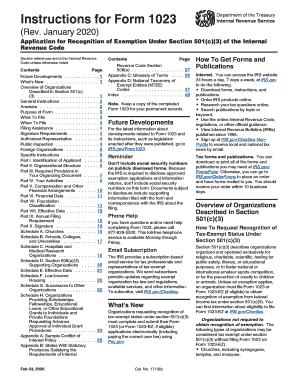
Ection references are to the Internal Revenue Code unless otherwise noted. Contents Future Developments . . . . . . . . What's New . . . . . . . . . . . . . . Overview of Organizations Described in Section 501(c) (3) . . . . . . . . . . . . . . . . . General Instructions . . . . . . . . . Answers . . . . . . . . . . . . . . . . Purpose of Form . . . . . . . . . . . What To File . . . . . . . . . . . . . When To File . . . . . . . . . . . . . Filing Assistance . . . . . . . . . . . Signature Req.
Open form follow the instructions
Easily sign the form with your finger
Send filled & signed form or save
How to fill out the IRS Instruction 1023 online
Filling out the IRS Instruction 1023 online is a crucial step for organizations seeking tax-exempt status under section 501(c)(3). This guide provides a clear, step-by-step approach to ensure that users, regardless of their legal background, can successfully complete the form accurately and efficiently.
Follow the steps to complete the IRS Instruction 1023 effectively.
- Click the ‘Get Form’ button to access the IRS Instruction 1023 form and open it in a digital editor.
- In Part I, provide identification information. Enter the complete name of the organization exactly as per the organizing document and include the Employer Identification Number (EIN), if applicable.
- Move to Part II to outline the organizational structure. Specify the type of organization, whether it is a corporation, LLC, or another structure, and attach the organizing document.
- In Part III, explain the required provisions in your organizing document including detail about your purposes and asset distribution upon dissolution.
- Proceed to Part IV where you detail the activities of your organization. Be specific about past, present, and planned actions relevant to your exempt purposes.
- In Part V, provide information about compensation for officers and directors, ensuring to include any financial arrangements.
- Complete Part VI by entering financial data, detailing budgeted and actual income and expenses where applicable.
- For Part VII, select your foundation classification, noting the differences between public charities and private foundations.
- In Part VIII, clarify the effective date of your exemption, ensuring it aligns with submission timelines.
- Part IX discusses annual filing requirements, while Part X is where authorized representatives must sign.
- Once the form is fully completed, save the changes and prepare to upload any required attachments as a single PDF file for submission.
Begin filling out your IRS Instruction 1023 online today to take the first step in securing your tax-exempt status!
Experience a faster way to fill out and sign forms on the web. Access the most extensive library of templates available.
Related content
Organizations requesting recognition of tax-exempt status under section 501(c)(3) must...
The information return and exemption application materials must be posted exactly as filed...
Apr 15, 2015 — You may be eligible to claim the premium tax credit if you, your spouse...
Get answers to your most pressing questions about US Legal Forms API.
How long does it take for Form 1023 to be approved?
Approval for Form 1023 typically takes anywhere from 2 to 12 months after submission. The duration might differ based on the complexity of your application and the volume of applications the IRS is processing. Following IRS Instruction 1023 carefully can help address any concerns that may arise during review. If you anticipate longer wait times, staying in touch with the IRS may provide updates on your application status.
How to submit IRS Form 1023?
To submit IRS Form 1023, you can either file it electronically through the IRS website or mail a paper version to the appropriate address listed in IRS Instruction 1023. Make sure to include any attachments and the required payment. If you choose the online route, you will need to create an account on the IRS site for electronic submissions. Double-check your form for accuracy to avoid delays in processing.
How long does it take to process Form 1023?
The processing time for Form 1023 can vary, but it typically takes about 3 to 6 months. Factors such as the IRS's workload and the completeness of your application can influence this timeframe. By following IRS Instruction 1023 carefully and providing all required information, you can help speed up the process. If you need assistance, consider using platforms like uslegalforms to ensure your form is correctly filled out.
Can Form 1023 be filed electronically?
Yes, Form 1023 can be filed electronically through the IRS website. This option allows for a more streamlined submission process, aligning with IRS Instruction 1023. Filing electronically may expedite your application, as it is easier for the IRS to process digital forms. Ensure that you have all necessary documents ready to upload when filing online.
What happens if I use Form 1023-EZ and bring in more than $50,000?
If you file Form 1023-EZ and exceed the $50,000 threshold in gross annual revenue, the IRS may revoke your tax-exempt status. This situation could lead to significant complications and may require you to reapply using the full Form 1023. It is critical to understand the limitations outlined in IRS Instruction 1023 when choosing which form to submit.
How long does it take to get a 501c3 determination letter?
Typically, it takes anywhere from 2 to 6 months to receive your 501c3 determination letter from the IRS. The timing often depends on the complexity of your application and the volume of applications the IRS is processing. For a smoother process, ensure that your application aligns with IRS Instruction 1023.
Is Form 1023 publicly available?
Yes, Form 1023 is publicly available and can be accessed through the IRS website. Once your application is approved, it becomes part of the public record. This transparency aligns with the guidelines outlined in IRS Instruction 1023, ensuring the public can access information about nonprofit organizations.
How do I get IRS instructions?
You can obtain IRS instructions by visiting the IRS website, where you'll find the latest versions of IRS Instruction 1023. Additionally, various resources and guides are available through nonprofit organizations that help with the 501c3 application process. If you prefer assistance, platforms like uslegalforms can provide tailored support.
How many directors does the IRS require for a 501c3?
The IRS requires that a 501c3 organization have at least three directors on its board. It's important that these directors are not related to ensure independence and avoid conflicts of interest. Having a diverse board can enhance governance and decision-making, aligning with the IRS Instruction 1023 requirements.
What is a 501c3 not allowed to do?
A 501c3 organization, according to IRS Instruction 1023, is restricted from engaging in political campaign activities for or against any candidate. Additionally, these organizations must not operate for the private benefit of individuals or shareholders, and they cannot participate in excessive lobbying activities. Adhering to these guidelines is crucial for maintaining tax-exempt status and upholding the organization's charitable mission.
Use professional pre-built templates to fill in and sign documents online faster. Get access to thousands of forms.
If you believe that this page should be taken down, please follow our DMCA take down process here.