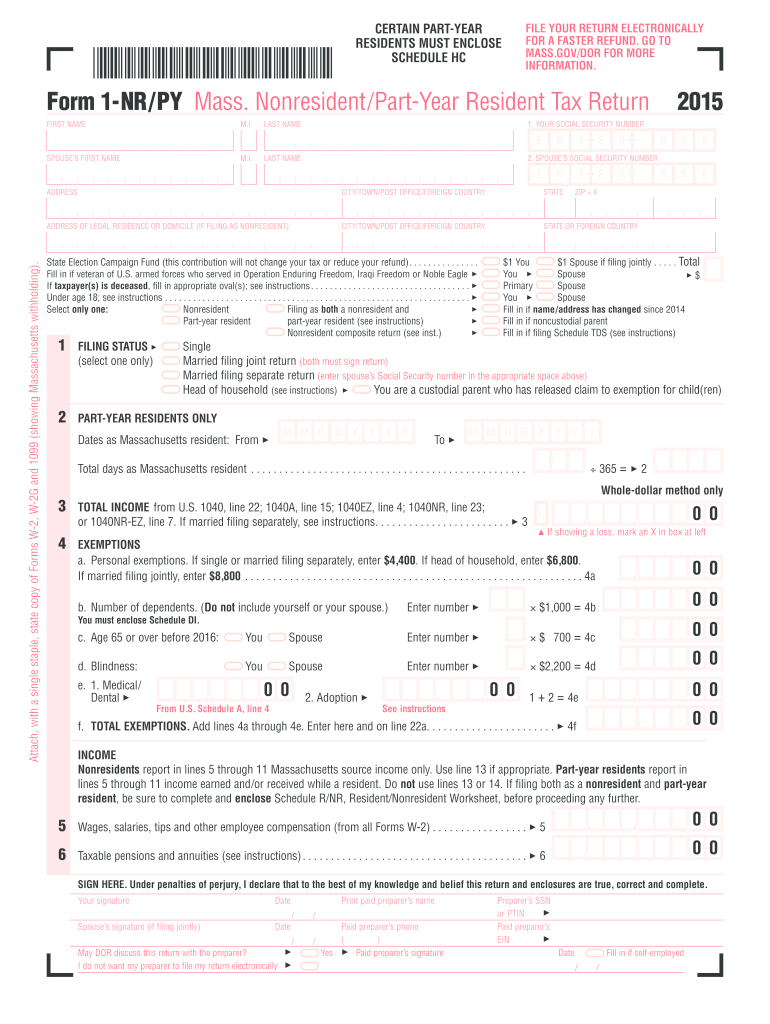
Nes 4a through 4e. Enter here and on line 22a. . . . . . . . . . . . . . . . . . . . . . . 3 4f 0 0 e. 1. Medical/ Dental 3 0 0 0 0 2. Adoption 3 From U.S. Schedule A, line 4 See instructions INCOME Nonresidents report in lines 5 through 11 Massachusetts source income only. Use line 13 if appropriate. Part-year residents report in lines 5 through 11 income earned and/or received while a resident. Do not use lines 13 or 14. If filing both as a nonresident and part-year resident, be sure t.
Loading

Open form follow the instructions

Easily sign the form with your finger

Send filled & signed form or save
How to fill out the MA DoR 1-NR/PY online
Filling out the MA DoR 1-NR/PY, or the Massachusetts Nonresident/Part-Year Resident Tax Return, can be a straightforward process with the right guidance. This form is essential for people filing taxes who lived in Massachusetts for part of the year or earned income there as nonresidents. This guide will provide clear, step-by-step instructions to help you complete the form online effectively.
Follow the steps to fill out your MA DoR 1-NR/PY online.
- Click ‘Get Form’ button to obtain the form and open it in the editor.
- Enter your personal information in the designated fields, including first name, middle initial, last name, and Social Security number. If applicable, provide your spouse’s information as well.
- Fill in your legal residence address, including city, town, state, and zip code. If you are filing as a nonresident, ensure to provide your legal domicile address.
- Complete the filing status section by selecting one option that best describes your tax situation: single, married filing jointly, married filing separately, or head of household.
- If you are a part-year resident, indicate the dates you were a Massachusetts resident and calculate the total days of residency.
- Report your total income, ensuring to focus only on Massachusetts source income if you are a nonresident.
- Enter personal exemptions in the designated area based on your filing status. Make sure to include any applicable deductions.
- Complete the deductions section accurately, providing information as required about any amounts you paid to Social Security or Medicare.
- Sign and date the form at the appropriate section, ensuring compliance with perjury declarations.
- Finally, review the completed form, save any changes, and choose to download, print, or share the form as necessary.
Start filling out your MA DoR 1-NR/PY online today for a smoother tax filing experience!
Experience a faster way to fill out and sign forms on the web. Access the most extensive library of templates available.
Related content
Write Social Security number(s) in memo section of check and be sure to sign check. Mail...
2024 Massachusetts individual income tax filing deadline is April 15, 2025. Form 1 or Form...
Get answers to your most pressing questions about US Legal Forms API.
How can I avoid underpayment penalty taxes?
To avoid underpayment penalty taxes, regularly review your income and ensure you are making estimated tax payments based on your earnings. Utilize the resources available on the USlegalforms platform to help you calculate your tax liability accurately under the MA DoR 1-NR/PY requirements. Consistent assessment and timely payments significantly reduce your risk of incurring penalties.
How do I request a penalty abatement in Massachusetts?
To request a penalty abatement in Massachusetts, file a request with the Department of Revenue, providing supporting documentation and a detailed explanation of your situation. It's crucial to present a solid case showing that the penalty should not apply. Leveraging services like USlegalforms can help you navigate the specifics of your request related to MA DoR 1-NR/PY.
Do I need to file a nonresident Massachusetts tax return?
Yes, if you earned income from Massachusetts sources and you are not a resident, you need to file a nonresident tax return, known as Form 1 NR. This filing ensures that you fulfill your tax obligations based on your income generated within the state. Be sure to check your eligibility and comply with the MA DoR 1-NR/PY regulations.
How do I get my underpayment penalty waived?
To request a waiver for your underpayment penalty, you must submit a written request to the Massachusetts Department of Revenue, explaining your circumstances clearly. The department will consider factors such as incorrect tax estimates or reasonable cause. Using USlegalforms can simplify this process, providing templates and guidance related to the MA DoR 1-NR/PY.
What is a Form 1 NR in Massachusetts?
Form 1 NR is the nonresident income tax return used by individuals who earn income in Massachusetts but reside elsewhere. It allows nonresidents to report their MA-source income while ensuring they comply with state tax obligations. Understanding Form 1 NR is essential for navigating the MA DoR 1-NR/PY process efficiently.
How to avoid ma health insurance penalty?
To avoid the MA health insurance penalty, ensure you have qualifying health coverage for the entire year. You can enroll in health insurance plans during open enrollment periods or apply for a special enrollment period if you qualify. Additionally, consider using the resources available on the USlegalforms platform to help navigate your options and comply with the MA DoR 1-NR/PY requirements.
Where do I file my MA Form 1?
You can file your MA Form 1 with the Massachusetts Department of Revenue. If you’re using the MA DoR 1-NR/PY, ensure that you send it to the correct address specified on the form. Consider e-filing for a quicker process and confirmation that your return is received without delays.
Do I have to file a nonresident state tax return in Massachusetts?
Yes, if you earn income sourced from Massachusetts while living in another state, you must file a nonresident state tax return using the MA DoR 1-NR/PY. Even if your income is only partially from Massachusetts, filing is necessary to report what you owe. Using the correct forms ensures you receive any refundable credits you may qualify for.
What does resident vs nonresident mean?
The terms 'resident' and 'nonresident' define your connection to Massachusetts concerning tax purposes. A resident meets the state’s criteria for living and working primarily in Massachusetts, while a non-resident may operate under different conditions, such as working in the state but living elsewhere. Understanding this difference is crucial, especially when you file using the MA DoR 1-NR/PY for tax compliance.
How do you determine if you are a Massachusetts resident?
You can determine your residency by assessing where you live, work, and your intentions regarding your stay. If you live in Massachusetts for more than 183 days within a year while calling it your primary home, you qualify as a resident. You may need to review specific residency rules and possibly consult forms like the MA DoR 1-NR/PY for clarification.
Use professional pre-built templates to fill in and sign documents online faster. Get access to thousands of forms.
If you believe that this page should be taken down, please follow our DMCA take down process here.
This form is available in several versions. Select the version you need from the drop-down list below.