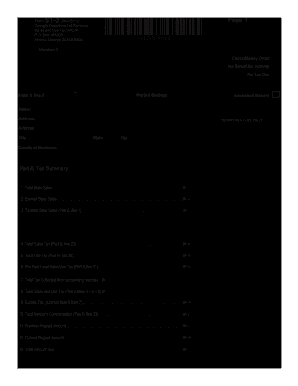
D address of the registered taxpayer. The Period Ending should be the end date (mm/dd/yy) of the reporting period. Check the Amended Return box if you are amending a previously filed return for the same period. Check the appropriate Payment box according to your method of payment. The No Tax Due box means there were no taxable sales/use and no tax due for this period. The No Sales/Use Activity box means there were no sales/use transactions during this period. You may check No S/U Activity Due bo.
Open form follow the instructions
Easily sign the form with your finger
Send filled & signed form or save
How to fill out the GA DoR ST-3 online
The Georgia Sales and Use Tax Return (ST-3) is a crucial document for reporting taxable sales and use tax obligations. This guide offers detailed, step-by-step instructions to help users complete the form accurately and efficiently, even if they are unfamiliar with tax filing processes.
Follow the steps to complete the GA DoR ST-3 online
- Press the ‘Get Form’ button to access the form and open it in the editor.
- Enter your Sales and Use Tax number (STN), along with your name and address in the designated fields.
- Specify the 'Period Ending' date corresponding to the end of your reporting period in the mm/dd/yy format.
- If you are amending a previously filed return for the same period, check the 'Amended Return' box.
- Select the appropriate payment method by checking the respective Payment box.
- If applicable, check the 'No Sales/Use Activity' box to indicate that there were no sales or use transactions during this period.
- Complete Part A - Tax Summary by entering the required information for lines 1 through 13 as applicable to your reporting period.
- Proceed to Part B and fill out the Sales Tax Distribution Table, inputting data for taxable sales as instructed in the table.
- In the Use Tax Distribution Table, record any applicable use taxes by jurisdiction, reason code, and amount.
- Calculate and record the total vendor's compensation in accordance with the guidelines provided in Part B.
- Complete Part C by certifying and signing the return to ensure timely filing.
- Finally, review your form, save your changes, and download or print the completed ST-3 for your records.
Ensure compliance and submit your GA DoR ST-3 form online to fulfill your tax obligations.
Experience a faster way to fill out and sign forms on the web. Access the most extensive library of templates available.
Related content
ST-3 Sales and Use Tax Return Effective for Sales from April 1, 2018 through September 30...
Jul 3, 2019 — Institutional sales that are subject to state of Georgia sales tax must be...
Você pode utilizar o controle remoto fornecido. RM-AAU058 para operar o receiver e para...
Get answers to your most pressing questions about US Legal Forms API.
What is the reason code for use tax in Georgia?
In Georgia, the reason code for use tax typically refers to the explanations provided for exemptions or deductions related to goods purchased outside the state. When filing, individuals and businesses should provide specific codes to indicate the purpose of their tax claims. Understanding this can enhance compliance and avoid potential issues.
At what age do you stop paying state taxes in Georgia?
In Georgia, there is no specific age when individuals stop paying state taxes; tax obligations depend on income rather than age. However, some seniors may qualify for certain deductions that reduce their tax burden. It's advisable to consult a tax professional to explore available options.
Who is exempt from Georgia sales tax?
In Georgia, several categories of buyers are exempt from paying sales tax, including non-profit organizations, educational institutions, and government entities. Additionally, certain purchases made for resale or specific exempt purposes may qualify for exemption. You can utilize the GA DoR ST-3 form to ensure proper exemption claims.
How do you qualify for tax exemption?
Qualifying for tax exemption in Georgia typically involves meeting specific criteria defined by state law. Generally, entities such as non-profits, certain government agencies, or businesses purchasing exempt goods can qualify. Completing the GA DoR ST-3 form is essential for establishing your eligibility.
What is a Georgia Schedule 3 form?
The Georgia Schedule 3 form, known as GA DoR ST-3, is used to claim exemption from sales tax for certain purchases in Georgia. This form allows eligible buyers to avoid tax on specific transactions that qualify for exemption. It's essential to complete this form accurately to ensure compliance with Georgia tax laws.
How is Georgia state tax calculated?
Georgia state tax is calculated based on your taxable income, applying a progressive tax structure. You start with your gross income, subtract allowable deductions, and then apply the corresponding tax rates. For individuals and businesses, accurately reflecting your tax liabilities on forms like the GA DoR ST-3 will ensure you meet your obligations.
Does Georgia have 7% sales tax?
Yes, Georgia has a base sales tax rate of 4%, but when local taxes are included, the total sales tax rate can reach 7% or more, depending on the jurisdiction. It is essential to check local rates to ensure compliance when calculating sales tax. Accurate understanding of these rates is crucial for correctly reporting your sales on the GA DoR ST-3.
Who qualifies for sales tax exemption in Georgia?
In Georgia, individuals and organizations may qualify for sales tax exemption based on specific criteria, such as non-profit status or purchasing items for resale. Certain goods, like food for household consumption, also qualify for exemptions. Understanding your eligibility can help you avoid overpaying sales tax and simplify your GA DoR ST-3 filings.
What is the format for Georgia withholding ID?
The format for a Georgia withholding ID typically includes a prefix followed by a numeric identifier. It often starts with 'WH' followed by a series of numbers. Accurate entry of this ID in your financial documents is crucial, especially when submitting forms like the GA DoR ST-3.
Who can file a Georgia composite return?
A Georgia composite return can be filed by certain pass-through entities, such as partnerships and S corporations, on behalf of their non-resident partners or shareholders. This filing includes the GA DoR ST-3 to report sales taxes if applicable. It's a streamlined way for these entities to meet their tax obligations without requiring each non-resident to file separately. Ensure you meet the qualification criteria before filing.
Use professional pre-built templates to fill in and sign documents online faster. Get access to thousands of forms.
If you believe that this page should be taken down, please follow our DMCA take down process here.
This form is available in several versions. Select the version you need from the drop-down list below.