How it works
  • Open form

    Open form follow the instructions

  • Easily sign form

    Easily sign the form with your finger

  • Share form

    Send filled & signed form or save

How to fill out the IRS Instruction 706 online

This guide provides a comprehensive overview for users on how to fill out IRS Instruction 706 online. It breaks down each section and field of the form with clear, step-by-step instructions to help users navigate the process effectively.

Follow the steps to complete IRS Instruction 706 online.

  1. Click ‘Get Form’ button to obtain the form and open it in the editor.
  2. Complete the general information section, which includes details about the decedent, their social security number, and the executor's information.
  3. Fill out Part 2 to calculate the estate tax owed based on the decedent’s gross estate and any applicable deductions.
  4. Proceed to Part 3 to document any elections made by the executor, including the choice to elect portability of the Deceased Spousal Unused Exclusion (DSUE).
  5. Complete the detailed property information in Parts 4 and 5, making sure to include all necessary schedules, such as Schedules A to I for real estate and other assets.
  6. Finally, review all entries for accuracy and completeness before saving, downloading, printing, or sharing the form as necessary.

Don't wait—start completing your IRS Instruction 706 online today!

Get form

Experience a faster way to fill out and sign forms on the web. Access the most extensive library of templates available.

Related content

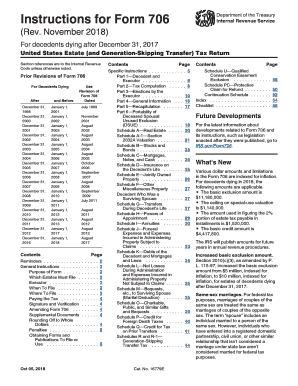
Instructions for Form 706 (Rev. October 2024)

The executor of a decedent's estate uses Form 706 to figure the estate tax imposed by...

Learn more
Form 706 (Rev. August 2019)

8. If decedent died testate, check here ▷ and attach a certified copy of the will. 9 If...

Learn more
2001 - Instructions for Form 709

securities. instructions for Schedule B of Form 706. For stocks: Also attach any appraisal...

Learn more
Questions & Answers

Get answers to your most pressing questions about US Legal Forms API.

Contact support

What are the IRS rules for surviving spouse after death?

The IRS offers specific rules for surviving spouses regarding estate planning and tax benefits. For instance, under certain conditions, a surviving spouse may inherit the deceased spouse's unused exemption amount. Additionally, they can file a joint tax return for the year of death, simplifying the tax process; refer to IRS Instruction 706 for more insights.

Filing requirements for the estate tax return 706 are based on the total gross estate value exceeding the established exemption threshold. Generally, estates must file if the value is above this threshold, which is updated regularly by the IRS. For detailed requirements, check IRS Instruction 706 or consult a tax professional.

You should send your completed Form 706 to the address specified in the IRS instructions. Typically, this address is based on the state of residence of the deceased. Referencing IRS Instruction 706 during this process can help ensure you send your form to the correct location.

Currently, Form 706 cannot be filed electronically. You must print the completed form and send it by mail to the IRS. This process may seem cumbersome, but it is crucial to ensure accurate submission; therefore, utilizing resources like US Legal Forms can simplify crafting your form.

Yes, you must report the sale of inherited property to the IRS. When you sell such property, you are required to provide the IRS with information regarding the sale's proceeds and your adjusted basis, which is typically the fair market value at the time of the decedent's death. IRS Instruction 706 can guide you through the necessary reporting to ensure compliance.

The filing requirements for Form 706 depend on the value of the deceased's estate. If the gross estate exceeds the exemption limit set by the IRS, filing is mandatory. Additionally, you should review IRS Instruction 706 for specific guidelines based on the year of the individual's death, as exemptions may change annually.

According to IRS Instruction 706, certain assets are exempt from estate tax. These include life insurance proceeds payable to a named beneficiary, assets held in certain types of trusts, and gifts made to individuals within specified limits. It's important to consult a tax professional for personalized advice regarding your estate.

The IRS 7 year rule generally refers to the IRS's ability to examine certain tax returns filed incorrectly or those claiming incorrect deductions. This can extend the standard audit period significantly. When dealing with estate tax issues, IRS Instruction 706 will clarify how long records should be kept to avoid future complications.

The statute of limitations on Form 706 is typically three years from the date of filing. However, if the IRS notices any discrepancies, this may extend. Staying informed about the specifics in IRS Instruction 706 is vital for managing your estate’s tax responsibilities.

IRS Form 706 is used to calculate the estate tax owed on the estate of a deceased person. This form identifies the value of the estate and any deductions that may apply. Understanding the requirements of IRS Instruction 706 will help you accurately fill out this essential form.

Get This Form Now!

Use professional pre-built templates to fill in and sign documents online faster. Get access to thousands of forms.

If you believe that this page should be taken down, please follow our DMCA take down process here.

IRS Instruction 706 Form

This form is available in several versions. Select the version you need from the drop-down list below.

Get IRS Instruction 706