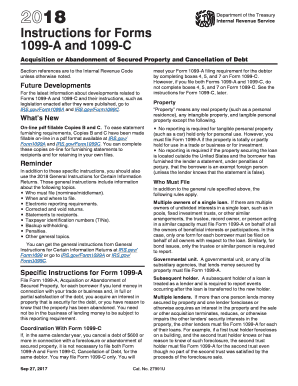
Enalties of perjury, that the borrower is an exempt foreign person (unless the lender knows that the statement is false). Who Must File In addition to the general rule specified above, the following rules apply. Multiple owners of a single loan. If there are multiple owners of undivided interests in a single loan, such as in pools, fixed investment trusts, or other similar arrangements, the trustee, record owner, or person acting in a similar capacity must file Form 1099-A on behalf of all the.
Open form follow the instructions
Easily sign the form with your finger
Send filled & signed form or save
How to fill out the IRS Instruction 1099-A & 1099-C online
Filling out the IRS Instruction 1099-A & 1099-C forms online can streamline your reporting process, ensuring compliance with tax regulations. This guide provides a step-by-step approach to complete these forms correctly.
Follow the steps to complete the IRS Instruction 1099-A & 1099-C online.
- Click ‘Get Form’ button to obtain the form and open it in the editor.
- Review the specific requirements for Form 1099-A, which is used for the acquisition or abandonment of secured property. Identify each borrower for whom you will file the form.
- Enter the borrower’s information, including their name, address, and taxpayer identification number in the designated fields.
- Input the balance of principal outstanding in Box 2. This should reflect the unpaid principal only and exclude any interest or fees.
- For Box 4, provide the fair market value of the property as of the acquisition date or when you became aware of the abandonment. If this is a foreclosure, the gross bid price may be used.
- In Box 5, indicate whether the borrower was personally liable for the debt by placing an ‘X’ in the checkbox if applicable.
- Provide a description of the property in Box 6. Include specific details such as the property’s address or type and make of personal property.
- Include an account number if applicable, especially if filing for multiple accounts associated with the borrower.
- Complete the requirements for Form 1099-C if applicable, detailing any cancellation of debt with similar steps, focusing on the debt amount discharged and identifiable events that led to the cancellation.
- Once all fields are completed accurately, save your changes. You can download, print, or share the completed form based on your requirements.
Begin filling out the IRS Instruction 1099-A & 1099-C forms online today to ensure your compliance with tax regulations.
Experience a faster way to fill out and sign forms on the web. Access the most extensive library of templates available.
Related content
Mar 20, 2025 — You will meet your Form 1099-A filing requirement for the debtor by...
IRS Publication 4681 explains how to read Forms 1099-A and C. A taxpayer who erroneously...
Oct 18, 2023 — 1099-A reports acquired property; 1099-C reports canceled debt. Key...
Get answers to your most pressing questions about US Legal Forms API.
Where do I enter a 1099s on my tax return?
To enter a 1099s on your tax return, locate the section relevant to the type of income reported. Generally, non-employee compensation from a 1099 NEC goes on Schedule C, while other types of income are entered directly on Form 1040. Understanding IRS Instruction 1099-A & 1099-C will help you place this information correctly. Consider using tools from uslegalforms to ensure accurate entry.
How do I report 1099 income on my tax return?
To report 1099 income on your tax return, use Form 1040, and include details from the 1099 form. Depending on the type of 1099, you may need to fill out additional schedules, like Schedule C for business income. It's vital to refer to IRS Instruction 1099-A & 1099-C for guidance on this process. Using a reliable tax platform can also streamline reporting.
How to file a 1099-A on taxes?
Filing a 1099-A on your taxes involves reporting the information accurately on your tax return. Typically, you'll enter the information from the form on Schedule D and Form 1040. Following IRS Instruction 1099-A & 1099-C is crucial for correct reporting. If you're unsure, resources on uslegalforms can guide you through the filing process.
How do I report a 1099-C on my tax return?
To report a 1099-C on your tax return, include the canceled debt amount on Form 1040. It's essential to consider that canceled debt may be treated as taxable income. Following the IRS Instruction 1099-A & 1099-C helps ensure you report it accurately. Consulting tax software or a tax professional can provide clarity on the implications of reporting a 1099-C.
What is 1099-A and 1099-C?
The 1099-A form is used to report the acquisition or abandonment of secured property, while the 1099-C form reports cancellation of debt. Both forms are important for tax purposes, as they inform the IRS of specific income events. Understanding IRS Instruction 1099-A & 1099-C helps you comprehend how these forms affect your tax return. Proper handling of these forms is crucial for ensuring compliance with tax laws.
Do I file both 1099 NEC and Schedule C?
Yes, you may need to file both a 1099 NEC and Schedule C for self-employment income. The 1099 NEC reports non-employee compensation, while Schedule C documents your business income and expenses. Be sure to consult IRS Instruction 1099-A & 1099-C to ensure you are following the proper procedures. If you have questions, platforms like uslegalforms can assist you in filing these forms correctly.
How do I report a 1099-A on my tax return?
To report a 1099-A on your tax return, start by understanding the details it contains. You'll need to include the information from the 1099-A in your tax return, particularly on Form 1040, Schedule C if applicable. Be sure to follow the IRS Instruction 1099-A & 1099-C guidelines for reporting capital gains or losses accurately. Using tax software or consulting a tax pro can simplify this process.
How badly does a 1099-C affect my taxes?
The impact of a 1099-C on your taxes varies based on your overall financial situation, including deductions and exemptions. A 1099-C indicates canceled debt, which the IRS may treat as additional income, potentially increasing your taxable income. To comprehend the full impact of IRS Instruction 1099-A & 1099-C on your taxes, consult with a tax professional to evaluate your options. Taking proactive steps now can help alleviate future tax burdens.
Does a 1099-C hurt your taxes?
Receiving a 1099-C can lead to tax implications since it may classify canceled debt as taxable income. However, not all canceled debts are subject to taxation, as certain exclusions may apply. Understanding the details in IRS Instruction 1099-A & 1099-C is crucial to determine how it affects your overall tax situation. You might also want to explore potential deductions or exclusions that could mitigate the impact.
Can a creditor still collect after issuing a 1099-C?
Yes, a creditor can still attempt to collect on a debt even after issuing a 1099-C. The 1099-C indicates cancellation of debt for tax purposes but does not automatically absolve the debtor from their obligation. It is essential to know your rights and options regarding debt collection under IRS Instruction 1099-A & 1099-C. Consulting a financial expert can help you navigate this situation.
Use professional pre-built templates to fill in and sign documents online faster. Get access to thousands of forms.
If you believe that this page should be taken down, please follow our DMCA take down process here.
This form is available in several versions. Select the version you need from the drop-down list below.