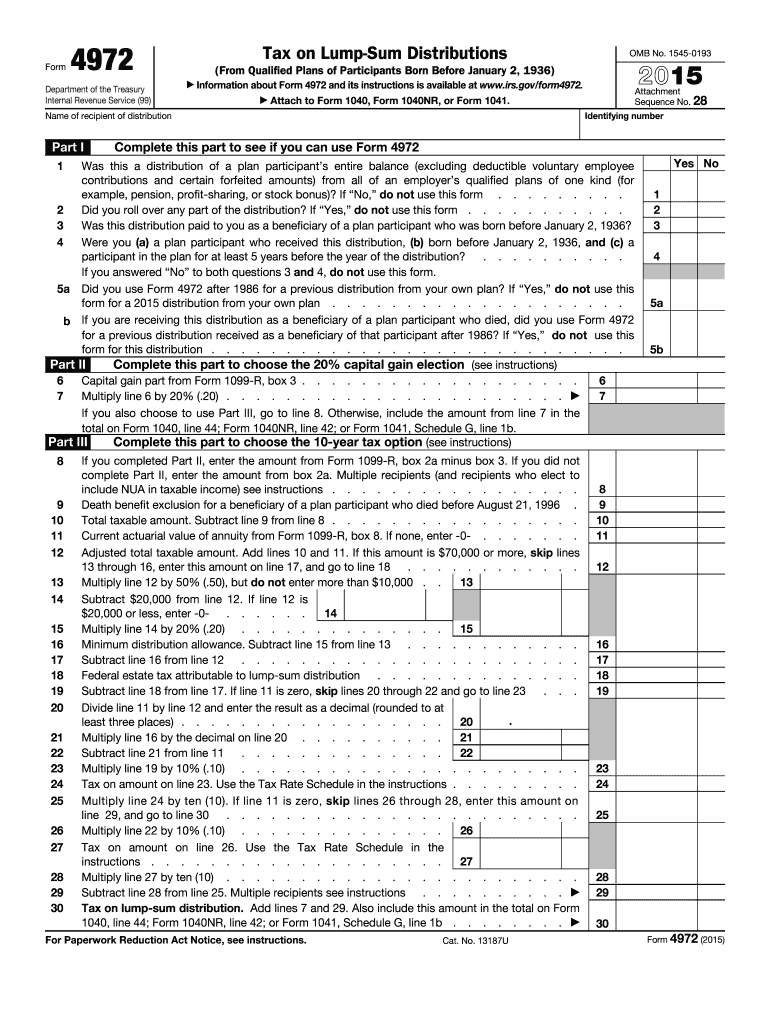
Ot enter more than $10,000 . . 13 Subtract $20,000 from line 12. If line 12 is $20,000 or less, enter -0. . . . . . 14 Multiply line 14 by 20% (.20) . . . . . . . . . . . . . . 15 Minimum distribution allowance. Subtract line 15 from line 13 . . . . . . . . . . . . Subtract line 16 from line 12 . . . . . . . . . . . . . . . . . . . . . . . Federal estate tax attributable to lump-sum distribution . . . . . . . . . . . . . . Subtract line 18 from line 17. If line 11 is zero, skip lines 20 through.
Loading

Open form follow the instructions

Easily sign the form with your finger

Send filled & signed form or save
How to fill out the IRS 4972 online
Filling out the IRS Form 4972 is essential for individuals receiving lump-sum distributions from qualified plans, especially if they are eligible for special tax treatments. This guide will provide a clear and comprehensive process for completing this form online.
Follow the steps to effectively complete the IRS 4972 online.
- Use the ‘Get Form’ button to obtain Form 4972 and open it in your editing tool.
- At the top of Form 4972, enter the name and identifying number of the recipient of the distribution. Ensure you provide accurate personal information to avoid processing delays.
- Complete Part I to determine eligibility for using Form 4972. Answer the questions on the form as 'Yes' or 'No' regarding the distribution circumstances.
- If eligible, move to Part II where you will calculate the capital gain portion. Follow the instructions carefully to fill in the amounts based on your Form 1099-R, particularly focusing on line 6.
- Next, complete Part III if you opt to use the 10-year tax option. Fill out the relevant lines, ensuring you accurately report on the distribution amounts as provided in your Form 1099-R.
- Review all filled sections for accuracy. Double-check calculations and ensure all information is correctly entered before finalizing your form.
- Once you have completed all parts of the form, you can save changes, download, print, or share the form as required for submission.
Start filling out your IRS 4972 form online today to ensure you meet tax obligations accurately and timely.
Experience a faster way to fill out and sign forms on the web. Access the most extensive library of templates available.
Related content
Apr 29, 2025 — Use this form to figure the tax on a qualified lump-sum distribution...
In the case of any qualified employer plan, there is hereby imposed a tax equal to 10...
Jan 4, 2017 — This publication discusses the tax treatment of distribu- tions you...
Get answers to your most pressing questions about US Legal Forms API.
What triggers a lump sum distribution?
Several events can trigger a lump-sum distribution, such as retirement, reaching a specific age, or an account holder's death. Understanding these triggers is essential so you can prepare for the financial implications and tax responsibilities that may follow. Knowledge of IRS 4972 is vital for navigating these situations successfully.
Who gets lump sum payments?
Lump-sum payments are generally issued to individuals who have accrued benefits from retirement plans, typically retirees, disabled individuals, or beneficiaries after a plan holder’s death. These payments can provide financial relief or a means for financial planning. Being aware of IRS 4972 will help ensure you manage tax implications effectively.
What is the IRS form 4972 used for?
The IRS Form 4972 is used to report lump-sum distributions from retirement plans, specifically to calculate the tax on those distributions. By using this form accurately, you can potentially lower your tax rate if you qualify under specific provisions. Understanding its purpose is critical for anyone impacted by IRS 4972.
How many years before IRS debt is written off?
IRS debt can be written off after a period typically known as the statute of limitations, which is usually 10 years from the date the tax was assessed. However, this can vary based on individual circumstances and specific situations like bankruptcy. To navigate the complexities surrounding IRS 4972 and tax debt, seeking professional advice is recommended.
What qualifies as a lump sum distribution?
sum distribution can occur when you withdraw your entire balance from a qualified retirement account in a single payment. This typically happens during retirement, disability, or death. Understanding how the IRS 4972 affects these distributions can help you manage the associated tax obligations.
Does the IRS forgive taxes after 10 years?
The IRS does not automatically forgive taxes after 10 years; however, they may eliminate some tax debts in specific circumstances, such as through the Offer in Compromise program. To benefit from any provisions related to the IRS 4972, it’s advisable to consult a tax professional to understand the best course of action for your situation.
Who is eligible for lump sum?
Eligibility for lump-sum payments typically includes retirees, disabled individuals, and beneficiaries of deceased plan holders. Each of these situations can trigger special tax considerations under the IRS 4972. Therefore, it's essential to evaluate your specific circumstances when determining eligibility.
Who qualifies for lump-sum distribution?
Individuals who have retired, become disabled, or passed away generally qualify for a lump-sum distribution. Also, if you are receiving a distribution from a qualified retirement plan, such as a 401(k), you may qualify under specific rules. Understanding the IRS 4972 is crucial as it helps you navigate tax implications on these distributions.
What is the internal revenue code for qualified charitable distribution?
The Internal Revenue Code section that addresses qualified charitable distribution is Section 408(d)(8). This allows individuals with IRA accounts aged 70½ and older to make direct transfers to charity without incurring tax. Such distributions can efficiently meet minimum distribution requirements while supporting charitable causes.
What income is taxable under the Internal Revenue Code?
Taxable income under the Internal Revenue Code includes wages, salaries, bonuses, rental income, investment gains, and also certain retirement distributions. Almost all forms of income must be reported unless specifically exempted by tax law. Understanding what constitutes taxable income is crucial for effective tax planning.
Use professional pre-built templates to fill in and sign documents online faster. Get access to thousands of forms.
If you believe that this page should be taken down, please follow our DMCA take down process here.
This form is available in several versions. Select the version you need from the drop-down list below.