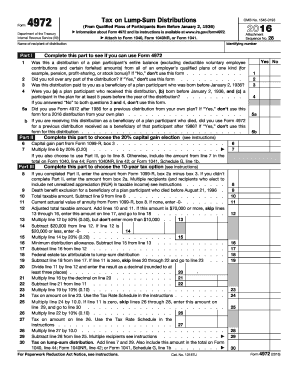
Hrough 16, enter this amount on line 17, and go to line 18 . . . . . . . . . . . . Multiply line 12 by 50% (0.50), but don't enter more than $10,000 . . 13 Subtract $20,000 from line 12. If line 12 is $20,000 or less, enter -0. . . . . . 14 Multiply line 14 by 20% (0.20) . . . . . . . . . . . . . . 15 Minimum distribution allowance. Subtract line 15 from line 13 . . . . . . . . . . . . Subtract line 16 from line 12 . . . . . . . . . . . . . . . . . . . . . . . Federal estate tax attributable to.

How it works
  • Open form

    Open form follow the instructions

  • Easily sign form

    Easily sign the form with your finger

  • Share form

    Send filled & signed form or save

How to fill out the IRS 4972 online

Filling out IRS Form 4972 can seem daunting, but this guide is here to simplify the process for you. This form is used to calculate the tax on lump-sum distributions from qualified plans for participants born before January 2, 1936.

Follow the steps to successfully complete the IRS 4972 form online

  1. Click ‘Get Form’ button to obtain the form and open it for editing.
  2. At the top of Form 4972, fill in your name and identifying number as the recipient of the distribution. If you received distributions for multiple participants, you will need to file separate forms for each.

Get started on filling out your IRS 4972 form online today!

Get form

Experience a faster way to fill out and sign forms on the web. Access the most extensive library of templates available.

Related content

About Form 4972, Tax on Lump-Sum Distributions

Apr 29, 2025 — Use this form to figure the tax on a qualified lump-sum distribution...

Learn more
26 U.S. Code § 4972 - Tax on nondeductible...

In the case of any qualified employer plan, there is hereby imposed a tax equal to 10...

Learn more
2016 Publication 575

Jan 4, 2017 — This publication discusses the tax treatment of distribu- tions you...

Learn more
Questions & Answers

Get answers to your most pressing questions about US Legal Forms API.

Contact support

What is the IRS Code 4972?

IRS Code 4972 provides the tax guidelines for reporting lump-sum distributions from retirement plans. This code outlines how to calculate the tax owed and identifies the necessary filings that individuals must complete. Understanding the implications of IRS 4972 can help in managing your taxes effectively when you receive these distributions.

Several factors can trigger a lump sum distribution, including reaching retirement age, voluntary withdrawal from a plan, or plan termination. Additionally, when an employee ceases employment or becomes disabled, they may also trigger this distribution. It's essential to be aware of these triggers to make timely and informed decisions.

Eligibility for lump sum payments primarily depends on your vested status in the retirement plan. Generally, those who have retired, disabled individuals, or beneficiaries of deceased individuals are eligible. Understanding your vested rights can assist you in navigating the complexities involved in an IRS 4972 filing.

Individuals who are plan participants and have reached a certain age or status, such as retirement or disability, typically qualify for lump-sum distributions. Additionally, beneficiaries of deceased plan participants may also be eligible. Be sure to check your retirement plan's specific rules to confirm your eligibility.

The amount of tax taken from a lump-sum payout can vary based on your total income, tax bracket, and any deductions you may have. Generally, lump sum distributions are taxed as ordinary income, which can be significant under IRS 4972. Consulting a tax professional on this matter is highly advisable to optimize your tax situation.

Lump sum payments are available to individuals who have retired, become disabled, or passed away while covered by a retirement plan. Eligible beneficiaries usually include former employees and their dependents. Therefore, if you have a vested interest in a retirement plan, you may qualify to receive a lump sum payment.

A lump sum distribution involves the complete payout of a retirement plan balance in a single transaction. This distribution generally includes all of your vested amounts from a qualified plan. Knowing the specifics of what constitutes a lump sum can help you understand your tax liabilities under IRS 4972.

Individuals who receive a lump sum distribution from a qualified retirement plan typically file IRS Form 4972. This form is specifically for reporting the tax on lump sum distributions. If you're managing a pension plan or retirement fund, you may need to fill out this form to accurately report your financial information to the IRS.

IRS form 4972 is specifically used to report the special tax on lump-sum distributions received from qualified plans. This form allows individuals to detail their taxable amounts and determine their tax liability based on IRS 4972 guidelines. Knowing how to fill out this form accurately is crucial in ensuring compliance and minimizing tax owed.

Form 4972 must be filed by individuals who receive a lump-sum distribution from retirement plans. This form is particularly important if you want to report and potentially reduce your tax on this distribution. If you are uncertain about your requirements with IRS 4972, seeking advice from tax experts can be beneficial.

Get This Form Now!

Use professional pre-built templates to fill in and sign documents online faster. Get access to thousands of forms.

If you believe that this page should be taken down, please follow our DMCA take down process here.

IRS 4972 Form

This form is available in several versions. Select the version you need from the drop-down list below.

Get IRS 4972