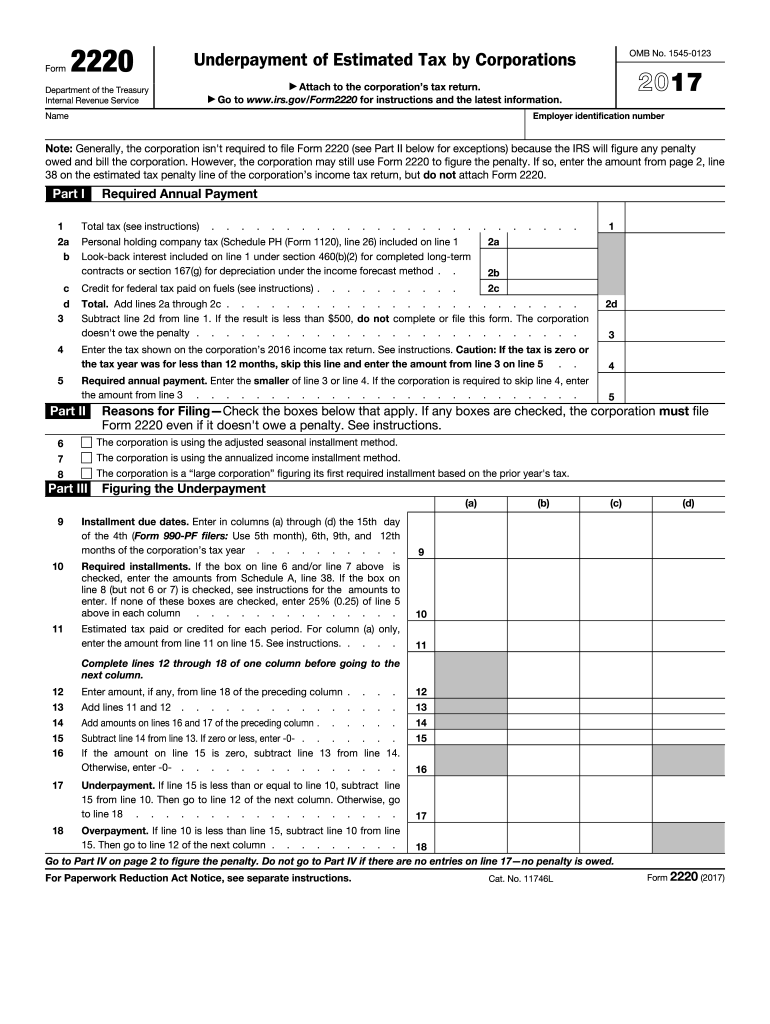
O the next column. 12 Enter amount, if any, from line 18 of the preceding column . . . . 12 13 Add lines 11 and 12 . . . 13 14 15 16 Add amounts on lines 16 and 17 of the preceding column Subtract line 14 from line 13. If zero or less, enter -0- . If the amount on line 15 is zero, subtract line Otherwise, enter -0- . . . . . . . . . 17 Underpayment. If line 15 is less than or equal to line 10, subtract line 15 from line 10. Then go to line 12 of the next column. Otherwise, go to l.
Loading

Open form follow the instructions

Easily sign the form with your finger

Send filled & signed form or save
How to fill out the IRS 2220 online
The IRS 2220 form is essential for corporations to report any underpayment of estimated tax. This guide provides step-by-step instructions to help users accurately complete the form online, ensuring compliance and minimizing potential penalties.
Follow the steps to fill out the IRS 2220 form effectively.
- Click ‘Get Form’ button to access the IRS 2220 form and open it in your editor.
- Complete the employer identification number and corporation name fields at the top of the form.
- In Part I, calculate the required annual payment. Start by entering the total tax from line 1, and then include any additional details requested in lines 2a through 2d.
- Proceed to Part II. Indicate if the corporation is using any special methods like adjusted seasonal installment or annualized income installment. Check the appropriate boxes as needed.
- In Part III, enter the installment due dates and required installments. Input the estimated tax paid for each installment period.
- Continue through the lines in Part III, calculating the underpayment or overpayment as instructed. Make sure to follow the steps methodically for accuracy.
- Move to Part IV to figure the penalty associated with any underpayment. Carefully complete each line required for the penalty calculation.
- After completing the form, review all entries for accuracy. Save your changes and consider downloading, printing, or sharing the completed form as needed.
Complete your IRS 2220 form online today to ensure accurate tax reporting.
Experience a faster way to fill out and sign forms on the web. Access the most extensive library of templates available.
Related content
Nov 26, 2024 — Information about Form 2220, Underpayment of Estimated Tax By...
The IRS will figure any penalty owed and bill the corporation. If the corporation does not...
Jan 31, 2012 — If Form 2220 is attached, check the box worksheet to figure the tax...
Get answers to your most pressing questions about US Legal Forms API.
Who qualifies for IRS penalty forgiveness?
IRS penalty forgiveness may be available for individuals or businesses that can show reasonable cause for failing to comply with tax obligations. This includes those who have experienced difficult circumstances, such as serious illness or natural disasters. Understanding the IRS 2220 criteria can assist you in applying for this type of forgiveness effectively.
What triggers an IRS audit on a S Corp?
An IRS audit on an S Corporation can be triggered by various factors, including discrepancies in reported income and deductions. Significant changes in financial performance or patterns compared to previous years can also spark audits. It's crucial to maintain clear records and follow IRS 2220 guidelines to minimize audit risks.
What is form 2220 used for?
Form 2220 is used to calculate the penalty for underpayment of estimated tax. It helps you report your underpayment accurately and provides a clear picture of your tax obligations. Using the IRS 2220 form properly can prevent unnecessary penalties and ensure compliance.
Is form 2220 required?
Form 2220 is required if you owe a penalty for underpayment of estimated tax. Your tax liability determines whether this form applies to you. By understanding the IRS 2220 guidelines, you can ensure compliance and avoid costly penalties.
What qualifies as a large corporation?
A large corporation is generally defined as one that has a gross receipt of $10 million or more in any taxable year. These corporations are subject to specific tax regulations, including the IRS 2220 rules. Understanding this classification can help you manage your tax obligations more effectively.
How do I know if the IRS received my estimated tax payment?
You can confirm if the IRS received your estimated tax payment by checking your IRS account online. The IRS updates your account information regularly, which includes recorded payments. If you sent your payment via certified mail, you could also use the delivery confirmation as verification. Staying informed about your status helps you adhere to IRS 2220 guidelines.
Should you send estimated tax payments by certified mail?
Sending your estimated tax payments by certified mail is a smart choice if you're concerned about proof of delivery. Certified mail provides you with a receipt, ensuring you have evidence your payment reached the IRS. This is particularly helpful if you are filing Form 2220, as it shows your commitment to fulfilling tax obligations. However, for immediate confirmation, consider electronic methods as well.
Who qualifies for the IRS forgiveness program?
The IRS forgiveness program generally applies to taxpayers who can show reasonable cause for underpayment or timely filing mistakes. Individuals facing circumstances beyond their control may qualify for relief, potentially including those affected by natural disasters or significant health crises. Reviewing IRS Form 2220 can help you determine your eligibility and how to apply for this relief effectively.
What is Form 2210 used for?
Form 2210 is used to calculate whether you owe a penalty for underpayment of estimated tax. Unlike IRS Form 2220, which is focused on corporate taxpayers, Form 2210 is tailored for individuals and smaller entities. Using either form helps you understand your tax obligations and manage your payments to avoid penalties.
What is IRS Form 2220?
IRS Form 2220 is a form specifically designed for corporate and other tax filers to calculate their underpayment penalties. It allows taxpayers to determine whether they owe a penalty for underpayment based on their total tax liability. Using this form can clarify your payment responsibilities and support your request for penalty waivers if applicable.
Use professional pre-built templates to fill in and sign documents online faster. Get access to thousands of forms.
If you believe that this page should be taken down, please follow our DMCA take down process here.
This form is available in several versions. Select the version you need from the drop-down list below.