And add line 3. LINES 5 & 6: NET PROFITS/NET LOSSES FROM BUSINESS: Use line 5 for profit and line 6 for loss. Documentation Required: 1099(s), PA schedules C, E, F, or K-1 must be enclosed (legible photocopies are accepted). Rule: A taxpayer may NOT offset a business loss against wages and other compensation (W-2 earnings -- line 1). "Passthrough" income from an S-Corporation is NOT taxable and loss is not deductible. A taxpayer may offset a loss from one business entity against a .

How it works
  • Open form

    Open form follow the instructions

  • Easily sign form

    Easily sign the form with your finger

  • Share form

    Send filled & signed form or save

How to fill out the PA DCED CLGS-32-1 online

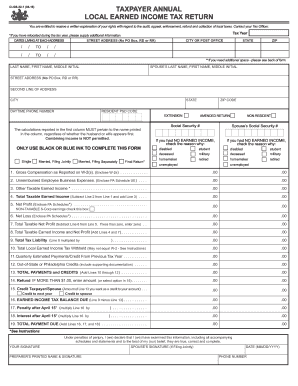
Filling out the PA DCED CLGS-32-1 form online is essential for accurately reporting your local earned income tax. This guide offers a step-by-step approach to assist users in completing the form effectively, ensuring all necessary sections and fields are understood.

Follow the steps to complete the PA DCED CLGS-32-1 online.

  1. Click the ‘Get Form’ button to access the PA DCED CLGS-32-1 form and open it for editing.
  2. Begin by entering your tax year at the top of the form. This indicates the reporting period for your local earned income tax.
  3. In the section for your address, provide the street address without using a P.O. box. Include city, state, and zip code.
  4. If you have changed your residence during the tax year, list the dates for living at each address. You may need to provide additional information if there are multiple addresses.
  5. Enter your name and the name of your spouse, if applicable. Ensure that all names are recorded accurately, including the first name, last name, and middle initial.
  6. Fill in the daytime phone number for contact purposes and ensure that the Resident PSD code is also entered.
  7. Indicate whether this is an amended return and provide the Social Security number corresponding to each name listed.
  8. Complete the income section by reporting gross compensation as indicated on your W-2 forms. Remember to enclose the W-2s when submitting the form.
  9. Input any unreimbursed employee business expenses and attach the necessary documentation such as the PA Schedule UE.
  10. Continue through the income calculations by detailing other taxable earned income. Make sure that all amounts are correctly totaled.
  11. Calculate your total tax liability by following the lines provided in the form and ensuring all additions and subtractions are accurate.
  12. Once all calculations are completed, review the payments and credits section and accurately record the total payments and credits.
  13. Lastly, sign the form, as well as have your spouse sign if filing jointly. Include the date and preparer’s information if applicable.
  14. After completing the form, you can save the changes made, download a copy for your records, print it, or share it as needed.

Complete your PA DCED CLGS-32-1 form online today to ensure timely and accurate filing.

Get form

Experience a faster way to fill out and sign forms on the web. Access the most extensive library of templates available.

Related content

Taxpayer Annual Local Earned Income Tax Return...

The mission of the Department of Community and Economic Development (DCED) is to foster...

Learn more
RESIDENCY CERTIFICATION FORM Local Earned Income...

TO EMPLOYERS/TAXPAYERS: This form is to be used by employers and taxpayers to report...

Learn more
Questions & Answers

Get answers to your most pressing questions about US Legal Forms API.

Contact support

What happens if I forgot to file local taxes in PA?

Forgetting to file local taxes in Pennsylvania can result in penalties and interest on any unpaid tax balance. It is essential to file your tax return regardless of the delay. Look into the PA DCED CLGS-32-1 for further guidance on corrective actions. For assistance in completing your filings, uslegalforms offers valuable tools to support you.

Determining if you owe PA local taxes involves reviewing your income sources and the local tax rates applicable to your area. Generally, if you reside or earn income within Pennsylvania, you are liable for local taxes. Utilize the PA DCED CLGS-32-1 for detailed tax obligations and rates. To clarify your status easily, uslegalforms can be a helpful resource.

To file an amended tax return in Pennsylvania, complete the PA-40X form to report changes to your initially filed return. This form allows you to correct errors and address any new deductions or changes in income. The PA DCED CLGS-32-1 can guide you through specific requirements for amendments. Uslegalforms provides templates to facilitate this process.

If you overlook filing your taxes, it's important to act quickly. File your return as soon as you realize the mistake to minimize potential penalties. The PA DCED CLGS-32-1 can help you understand your obligations moving forward. For assistance, uslegalforms offers resources to navigate this situation effectively.

In Pennsylvania, local earned income tax applies to wages, salaries, commissions, and any other compensation for services. This also includes self-employment income and profits derived from partnerships or corporations. It's essential to understand these tax liabilities to ensure accurate reporting. Refer to the PA DCED CLGS-32-1 form for comprehensive guidance.

The typical deadline for filing local taxes in Pennsylvania is April 15 for most taxpayers. However, it can vary based on specific local regulations. Adhering to deadlines is crucial to avoid late fees and penalties. For further clarity on the PA DCED CLGS-32-1 requirements, consult uslegalforms.

As a non-resident of Pennsylvania, you should file the PA-40 form. This form allows you to report only the income earned in PA, simplifying your tax obligations. The PA DCED CLGS-32-1 can provide additional insights into your filing responsibilities. Consider leveraging platforms like uslegalforms for streamlined processing.

Yes, if you earn income within Pennsylvania, you are required to file a local tax return. This stipulation is crucial, as failing to do so can lead to penalties. The PA DCED CLGS-32-1 form serves as a guide, helping you understand your filing obligations. Stay compliant to avoid potential issues.

The PA 32 form is officially known as the PA DCED CLGS-32-1, which is essential for reporting inheritance tax for estates in Pennsylvania. This form must be completed to provide the state with necessary financial details related to the deceased's estate. Utilizing uslegalforms can help streamline the process of obtaining and filling out this form.

Schedule C on the PA inheritance tax return, attached to the PA DCED CLGS-32-1, covers the details surrounding the estate's debts and expenses. This schedule is important for accurately determining the net value of the estate, which influences the inheritance tax calculation. By properly reporting debts, you can reduce the taxable estate amount.

Get This Form Now!

Use professional pre-built templates to fill in and sign documents online faster. Get access to thousands of forms.

If you believe that this page should be taken down, please follow our DMCA take down process here.

Get PA DCED CLGS-32-1