Loading

Open form follow the instructions

Easily sign the form with your finger

Send filled & signed form or save
How to fill out the IRS Instruction 706 online
Filling out the IRS Instruction 706 accurately is crucial for reporting the estate tax owed by the decedent’s estate. This guide provides a comprehensive overview of the steps involved in completing the form online, ensuring you understand each section and field.
Follow the steps to successfully complete the IRS Instruction 706.
- Click ‘Get Form’ button to obtain the form and open it in the editor.
- Fill in the decedent’s information at the beginning of the form, including their name, social security number, and date of death.
- In Part 1, provide details about the executor of the estate, ensuring all necessary contact information is included.
- Move to Part 2 to compute the tax by adding up the gross estate, taxable gifts, and any deductions that may apply.
- In Part 3, make elections by the executor, such as choosing the alternate valuation date if applicable.
- Complete Parts 4 to 6 by providing general information, claiming the portability of the deceased spousal unused exclusion amount if applicable, and verifying that all required documentation is attached.
- Proceed to the schedules (A through R) and fill them out based on the decedent’s assets, debts, and other relevant information.
- Once all sections are complete, review your entries to ensure accuracy and make any necessary adjustments.
- Save changes, download, print, or share the form as needed to comply with filing requirements.
Start filling out the IRS Instruction 706 online today to ensure compliance and smooth processing!
Experience a faster way to fill out and sign forms on the web. Access the most extensive library of templates available.
Related content
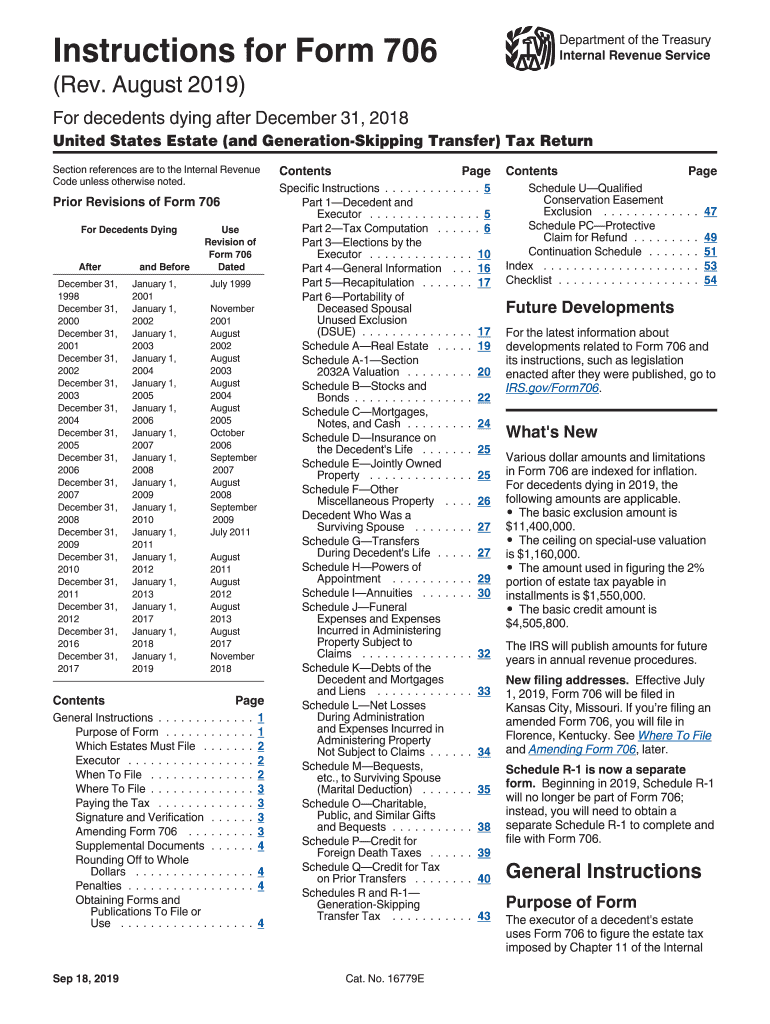
The executor of a decedent's estate uses Form 706 to figure the estate tax imposed by...
8. If decedent died testate, check here ▷ and attach a certified copy of the will. 9 If...
securities. instructions for Schedule B of Form 706. For stocks: Also attach any appraisal...
Get answers to your most pressing questions about US Legal Forms API.
What does IRS Code 706 mean?
IRS Code 706 refers specifically to the estate tax provisions tied to form 706. This code outlines the requirements and guidelines for calculating estate taxes. Familiarizing yourself with IRS Instruction 706 can help you understand how this code affects your estate obligations.
What is 706 for?
Form 706 is primarily used to report the estate tax owed to the IRS following a person’s death. This form ensures that estates are correctly assessed for tax liability. Utilizing resources like IRS Instruction 706 can streamline the process and help you avoid common mistakes.
Do I have to report the sale of inherited property to the IRS?
Yes, you must report the sale of inherited property to the IRS if you sell it for a gain. While the inherited property may not be subject to capital gains tax, any profit made from the sale must be reported. Referring to IRS Instruction 706 can guide you on how to properly report this transaction.
What does code 706 mean on an IRS transcript?
Code 706 on an IRS transcript indicates that a form 706 has been filed for estate tax purposes. This code helps both the taxpayer and the IRS keep track of estate tax filings. Understanding the implications of this code can aid you in effective estate management.
Who is required to file IRS form 706?
Individuals responsible for managing an estate are required to file IRS form 706 if the gross estate exceeds the federal exemption threshold. This includes executors and administrators of estates. If you're unsure about your obligations, consulting IRS Instruction 706 can clarify when you need to file.
What is 706 requirement?
The 706 requirement refers to the necessity of filing IRS Form 706 when an estate's value exceeds the exemption limit. This requirement ensures that estates comply with federal estate tax laws. Reviewing IRS Instruction 706 will help you understand these requirements better and avoid potential penalties.
How long does it take for the IRS to review a 706?
The IRS typically takes about six months to review a form 706. However, this timeline may vary based on the complexity of the estate and the completeness of the submitted information. Promptly submitting your form can help expedite the process and ensure your estate is handled efficiently.
What triggers a form 706?
A form 706 is triggered when an estate exceeds the exemption limit set by the IRS. This threshold generally applies to estates valued over a certain amount at the time of death. If you believe your estate exceeds this limit, it is vital to review IRS Instruction 706 to ensure compliance with estate tax requirements.
Who prepares form 706?
Form 706 is typically prepared by the executor or administrator of an estate. This individual may also seek assistance from a tax professional or an attorney experienced in estate tax matters. Ensuring accuracy on IRS Instruction 706 is crucial for compliance and avoiding penalties.
Can you get IRS forms at the post office?
Most post offices do not carry IRS forms, as they tend to be available primarily through the IRS website or offices. However, some larger post offices might stock a few essential forms during tax season. For IRS Instruction 706, your best bet remains the IRS online portal.
Use professional pre-built templates to fill in and sign documents online faster. Get access to thousands of forms.
If you believe that this page should be taken down, please follow our DMCA take down process here.
This form is available in several versions. Select the version you need from the drop-down list below.