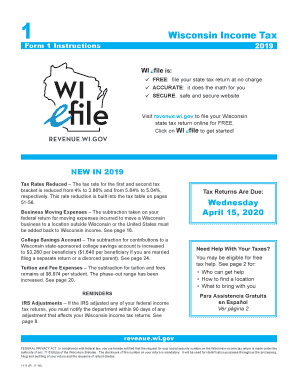
E years beginning on or after January 1, 2018. As a result of the new law, tax-option (S) corporations may now elect to be taxed at the entity level pursuant to sec. 71.365(4m)(a), Wis. Stats. If the tax-option (S) corporation makes this election, box 3 in Part B of Schedule 5K-1 will be checked. Shareholders of an electing tax-option (S) corporation do not report any items of income, gain, loss, or deduction reported on the Schedule 5K-1. Most items of income, gain, loss, or deduction reported.
Open form follow the instructions
Easily sign the form with your finger
Send filled & signed form or save
How to fill out the WI I-111 online
Filling out the WI I-111 online can streamline your tax filing process and ensure that you submit accurate information. This guide will walk you through each section of the form, providing clear, step-by-step instructions tailored to your needs.
Follow the steps to efficiently complete the WI I-111 form online.
- Click the ‘Get Form’ button to obtain the form and open it in the editor.
- Enter your name and address in the designated fields at the top of the form. Ensure that you include all necessary information, such as apartment number if applicable.
- Fill in your Social Security number and your spouse's number if you are filing jointly. This information is essential for proper identification.
- Select the appropriate filing status that applies to you from the available options, such as single, married filing jointly, or head of household.
- Report your federal adjusted gross income by referencing your federal return. Use the amounts specifically required for Wisconsin tax purposes, as some federal laws may differ.
- Complete the addition and subtraction sections as necessary, using any applicable credits or deductions.
- Carefully review the tax table to determine your taxable amount and subsequently calculate your tax based on the given rate.
- Indicate any taxable refunds from state or local taxes and include any additional credits for charitable contributions or other deductions.
- At the conclusion of the form, ensure that you verify all entered information for accuracy before saving.
- Save changes, and choose to download, print, or share the completed form as needed.
Start filling out your documents online today to ensure timely submission and avoid any potential delays!
Experience a faster way to fill out and sign forms on the web. Access the most extensive library of templates available.
Related content
Dec 31, 2024 — It will be used for identification purposes throughout the processing...
Dec 31, 2019 — It will be used for identification purposes throughout the processing...
Wi-Fi, Impressão Wi-Fi Direct, NFC e impressão BLE permitem que dispositivos...
Get answers to your most pressing questions about US Legal Forms API.
Does Wisconsin tax social security?
In Wisconsin, Social Security benefits are not subject to state income tax, which is a relief for many residents. However, it is essential to consider other income sources when assessing your overall tax situation. By understanding these specifics related to WI I-111, you can better plan for your tax obligations and possibly utilize tax forms offered by uslegalforms for smooth filing.
What is the minimum income to file taxes in Wisconsin?
The minimum income to file taxes in Wisconsin depends on various factors, including your filing status and age. Generally, if a single filer earns over $12,400 in gross income, they must file a tax return. Understanding these thresholds can help you determine your obligations and ensure compliance with the state’s tax laws as detailed in WI I-111.
Is there a standard deduction for Wisconsin state income tax?
Wisconsin offers a standard deduction for state income tax, which can help reduce your taxable income significantly. For taxpayers filing in WI I-111, this deduction varies based on filing status, ranging from $12,120 for single filers to higher amounts for married couples. Be sure to take advantage of this deduction when preparing your taxes.
Do dependents need to report income?
Yes, dependents must report their income if it exceeds certain thresholds established by the IRS and state regulations. For tax purposes, any income received by a dependent must be accounted for, especially if they surpass the minimum filing requirements outlined in WI I-111. This reporting can impact your overall tax situation, so staying informed is vital.
What is the minimum filing requirement for income in Wisconsin for a dependent?
In Wisconsin, the minimum filing requirement for a dependent varies based on their type of income. Typically, if a dependent earns more than $1,100 in unearned income or more than $12,400 in earned income, they must file a return. Therefore, it's important to keep track of your dependents’ income to ensure compliance with the regulations outlined in WI I-111.
What is the minimum income to claim a dependent?
To claim a dependent in WI I-111, you must meet certain income requirements. For tax purposes, a dependent must generally have a gross income that is less than the exemption amount specified by the IRS. In 2023, this amount is set at $4,400. This means that if your dependent's income exceeds this figure, you may not be able to claim them.
What states have e-file authorization forms?
Many states across the U.S. offer e-file authorization forms, including California, New York, and Texas. Each state has unique requirements and guidelines, so it's important to review these thoroughly. If you are navigating the tax filing process across state lines, the WI I-111 will provide insights on how Wisconsin's e-file system compares to those in other states.
Does Wisconsin have a state withholding form?
Yes, Wisconsin provides a state withholding form, which is crucial for employers to report employee wage withholding. This form helps ensure that the proper amount of state taxes is withheld from wages throughout the year. Employers and employees can refer to the WI I-111 for guidance on how to complete their state withholding requirements.
What is the form to authorize efile?
To authorize e-file for your Wisconsin tax return, you need to complete the e-file authorization form available on the Wisconsin Department of Revenue's website. This form designates your tax preparer to file your return electronically for you, streamlining the entire process. Refer to the WI I-111 form to understand how this authorization fits into your overall tax filing strategy.
Does Wisconsin have an efile form?
Wisconsin has various e-file forms tailored for different taxpayer situations. Using these forms can make your filing process more efficient and secure. If you’re filing electronically using the WI I-111, ensure that you select the appropriate e-file form specific to your circumstances.
Use professional pre-built templates to fill in and sign documents online faster. Get access to thousands of forms.
If you believe that this page should be taken down, please follow our DMCA take down process here.
This form is available in several versions. Select the version you need from the drop-down list below.