Loading
Get Mi Pca 301a 2017-2026
How it works
-

Open form follow the instructions
-

Easily sign the form with your finger
-

Send filled & signed form or save
How to fill out the MI PCA 301a online
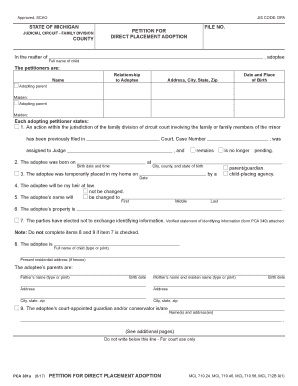
Completing the MI PCA 301a form online is a vital step in the direct placement adoption process in Michigan. This guide offers a detailed walkthrough of each section of the form to help users navigate the application with confidence.
Follow the steps to accurately complete the MI PCA 301a online.
- Click ‘Get Form’ button to obtain the MI PCA 301a and open it in the appropriate online editor.
- Fill in the details regarding the adoptee in the section labeled 'In the matter of.' Include the full name of the child, followed by the related case information.
- Complete the sections titled 'Each adopting petitioner states' by detailing any previous actions filed with the court concerning the family of the minor and including the court case number and assigned judge.
- Indicate the adoptee's birth date and place, along with the date they were temporarily placed in your home.
- Check the appropriate boxes regarding the adoptee's name changes and the related legal considerations.
- Address the consent and identifying information sections. If opting not to exchange identifying information, attach the verified statement of identifying information (form PCA 340) as required.
- Complete personal information for the adoptee's parents and any court-appointed guardians, ensuring that all names and addresses are accurate.
- Review sections about counseling services received and preplacement assessments completed.
- Finalize the document by signing where indicated, including both petitioners and the attorney, if applicable. Ensure all required contact details are provided.
- Once all fields are filled out accurately, save changes to the form. You can download, print, or share the completed MI PCA 301a form as needed.
Start completing the MI PCA 301a online today to facilitate your adoption process.
A small claims court judgment against you is recorded on your credit report. These civil judgments are automatically sent to all three credit bureaus and often result in significant negatives on your credit report.