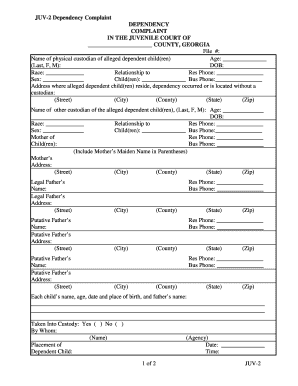
(Last, F, M): DOB: Race: Relationship to Res Phone: Sex: Child(ren): Bus Phone: Address where alleged dependent child(ren) reside, dependency occurred or is located without a custodian: (Street) (City) (County) (State) (Zip) Name of other custodian of the alleged dependent child(ren), (Last, F, M): Age: DOB: Race: Relationship to Res Phone: Sex: Child(ren).
Loading
Open form follow the instructions
Easily sign the form with your finger
Send filled & signed form or save
How to fill out the GA JUV-2 online
The GA JUV-2 form is essential for filing a dependency complaint in the juvenile court. This guide provides a clear, step-by-step approach to completing the form effectively and accurately.
Follow the steps to complete the GA JUV-2 form online.
- Click ‘Get Form’ button to obtain the form and open it in the editor.
- Begin by filling in the county name where the juvenile court is located in the designated space at the top of the form. This ensures that the complaint is directed to the correct jurisdiction.
- Provide the file number if one has been assigned. This helps the court track and reference the case easily.
- Next, enter the name, age, date of birth, race, sex, and relationship to the child(ren) for the physical custodian of the alleged dependent child(ren). Make sure to fill in all requested fields comprehensively.
- Fill out the contact information, including the residential and business phone numbers for the custodian. This is vital for any follow-up communication.
- Repeat the same information for any other custodians of the alleged dependent child(ren), ensuring to include their name, age, date of birth, race, sex, and relationship.
- Provide maternal information by including the mother’s name, her maiden name in parentheses, and her address details.
- Next, fill in the legal father’s name and address, followed by the names and addresses for any putative fathers. Ensure that these details are accurate to avoid any delays.
- List each child’s name, age, date, and place of birth, and identify their father’s name for clarity.
- Indicate whether the child(ren) have been taken into custody and by whom. Include the placement agency and the relevant date and time.
- State the facts of the dependency clearly and concisely in the provided section, ensuring that all necessary details are included.
- If applicable, describe how the child(ren) entered the U.S. and any actions taken to locate the legal parents if their whereabouts are unknown.
- Mark if the child(ren) are subject to the Indian Child Welfare Act, and answer any questions regarding the parents' capability to pay child support.
- Finally, ensure to include your name, signature, contact details, and the date of completion at the bottom of the form.
- Once you have completed all fields, review your entries for accuracy, save your changes, and download or print the form as necessary.
Begin completing the GA JUV-2 online today and ensure all required details are properly documented.
Experience a faster way to fill out and sign forms on the web. Access the most extensive library of templates available.
Related content
JUV-2 Dependency Complaint. DEPENDENCY. COMPLAINT. IN THE JUVENILE COURT OF. MUSCOGEE...
Este módulo, o segundo de uma série de duas partes, aborda considerações e...
by GJ White · 2006 · Cited by 9 — ABSTRACT. We report observations of gaseous methanol...
Get answers to your most pressing questions about US Legal Forms API.
At what age can a juvenile be charged as an adult in Georgia?
Juveniles can be charged as adults in Georgia at the age of 13 for serious offenses such as murder or armed robbery. The decision to prosecute a juvenile as an adult is based on the nature of the offense, reflecting the serious approach Georgia takes regarding juvenile crime. Being informed about these laws is key to navigating situations relating to GA JUV-2.
At what age in Georgia are you considered an adult?
In Georgia, the age of legal adulthood is 17. At this age, individuals gain the full rights and responsibilities of an adult. Understanding when this transition occurs is vital for those involved in the juvenile justice system and matters related to GA JUV-2.
How to become a juvenile probation officer in GA?
To become a juvenile probation officer in Georgia, you typically need a bachelor's degree in criminal justice, social work, or a related field. After completing the educational requirements, you may need to undergo training specific to juvenile justice. Engaging with platforms like uslegalforms can provide essential resources and guidance about the steps involved in pursuing a career in GA JUV-2.
Can a 14 year old refuse visitation in Georgia?
In Georgia, a 14-year-old does have the right to express their views regarding visitation. However, the final decision rests with the court, which considers the child's wishes alongside their best interests. This dynamic is important when discussing rights within the GA JUV-2 framework.
At what age are you no longer considered a juvenile in Georgia?
In Georgia, individuals are generally considered juveniles until they reach the age of 17. Once someone turns 17, they are legally recognized as an adult in most legal situations. This distinction is crucial for understanding the implications of GA JUV-2 and how it affects juvenile justice processing.
Can a 14 year old be charged as an adult in Georgia?
In Georgia, a 14-year-old can potentially face charges as an adult depending on the crime committed. For serious offenses like murder or aggravated assault, this can lead to adult charges under specific conditions. Understanding this aspect of juvenile law helps parents and guardians navigate the complexities associated with GA JUV-2.
What are the steps of juvenile detainment?
The steps of juvenile detainment in Georgia follow a structured process. Initially, law enforcement takes the juvenile into custody if they are accused of a crime. After that, a detention hearing occurs to assess whether the juvenile should remain in custody. Lastly, the juvenile's case goes to court for further proceedings, often exploring rehabilitation options, which is vital in the context of GA JUV-2.
What are the steps of the juvenile justice process?
The juvenile justice process involves distinct steps: referral, intake, diversion, detention, adjudication, disposition, and aftercare. Each step is designed to address the unique needs of minors while promoting rehabilitation. It's essential to understand how these steps interrelate to ensure the best outcomes for young individuals. Utilizing resources like USLegalForms can help you navigate the intricacies of the GA JUV-2 system effectively.
What are the steps in the justice process?
The justice process encompasses a series of steps, including reporting a crime, investigation, arrest, prosecution, trial, and sentencing. Each phase ensures that justice is served while protecting the rights of all parties involved. Familiarizing yourself with these steps is crucial for anyone navigating the system. For those interested in the juvenile aspect, resources focusing on GA JUV-2 provide valuable insights.
What are the 13 steps in the criminal justice decision-making process?
The criminal justice decision-making process consists of 13 steps, starting with the investigation and moving through arrest, charging, arraignment, and trial, concluding with sentencing and appeals. Each step plays a crucial role in determining a defendant's fate, ensuring due process. Understanding these stages can empower individuals to make informed decisions in their cases. When dealing with juvenile matters, this knowledge applies to GA JUV-2 as well.
Use professional pre-built templates to fill in and sign documents online faster. Get access to thousands of forms.
If you believe that this page should be taken down, please follow our DMCA take down process here.