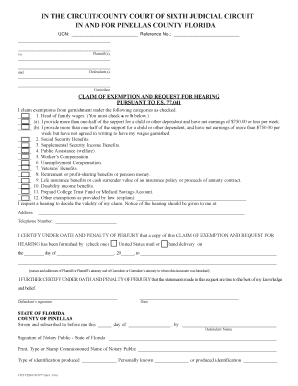
Plaintiff(s), vs. Defendant(s). and Garnishee. CLAIM OF EXEMPTION AND REQUEST FOR HEARING PURSUANT TO F.S. 77.041 I claim exemptions from garnishment under the following categories as checked. 1. Head of family wages. (You must check a or b below.).

How it works
  • Open form

    Open form follow the instructions

  • Easily sign form

    Easily sign the form with your finger

  • Share form

    Send filled & signed form or save

How to fill out the FL CTCIV228/COCIV77 online

This guide provides clear instructions on completing the FL CTCIV228/COCIV77 form, also known as the claim of exemption and request for hearing. Whether you are familiar with legal documents or new to the process, this step-by-step guidance aims to assist you in filling out the form accurately and efficiently online.

Follow the steps to complete the form with ease.

  1. Click the ‘Get Form’ button to access the form and open it in your preferred online format.
  2. Fill in the UCN and Reference Number in the designated fields at the top of the form. Ensure these details are accurate to avoid issues with processing.
  3. In the plaintiff and defendant sections, provide the full names or business names as appropriate. Include any additional relevant parties in the garnishee section.
  4. Check the appropriate categories for your claim of exemption from garnishment. You must specify if you are the head of the family or choose any other relevant exemptions from the listed options.
  5. If you are claiming to be the head of a family, select either option (a) or (b) to indicate your earnings and support responsibilities, ensuring that all information is filled out thoroughly.
  6. Request a hearing by indicating your preferred notice address. Provide your current address and telephone number clearly.
  7. Complete the certification section by checking the method of delivery for the notice and writing the date of delivery. Ensure names and addresses of the involved parties are correct.
  8. Sign and date the document, affirming that the information provided is true to the best of your knowledge. Include a notary section if required, ensuring it's completed accurately.
  9. Review all sections for accuracy and completeness before submitting the form. Save changes, then download or print your completed document for your records.

Act now to fill out your forms online and ensure your claims are properly submitted.

Get form

Experience a faster way to fill out and sign forms on the web. Access the most extensive library of templates available.

Related content

Active Fleet - Federal Transit Administration

77, 2016, 00021, 0021, Whatcom Transportation Authority(WTA), Active ..... 2010, Seattle...

Learn more
Anna Marie Ortiz | Psychology

Full text; Albano, G ;Hodsoll, J ;Kan, C ;Coco, Lo ;Cardi, V "Task-sharing interventions...

Learn more
R20 4067 ... - UserManual.wiki

J fl II II ~, .!.1£B. I I 12 I I ECB FlWCTION: RECORDS STATUS OF AN ~ 1 1 ..... OR = TO...

Learn more
Questions & Answers

Get answers to your most pressing questions about US Legal Forms API.

Contact support

Do I have to file a financial affidavit in Florida?

In many cases, you may need to file a financial affidavit in Florida when claiming an exemption from garnishment. The affidavit helps the court understand your financial situation and influences their decision. Use the FL CTCIV228/COCIV77 form to present accurate information about your income and expenses. This step is essential for a successful claim.

Claiming exemption from garnishment in Florida involves submitting the FL CTCIV228/COCIV77 form to the court. Provide evidence of your financial difficulties, showcasing that the garnishment would cause undue hardship. Ensure you serve a copy to the creditor to properly execute the claim. This process gives you an avenue to protect your income and assets.

To file an appeal for wage garnishment in Florida, start by reviewing the court's decision related to the garnishment. You must submit the appropriate notice of appeal, along with any supporting documents. Follow the procedures outlined for the FL CTCIV228/COCIV77 process. Remember to adhere to deadlines, as appeals are time-sensitive.

To fill out a wage garnishment exemption, refer to the FL CTCIV228/COCIV77 form. Begin by accurately listing your income sources, monthly expenses, and any debts you have. Be thorough and honest, as inconsistencies can affect your case. Ensure you sign and date the form before submission to avoid processing delays.

Filing a claim of exemption for wage garnishment in Florida involves using the FL CTCIV228/COCIV77 form. You must provide details regarding your income, expenses, and any dependents. After completing the form, file it with the court and serve it to the creditor. This step ensures that you legally challenge the garnishment based on your financial circumstances.

To stop a wage garnishment immediately in Florida, you can file a claim of exemption under FL CTCIV228/COCIV77. This process allows you to argue why the garnishment should not apply to you. Typically, you should prepare all necessary documentation showing your financial situation. Filing promptly is crucial, as you have a limited time to act.

The head of household exemption for garnishment in Florida allows eligible individuals to keep a significant portion of their wages from being garnished. As stipulated in FL CTCIV228/COCIV77, this exemption recognizes the need to protect family members relying on the head of household for support. By understanding your rights and utilizing resources like USLegalForms, you can navigate these protections effectively.

Proving head of household in Florida typically involves showing that you provide financial support for dependents and have a primary residence for them. To validate your status under FL CTCIV228/COCIV77, you may need to present documentation such as income statements and proof of residency. This evidence helps establish your entitlement to benefits, such as the head of household exemption from garnishment.

To avoid wage garnishment in Florida, you can take proactive steps such as negotiating with your creditors or seeking financial counseling. Understanding your rights under FL CTCIV228/COCIV77 can empower you to challenge any unjust wage garnishment actions. Additionally, using resources from platforms like USLegalForms can guide you through the necessary legal procedures to assert your benefits.

In Florida, the exemption from creditors refers to laws that protect certain assets from being seized by creditors. According to FL CTCIV228/COCIV77, these exemptions include homestead property, personal property, and retirement accounts, among others. This protection helps individuals maintain a minimum standard of living, even when facing financial challenges.

Get This Form Now!

Use professional pre-built templates to fill in and sign documents online faster. Get access to thousands of forms.

If you believe that this page should be taken down, please follow our DMCA take down process here.

Get FL CTCIV228/COCIV77