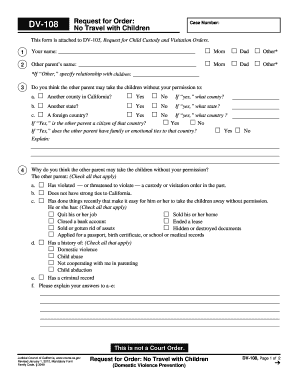
Another county in California? Yes No If yes, what county? b. Another state? Yes No If yes, what state? c. A foreign country? Yes No If yes, what country ? If Yes, is the other parent a citizen of that country? Yes No If Yes, does the other parent have family or emotional ties to that country? Yes Explain: 41 No Why do you think the other parent may take the children without your permission? The other parent: (Check all that apply) a. b. c. d. e. f. H.
Open form follow the instructions
Easily sign the form with your finger
Send filled & signed form or save
How to fill out the CA DV-108 online
Filling out the CA DV-108 form online can be a straightforward process when you have a clear understanding of its components. This guide will walk you through each section of the form, ensuring you can complete it accurately and effectively.
Follow the steps to successfully fill out the CA DV-108 form online.
- Click the ‘Get Form’ button to obtain the form and open it for filling out.
- Begin by entering the case number at the top of the form, as this identifies your specific case.
- In the section labeled 'Your name,' clearly provide your name and choose the appropriate designation (Mom, Dad, Other). If you selected 'Other,' specify your relationship to the children.
- Next, enter the other parent's name following the same format in the 'Other parent’s name' section.
- Answer the questions regarding concerns about the other parent taking the children without permission. Indicate 'Yes' or 'No' for each question while specifying the relevant counties or states where necessary.
- If you suspect that the other parent may take the children, explain your reasoning by checking all applicable options given in the section regarding the other parent's actions and history.
- In the 'What orders do you want?' section, check the boxes that apply to your situation, such as seeking a bond or restrictions on travel.
- Review your completed form for any errors or missing information to ensure accuracy.
- Save changes to the form if needed. You can download or print the form for your records or for submission.
- After obtaining the necessary signatures, ensure to submit your filled form according to your jurisdiction's guidelines.
Complete your CA DV-108 form online today to ensure you meet any necessary requirements.
Experience a faster way to fill out and sign forms on the web. Access the most extensive library of templates available.
Related content
Reasons I Am Afraid of Child Abduction. (In this section, explain to the judge why you...
Marsden, B. G.. Abstract. Publication: Minor Planet Electronic Circulars. Pub Date: March...
Conecte o cabo DV primeiro a outro dispositivo e depois à filmadora. • Conecte o cabo...
Get answers to your most pressing questions about US Legal Forms API.
How long does a domestic violence misdemeanor stay on your record in California?
A domestic violence misdemeanor in California can remain on your record for life unless you take action to have it expunged. Successfully expunging a conviction can restore certain rights and better your prospects. With resources like CA DV-108, you can learn more about the requirements for expungement. It's often advisable to seek legal counsel to assist with this process.
How long does a DV stay on your record in California?
A domestic violence (DV) conviction in California can stay on your record indefinitely, impacting future opportunities. However, individuals might explore options for expungement through the judicial system. Utilizing resources like CA DV-108 can help clarify the steps needed for potential removal from your record. Understanding your legal standing is critical for moving forward.
What is the minimum sentence for domestic violence in California?
In California, the minimum sentence for domestic violence can vary, but it often includes probation and mandatory counseling. Depending on the severity of the incident, some cases may lead to jail time. The CA DV-108 framework provides essential information on legal obligations and potential consequences. Engaging in local support services can also be beneficial for those affected.
Is arguing considered domestic violence?
Arguing can lead to domestic violence if it escalates to threats, physical harm, or emotional abuse. California law defines domestic violence as any behavior that seeks to control or intimidate a partner. Defining the boundaries of acceptable behavior is crucial, and understanding the CA DV-108 can help clarify these distinctions. If you or someone you know is in a challenging situation, seeking legal advice is recommended.
How long does a temporary restraining order stay on your record in California?
A temporary restraining order (TRO) can remain on your record for a duration defined by the court. Typically, after the hearing or expiration of the TRO, it may be possible to remove it from public records. Consulting resources like the CA DV-108 can guide you through the process of clearing your record effectively. It’s important to understand the potential impacts on your personal and professional life.
Do misdemeanors go away after 7 years in California?
In California, misdemeanors do not automatically disappear after seven years. However, individuals can petition for record expungement, which can clear certain misdemeanors from their record. The CA DV-108 process can provide more insights and help you navigate potential pathways for expungement, depending on your situation. It’s wise to consult a legal expert to understand your options.
What are the consequences of a restraining order in California?
In California, a restraining order can restrict your movements and activities. It may prevent you from having contact with the protected person and prohibit you from visiting certain places. Additionally, violations of a restraining order can lead to serious legal consequences, including fines or imprisonment. Understanding the implications of a restraining order and navigating the CA DV-108 process is essential for anyone involved.
How do I get full custody of my child in California?
To obtain full custody of your child in California, you need to follow specific legal steps, including completing the CA DV-108 form. You should clearly demonstrate that full custody serves the child's best interests. After filing, a court hearing will be scheduled where both parents can present evidence and testimonies. This process can be complicated, so consulting an attorney may enhance your chances of success.
How to file for visitation rights in California?
To file for visitation rights in California, start by gathering necessary documents, including the CA DV-108 form. You will need to outline your reasons for requesting visitation and how it benefits the child involved. Once you fill out the form, you can file it with the court, where both parents will have the opportunity to present their cases. Consider seeking assistance from professionals if you find the process overwhelming.
Do you need a lawyer to file for full custody in California?
You do not necessarily need a lawyer to file for full custody in California, but having one can be beneficial. While you can complete the process yourself using the CA DV-108 form, legal representation helps navigate the complexities of custody laws. This ensures that your case is presented effectively and increases the chances of a favorable outcome. It’s essential to weigh your comfort level with legal matters when deciding.
Use professional pre-built templates to fill in and sign documents online faster. Get access to thousands of forms.
If you believe that this page should be taken down, please follow our DMCA take down process here.