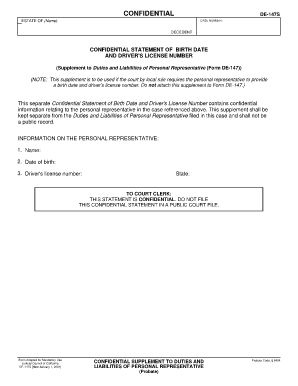
CONFIDENTIAL DE-147S ESTATE OF Name CASE NUMBER DECEDENT AND DRIVER S LICENSE NUMBER Supplement to Duties and Liabilities of Personal Representative Form DE-147 NOTE This supplement is to be used if the court by local rule requires the personal representative to provide a birth date and driver s license number. INFORMATION ON THE PERSONAL REPRESENTATIVE 1. Name 2. Date of birth 3. Driver s license number State TO COURT CLERK THIS STATEMENT IS CONFIDENTIAL. DO NOT FILE Form Adopted for Mandatory .
Open form follow the instructions
Easily sign the form with your finger
Send filled & signed form or save
How to fill out the CA DE-147S online
The CA DE-147S form is a Confidential Statement of Birth Date and Driver's License Number, used as a supplement to the Duties and Liabilities of Personal Representative. This guide will provide clear instructions to assist users in filling out this form online with ease.
Follow the steps to complete the CA DE-147S with confidence.
- Click ‘Get Form’ button to obtain the form and open it in the editor.
- Begin by entering the estate name in the designated field for 'Estate of (Name)'. Ensure that the name is accurate as it will be referenced throughout the document.
- Next, input the case number into the 'Case Number' field. This number is crucial for correctly associating the form with the specific probate case.
- For the section titled 'Decedent,' provide the full name of the decedent associated with the estate. This confirms the individual whose estate is being managed.
- Proceed to fill in the details of the personal representative. This includes their name, date of birth, and driver’s license number in the respective fields. Ensure this information is accurate, as it is required for validation.
- Select the state corresponding to the driver's license of the personal representative from the dropdown menu, ensuring it matches the license provided.
- Review all entered information to confirm its accuracy and completeness. This step is crucial to avoid delays or legal issues.
- Once all sections are filled out correctly, you can save your changes, download, print, or share the form as needed. Remember, this statement is confidential and should not be filed publicly.
Complete your CA DE-147S form online today to ensure your probate process runs smoothly.
Experience a faster way to fill out and sign forms on the web. Access the most extensive library of templates available.
Related content
DE-147S is a confidential supplement for the personal representative's birth date and...
Jan 1, 2016 — Number (Judicial Council Form DE-147S) is also required, pursuant to...
Colbert Fossil Plant is an operating power station of at least 1230-megawatts (MW) in...
Get answers to your most pressing questions about US Legal Forms API.
What is a confidential supplement to duties?
A confidential supplement to duties is a document that outlines specific responsibilities and obligations of the executor or administrator in handling an estate. This document is not public and is used to protect sensitive information while ensuring compliance with court requirements. Accessing resources like CA DE-147S can help ensure that you fill out this supplement accurately and comprehensively.
How to start a Probate case in California?
To start a Probate case in California, you need to file a petition for probate with the appropriate probate court. This petition generally includes the deceased's will, death certificate, and information about the estate. After filing, a court hearing will determine the validity of the will and appoint an executor. For assistance in this process, CA DE-147S can provide valuable templates and guidance.
What is a Petition for Probate and grant of letters testamentary?
A Petition for Probate is a formal request to the court to validate a deceased person's will and initiate the probate process. Once the court approves this petition, it issues letters testamentary, which authorize the executor to manage the estate. Properly completing and submitting the Petition for Probate is crucial, and utilizing CA DE-147S can facilitate this process effectively.
What is an example of testamentary?
An example of testamentary is a will, which outlines how a person's assets should be distributed after their death. Testamentary documents like a will often require validation through a probate court to be enforceable. When filing such documents, CA DE-147S offers essential guidance on ensuring your testamentary instructions are clear and legally sound.
How long do letters of testamentary take?
The timeframe for obtaining letters of testamentary can vary, but it typically takes several weeks. This period involves filing the necessary documents with the probate court and waiting for a hearing date. If there are no complications, the court usually issues the letters shortly after the hearing. To expedite your journey, consider using CA DE-147S for accurate and efficient filing.
How to obtain letters of administration in California?
To obtain letters of administration in California, you must file a petition with the probate court. This petition typically includes information about the deceased’s assets, debts, and potential heirs. After filing, a court hearing will be scheduled, where you must demonstrate that you are qualified to manage the estate. Utilizing resources like CA DE-147S can guide you through the necessary documentation, making the process smoother.
What are the disadvantages of the probate process?
The probate process can be slow and lengthy, often taking several months to complete. It's also public, which means anyone can view the details of your estate. Additionally, there are costs associated with probate, such as court fees, attorney fees, and executor fees, which can reduce the overall value of your estate. Considering these factors, some may view CA DE-147S as an essential tool for simplifying estate management.
What are the duties and liabilities of a personal representative in Probate?
A personal representative has the duty to manage the deceased's estate, which includes gathering assets, paying debts, and distributing property according to the will. They are also liable for their actions, and any mismanagement can result in personal financial responsibility. Completing the CA DE-147S accurately can help define these responsibilities clearly. Additionally, understanding these duties can prevent unnecessary legal complications.
What is the purpose of a letter of testamentary?
A letter of testamentary is an official document issued by the probate court that empowers the executor to act on behalf of the deceased's estate. This letter grants the authority to settle debts, distribute assets, and manage estate affairs according to the will. Utilizing forms such as CA DE-147S can facilitate obtaining these letters smoothly, ensuring you navigate the probate process effectively.
How do you become a personal representative for a deceased person?
To become a personal representative in California, you typically start by being nominated in the deceased person's will, or by petitioning the court if there is no will. You will need to complete and file relevant forms, including the CA DE-147S, which aids in establishing your authority. The court reviews your application, and if approved, grants you the necessary powers to manage the estate. Familiarizing yourself with this process can ensure that you fulfill your role effectively.
Use professional pre-built templates to fill in and sign documents online faster. Get access to thousands of forms.
If you believe that this page should be taken down, please follow our DMCA take down process here.