G (number of days) Has been extended before by the court. The court granted (number of extensions) totaling (number of days) 6 I am not able to stipulate to an extension to file this brief because (check one): The other party is not willing to stipulate to an extension. Other reason (please describe the reason): 7 The reason I need an extension to file this brief is (describe the reason you need an extension; see rule 8.811(b), for the factors the court will consider in deciding whether there.
Loading

Open form follow the instructions

Easily sign the form with your finger

Send filled & signed form or save
How to fill out the CA APP-106 online
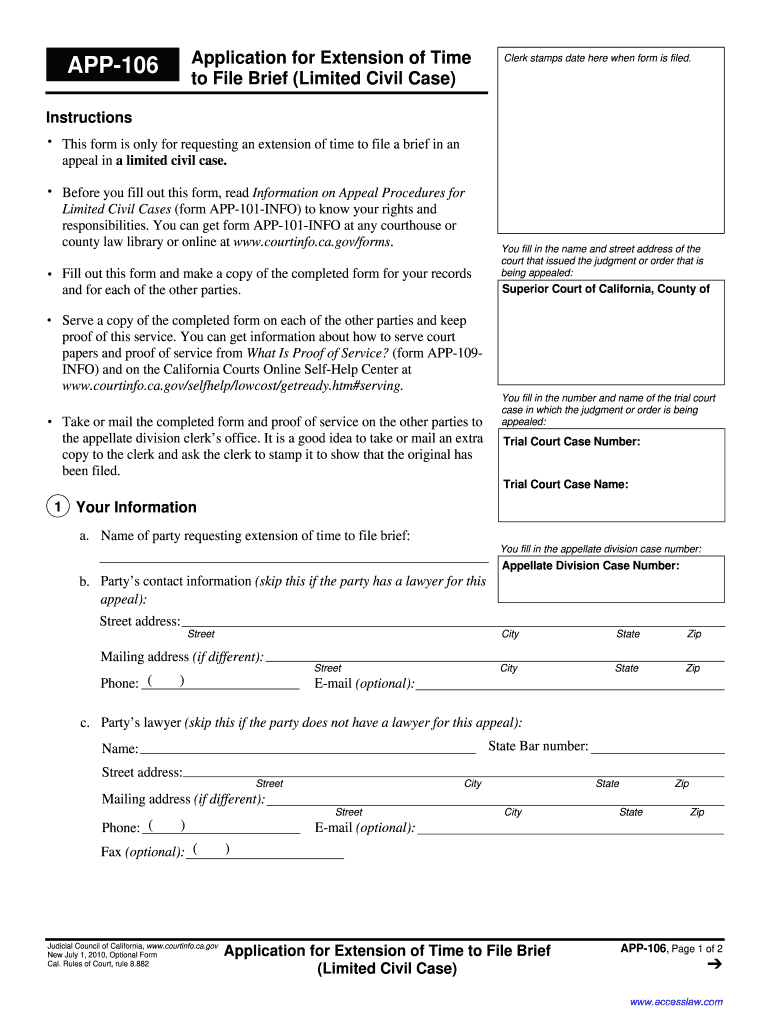
Filling out the CA APP-106 form online is a vital step for individuals seeking an extension of time to file a brief in a limited civil case appeal. This guide will provide a clear, step-by-step approach to ensure you complete the form accurately and efficiently.
Follow the steps to effectively complete the CA APP-106 form.
- Click ‘Get Form’ button to obtain the form and open it in your editor.
- Begin with the court details. Fill in the name and street address of the court that issued the judgment or order being appealed. This information is essential for ensuring that your request is processed correctly.
- Provide your information as the party requesting the extension. Enter your name, contact information (address, phone number), and email address if applicable. If you have a lawyer representing you, fill in their details accordingly.
- Indicate the appellate division case number and the case name related to your appeal by filling in the relevant fields.
- Specify the briefs for which you are requesting an extension. Select from the options provided and complete the due dates for each respective brief.
- Next, provide the new proposed date that you are requesting for the filing of the brief.
- Indicate if you have previously requested extensions and provide the necessary details about past extensions.
- If applicable, explain why you are unable to stipulate to an extension with the other party. This step requires clear documentation of your reasons.
- Describe in detail the reasons necessitating the extension. Reference rule 8.811(b) for the factors that the court considers in addressing your request.
- Complete the final section by certifying that you delivered a copy of this application to your lawyer if applicable. Sign the document and mark the date to validate your submission.
- Once you have filled out all required fields, be sure to save your document, download it for your records, and print a copy if necessary. You should keep proof of service for your own records.
Get started on completing the CA APP-106 form online today.
Experience a faster way to fill out and sign forms on the web. Access the most extensive library of templates available.
Related content
Jan 1, 2025 — 2. I am requesting an extension on the time to file: Appellant's opening...
Learn the first half of Stanford's intro to Python course, CS106A. When? Class starts 21st...
Esta é uma Philips Android TV™. A Android TV oferece milhares de filmes, shows e jogos...
Get answers to your most pressing questions about US Legal Forms API.
How long do you have to write an appeal?
Writing an appeal requires careful consideration and thorough preparation, but there is no set length of time specified by the court for composing your appeal document. However, the appeal must be filed within the established deadline, typically 60 days. This guideline is significant within the context of CA APP-106, as it helps prevent the last-minute stress of rushing your documentation. Resources from the uslegalforms platform can aid you in formulating a well-crafted appeal.
What is the time limit to file an appeal?
You usually have a strict time limit of 60 days to file an appeal in California, starting from the date the judgment is entered. This timeline is an essential part of the CA APP-106 protocol, so it's important to act promptly. Delaying your appeal might result in losing the chance to have your case reviewed. Tools on the uslegalforms platform can assist you in efficiently tracking these key dates.
What is the deadline for appeals in California?
The deadline for filing an appeal in California varies based on the type of case, but generally, you have 60 days from the notice of entry of judgment. Adhering to the timelines of the CA APP-106 is crucial to maintain your right to appeal. Delays beyond this timeframe typically forfeit your right to contest the ruling. The uslegalforms platform helps in tracking your filing deadlines to ensure compliance.
What is the difference between a writ and an appeal in California?
In California, an appeal challenges a court's final decision, while a writ is used for immediate review of certain decisions before final judgment. A writ is often more urgent and can address time-sensitive issues. Understanding the nuances between these two in relation to CA APP-106 is vital for effective legal maneuvering. The uslegalforms platform can provide clarity on when to use each option.
What happens after a notice of appeal is filed in California?
Once you file a notice of appeal in California, the court records your case for review. The appellate court will then assess the written arguments from both parties involved. It's essential to follow the CA APP-106 timeline closely, as delays in submitting necessary documentation can hinder your appeal. Utilizing tools available on the uslegalforms platform can streamline your preparation for this stage.
What happens after notice of entry of judgment?
After receiving the notice of entry of judgment, you have options to consider about your case. If you wish to appeal, you need to file a notice of appeal within the designated timeframe. Additionally, this step is crucial in the CA APP-106 process because it can significantly affect your case progression. Be mindful that engaging with the uslegalforms platform can guide you in understanding the next steps effectively.
What are valid reasons to get out of a subpoena?
There are several valid reasons one might seek to avoid compliance with a subpoena. Common grounds include demonstrating that the request is overly broad, unduly burdensome, or seeks privileged information. Familiarizing yourself with the CA APP-106 process can provide insights into challenging subpoenas effectively. Consider consulting legal advice if you believe you have a legitimate reason to contest it.
How to properly serve a subpoena in California?
To properly serve a subpoena in California, ensure you follow the guidelines laid out in the CA APP-106 instructions. Generally, you should deliver the subpoena to the individual or their legal representative, and it's advisable to use a process server or another reliable method. Remember to keep a record of how and when the subpoena was served, as this documentation can be critical if any disputes arise.
How to write a subpoena for documents?
Writing a subpoena for documents involves a few careful steps. Start by clearly identifying the documents you need, ensuring you specify their relevance to your case. Referencing the CA APP-106 format can help you outline your request methodically, enhancing clarity and improving the chance of compliance. Always be precise yet flexible in your wording to accommodate any potential concerns from the recipient.
What must a subpoena contain?
A valid subpoena must include several key elements. First, it needs the title of the court, the case number, and the names of the parties if applicable. Additionally, the subpoena must specify what is being requested, whether it's testimony or documents, and it should provide clear instructions for compliance. Utilizing the CA APP-106 form ensures that you cover all necessary components.
Use professional pre-built templates to fill in and sign documents online faster. Get access to thousands of forms.
If you believe that this page should be taken down, please follow our DMCA take down process here.