Loading
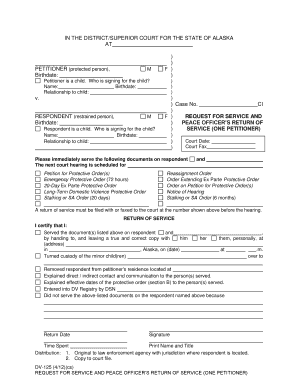
Get Ak Dv-125 2012-2026
How it works
-

Open form follow the instructions
-

Easily sign the form with your finger
-

Send filled & signed form or save
How to fill out the AK DV-125 online
The AK DV-125 is a crucial document in Alaska's legal system for requesting protective orders. This guide provides clear, step-by-step instructions on how to fill out this form online effectively and accurately.
Follow the steps to complete the AK DV-125 form.
- Press the ‘Get Form’ button to access the AK DV-125 form and open it for editing.
- Identify the petitioner section, where you will input your information. Include your name, birthdate, and select your gender. If you are the legal guardian of a child, specify that and provide the necessary details about the child.
- In the respondent section, fill out the name and birthdate of the person you are seeking protection from. If this person is also a child, specify who is completing the form on their behalf and provide their details.
- Note the case number assigned to your request, as well as the court date and court fax number. These details are often crucial for effective processing.
- In the service request section, indicate the documents you want served on the respondent. Choose from options like Emergency Protective Order or Long-Term Domestic Violence Protective Order and check the appropriate box.
- Complete the return of service section by indicating how you served the documents. Specify the method used and provide details such as the date and location of service.
- Finally, fill in the return date, sign your name, and print your name and title. Make sure to accurately record the time spent on the process.
- Once you have filled out the form, you can save your changes, download a copy for your records, and print the form for submission.
Complete your documents online today to ensure a streamlined process.
Statute 18.65.850 in Alaska pertains to the issuance of protective orders, including the AK DV-125. This statute outlines the legal framework for obtaining these orders and explains the rights of individuals seeking protection from harm. Understanding this statute is crucial for those navigating the legal system. For more help, legal resources, like USLegalForms, can offer guidance in such matters.