Loading
Get Ak Dr-710 2011-2026
How it works
-

Open form follow the instructions
-

Easily sign the form with your finger
-

Send filled & signed form or save
How to fill out the AK DR-710 online
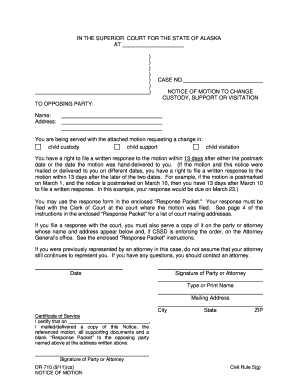
The AK DR-710 is a crucial document for individuals seeking to change custody, support, or visitation arrangements. This guide will provide you with clear, step-by-step instructions to fill out the form online effectively.
Follow the steps to complete the AK DR-710 form easily.
- Click ‘Get Form’ button to obtain the form and open it in the editor.
- Fill out the 'Case No.' field with the specific case number assigned to your situation. This number is essential for the court to recognize your motion.
- Provide your name and address in the designated fields to indicate who is filing the motion. This information should be current and accurate.
- Indicate the specific changes you are requesting by checking the appropriate boxes for child custody, child support, or child visitation.
- Include the date when you are serving this notice. This date is crucial as it influences the timeline for the opposing party's response.
- Sign the form to verify its authenticity. Your signature confirms that the information provided is correct to the best of your knowledge.
- Type or print your name, complete your mailing address, city, state, and ZIP code in the fields provided.
- Complete the 'Certificate of Service' section by certifying that you mailed or delivered a copy of the notice along with the relevant motion and documents to the opposing party.
- Once all sections are completed, review the form for accuracy and completeness. Ensure that all required fields are filled out.
- After ensuring everything is correct, save the document, and you may download, print, or share the AK DR-710 form as needed.
Complete your legal documents online today for a smoother process.
(1) A party may move the court to reconsider a ruling previously decided if, in reaching its decision, (A) the court has overlooked, misapplied or failed to consider a statute, decision, or principle directly controlling; or (B) the court has overlooked or misconceived some material fact or proposition of law; or (C) ...