Open form follow the instructions
Easily sign the form with your finger
Send filled & signed form or save
How to fill out the 3 Relapse Prevention Plan - Uwaims online
Completing the 3 Relapse Prevention Plan - Uwaims online is a crucial step in managing your health and well-being. This guide will provide you with a clear, step-by-step approach to ensure you fill out the document accurately and effectively.
Follow the steps to successfully complete the form.
- Click the ‘Get Form’ button to access the 3 Relapse Prevention Plan - Uwaims form. This will open the document in an editor, where you can begin to fill it out.
- In the 'Patient Name' section, enter your full name. This helps to ensure that the plan is tailored specifically to you.
- In the 'Today’s Date' field, input the current date. This is important for tracking your progress and updates to your plan.
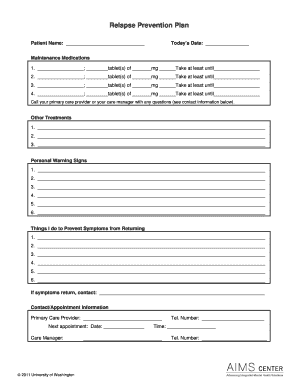
- For 'Maintenance Medications', list each medication you are prescribed along with the dosage and frequency. Be specific about the number of tablets and the mg of each medication, as well as until when you should take them.
- In the 'Other Treatments' section, note any additional therapies or interventions that can assist in your recovery. Ensure to provide details for at least three different treatments.
- Identify your 'Personal Warning Signs'. Write down at least six signs that may indicate your symptoms are returning. Being aware of these can help you take preemptive action.
- In the 'Things I do to Prevent Symptoms from Returning' section, list at least six proactive strategies or actions you take to maintain your mental wellness.
- If symptoms return, specify whom to contact for help. Clearly write down the contact information of your support person or healthcare provider.
- Fill out the 'Contact/Appointment Information' fields, including your primary care provider's name, your next appointment date, and their telephone number.
- After completing the form, review all entries for accuracy. You can then save your changes, download a copy for your records, print it for physical storage, or share it with your care team if necessary.
Complete your 3 Relapse Prevention Plan - Uwaims online today to stay proactive in your health management.
Experience a faster way to fill out and sign forms on the web. Access the most extensive library of templates available.
Related content
About. This guide is an introduction to the process of implementing the Collaborative Care...
Use the PHQ-9 on the back to self-assess yourself. 4. If you see signs of returning...
Get answers to your most pressing questions about US Legal Forms API.
What is an example of a relapse prevention plan?
An example of a relapse prevention plan might include a daily routine that incorporates exercise, mindful meditation, and regular check-ins with supportive friends. Within the 3 Relapse Prevention Plan - Uwaims, your plan should detail specific triggers and coping mechanisms tailored to your experiences. By having an actionable plan, you increase your chances of staying sober and achieving long-term wellness. Tailoring your plan to fit your lifestyle enhances its effectiveness.
How do you develop a relapse prevention plan Gorski?
Developing a relapse prevention plan using the Gorski model begins with self-awareness and acknowledging potential risks. This approach emphasizes recognizing early warning signs and implementing specific actions to counter them. The 3 Relapse Prevention Plan - Uwaims aligns well with this model, helping you track your progress while reinforcing your support system. Consistency and reflection are key elements in this development.
How to create a relapse prevention plan?
Creating a relapse prevention plan involves identifying triggers, establishing coping strategies, and setting clear goals. Start by reflecting on your past experiences and understanding what has led to relapses previously. You can use the 3 Relapse Prevention Plan - Uwaims as a guide to structure your plan effectively. By focusing on actionable steps, you'll reinforce your commitment to recovery.
What are the three types of recovery?
The three types of recovery include emotional recovery, physical recovery, and spiritual recovery. Each plays a vital role in restoring balance to your life. Understanding these types can enhance your approach in the 3 Relapse Prevention Plan - Uwaims by tailoring your strategies to address each area. A well-rounded recovery plan fosters holistic wellness.
What are the three stages of relapse prevention?
The three stages of relapse prevention focus on emotional, mental, and physical triggers. Recognizing these triggers is crucial to maintaining sobriety. You can address these stages in your 3 Relapse Prevention Plan - Uwaims by identifying personal stressors and developing coping strategies. This proactive approach helps you stay on track and avoid potential pitfalls.
What are relapse prevention plans?
Relapse prevention plans are structured strategies designed to help individuals maintain their recovery and avoid substance use relapse. These plans typically include identifying triggers, developing coping techniques, and setting up support systems. Adopting a 3 Relapse Prevention Plan - Uwaims can empower you with the knowledge and resources necessary for successful long-term recovery.
What are the 3 P's of recovery?
The 3 P's of recovery are patience, persistence, and practice. These principles remind individuals that recovery is a journey requiring time and effort. By embracing the 3 P's along with your 3 Relapse Prevention Plan - Uwaims, you can build a sustainable recovery that inspires confidence and growth.
What are the three relapse prevention strategies?
The three key relapse prevention strategies include identifying triggers, developing coping skills, and establishing a support network. Recognizing triggers helps individuals avoid situations that may lead to relapse. By implementing these strategies with your 3 Relapse Prevention Plan - Uwaims, you can independently navigate challenges and maintain sobriety.
What are 3 strategies often used to treat addiction?
Three frequently used strategies to treat addiction are medication-assisted treatment, behavioral therapy, and support group involvement. These strategies work together to address the physical, emotional, and social aspects of addiction. When integrated into a 3 Relapse Prevention Plan - Uwaims, they provide a comprehensive approach to overcoming obstacles on the road to recovery.
What are the three evidence-based strategies that are evident in your relapse plan?
The three evidence-based strategies often integrated into a relapse prevention plan include cognitive-behavioral therapy, motivational interviewing, and contingency management. These strategies have proven effective in equipping individuals with the tools they need to manage cravings and triggers. By incorporating these into your 3 Relapse Prevention Plan - Uwaims, you can develop a solid foundation for recovery.
Use professional pre-built templates to fill in and sign documents online faster. Get access to thousands of forms.
If you believe that this page should be taken down, please follow our DMCA take down process here.