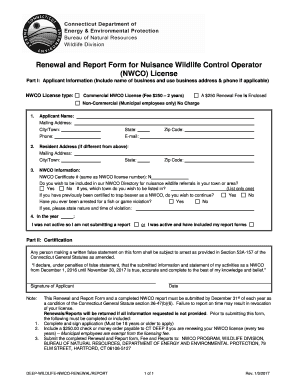
Renewal and Report Form for Nuisance Wildlife Control Operator (NWCO) License Part I: Applicant Information (Include name of business and use business address & phone if applicable) NWCO License.
Open form follow the instructions
Easily sign the form with your finger
Send filled & signed form or save
How to use or fill out the CT DEEP-WILDLIFE-NWCO-RENEWAL/REPORT online
Filling out the CT DEEP-WILDLIFE-NWCO-RENEWAL/REPORT online is essential for maintaining your Nuisance Wildlife Control Operator (NWCO) license. This guide provides clear, step-by-step instructions to ensure you successfully complete the renewal and reporting process.
Follow the steps to effectively complete the online form.
- Click ‘Get Form’ button to obtain the renewal and report form for Nuisance Wildlife Control Operator online.
- Provide your applicant information, including your name, mailing address, city/town, state, and phone number. If applicable, also include your email and zip code.
- Indicate your NWCO license type by choosing between Commercial NWCO License (with a $250 renewal fee, valid for two years) or Non-Commercial (municipal employees only) which incurs no charge.
- Fill in your NWCO certificate number, ensuring it matches your current NWCO license number. Then, indicate if you wish to be included in the NWCO directory for wildlife referrals, and specify the town if applicable.
- Answer questions regarding your certification status for trapping beaver, any arrests related to fish or game violations, and confirm your activity status for the year.
- Read and sign the certification statement, ensuring you declare that the information provided is true, accurate, and complete, as per the conditions specified in the form.
- Submit the completed form along with any necessary fees and report forms. Make sure to check that all required fields are completed. Save changes, download, print, or share the form if needed.
Ensure your license remains valid by completing your renewal and report online today.
Experience a faster way to fill out and sign forms on the web. Access the most extensive library of templates available.
Related content
Nov 29, 2023 — NWCO reports should be scanned and emailed to DEEP.wildlife@ct.gov...
CT DEEP maintains a list of “minimum risk” pesticide products allowed for use at K-8...
Get answers to your most pressing questions about US Legal Forms API.
How to become a wildlife trapper in Florida?
To become a wildlife trapper in Florida, start by researching the regulations that govern trapping in your area. You will need to complete a trapping education course and obtain a trapping license. Staying updated with resources such as the CT DEEP-WILDLIFE-NWCO-RENEWAL/REPORT can offer insight into additional training or certifications that may be beneficial.
How do I renew my license in CT?
Renewing your license in Connecticut typically involves completing a renewal application and paying the necessary fees. You may also need to provide proof of continued education or training. Make sure to check the requirements for CT DEEP-WILDLIFE-NWCO-RENEWAL/REPORT to ensure you meet all conditions and maintain your legal standing as a wildlife control professional.
How to become a licensed wildlife rescue?
To become a licensed wildlife rescue professional, start by understanding your state’s requirements for wildlife rehabilitation. This often includes attending training courses and gaining hands-on experience. Ensure you understand the CT DEEP-WILDLIFE-NWCO-RENEWAL/REPORT guidelines, as they provide essential information about maintaining your license in Connecticut.
How to become a certified wildlife conservationist?
To become a certified wildlife conservationist, pursue relevant education in environmental science or wildlife management. Gain experience through internships or volunteering with wildlife organizations. Familiarize yourself with the CT DEEP-WILDLIFE-NWCO-RENEWAL/REPORT process, as it can provide insights into the responsibilities and regulations involved in wildlife conservation.
How to become a NWCO?
Becoming a wildlife control officer (NWCO) involves completing training programs that cover wildlife management and ethical removal practices. You must also pass any required examinations and apply for a license. In Connecticut, stay informed about the CT DEEP-WILDLIFE-NWCO-RENEWAL/REPORT process to maintain your certification and stay compliant.
How to become a wildlife removal specialist?
To become a wildlife removal specialist, you need to gain experience in animal handling and understand local regulations. Many professionals start by working with established wildlife control companies. Additionally, consider obtaining relevant certifications and licenses that may involve completing the CT DEEP-WILDLIFE-NWCO-RENEWAL/REPORT process, ensuring compliance with state laws.
What is the grace period for CT license renewal?
In Connecticut, the grace period for license renewal can vary, so it’s important to check the latest updates provided by the Department of Energy and Environmental Protection. Typically, licenses need to be renewed before their expiration date to avoid penalties. The CT DEEP-WILDLIFE-NWCO-RENEWAL/REPORT will have updated information regarding renewal timelines and procedures.
Are you supposed to report bobcat sightings?
Yes, you are encouraged to report bobcat sightings as it aids in wildlife conservation efforts. Reporting such sightings allows wildlife officials to monitor bobcat populations and assess their habitat needs. Utilize the CT DEEP-WILDLIFE-NWCO-RENEWAL/REPORT feature for an efficient and straightforward reporting process, ensuring your observation contributes to important wildlife management.
Should I report bobcat sighting in CT?
Yes, reporting bobcat sightings in Connecticut helps contribute to wildlife management and conservation efforts. Bobcats are protected under state law, and your reports provide vital data for their population and behavior. Use the CT DEEP-WILDLIFE-NWCO-RENEWAL/REPORT tool to submit your sighting easily and help maintain ecological balance in the area.
What should I do if I see a bobcat?
If you encounter a bobcat, remain calm and keep your distance. Do not approach the animal, as they generally do not pose a threat to humans. Instead, observe from a safe spot and enjoy the sighting. You can report your encounter using the CT DEEP-WILDLIFE-NWCO-RENEWAL/REPORT feature to ensure accurate wildlife tracking.
Use professional pre-built templates to fill in and sign documents online faster. Get access to thousands of forms.
If you believe that this page should be taken down, please follow our DMCA take down process here.