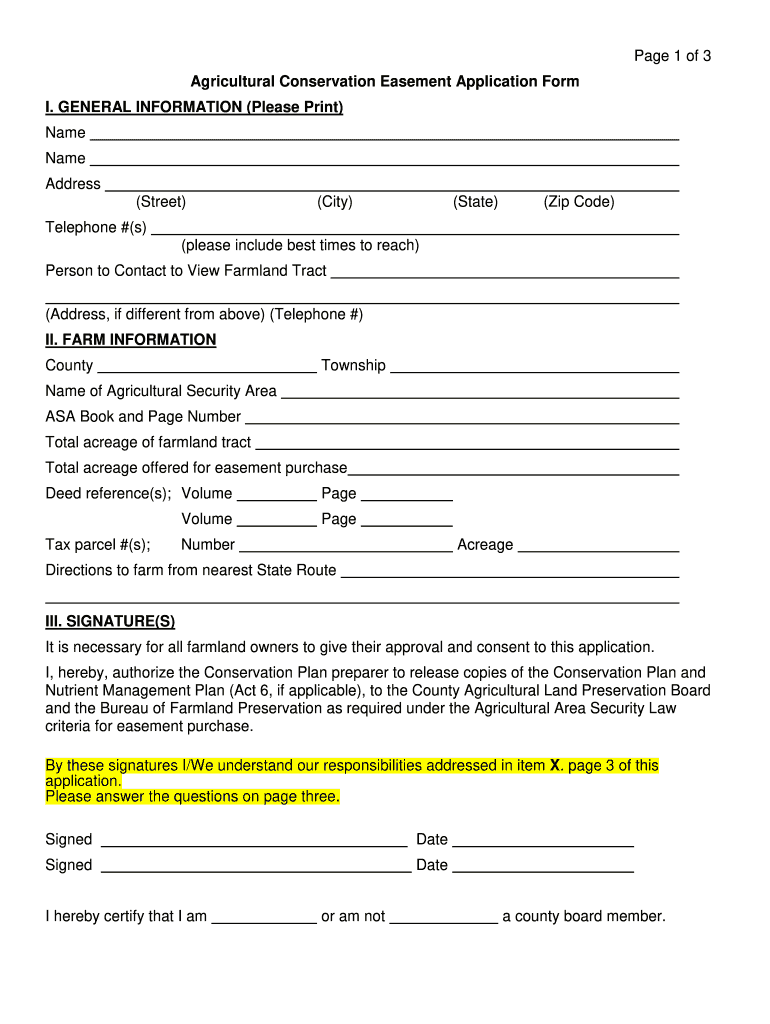
Times to reach) Person to Contact to View Farmland Tract (Address, if different from above) (Telephone #) II. FARM INFORMATION County Township Name of Agricultural Security Area ASA Book and Page Number Total acreage of farmland tract Total acreage offered for easement purchase Deed reference(s); Volume Page Volume Page Tax parcel #(s); Number Acreage Directions to farm from nearest State Route III. SIGNATURE(S) It is necessary for all farmland owners to give their approval and consent .
Loading

Open form follow the instructions

Easily sign the form with your finger

Send filled & signed form or save
How to fill out the PA Agricultural Conservation Easement Application online
Completing the PA Agricultural Conservation Easement Application online can seem daunting, but this guide provides clear and supportive instructions to help you through each section. Whether you are familiar with the application process or are just beginning, this resource is designed to make your experience as smooth as possible.
Follow the steps to successfully complete your application.
- Use the 'Get Form' button to access the PA Agricultural Conservation Easement Application, ensuring it opens in a suitable digital format for your review.
- In the General Information section, fill in your name and address, including city, state, and zip code. Provide your telephone number, indicating the best times to reach you. Designate a contact person for viewing the farmland tract, if different from yourself, and include their address and telephone number.
- Move to the Farm Information section. Indicate the county and township where your farm is located. Enter the name of the Agricultural Security Area, along with the ASA Book and Page Number. Specify the total acreage of your farmland tract and the total acreage you are offering for easement purchase.
- Complete the Deed Reference section by providing applicable volume and page numbers for all deeds related to your property. List the tax parcel numbers and their corresponding acreage.
- Provide directions to your farm from the nearest state route to assist with location finalization.
- In the Signatures section, ensure all farmland owners sign and date the application, confirming their approval. Additionally, certify whether you are a county board member.
- If applicable, fill out the Crop Production Information section with details of the commodities grown, including average yield and gross receipts for the past crop year.
- Also, complete the Livestock Report, specifying the average numbers of livestock, products sold, amounts sold, and the corresponding gross receipts for the last calendar year.
- Provide a Conservation Plan date, along with information regarding any nutrient management plan in place and conservation practices currently being utilized on your farm.
- List any mortgages, lienholders, or mineral rights that apply to your farmland tract in the appropriate section.
- Prepare and include the required maps: a location map, tax map, and soils map, ensuring the soils map is color-coded as specified.
- Complete the soils report for the farmland tract, adhering to State Form C requirements by detailing each soil type and its capability class.
- Review and respond to the applicant’s responsibilities item regarding withdrawal of your application.
- Answer the final questions regarding the land usage and conservation practices implemented, and reflect on the condition of the buildings on the tract.
- Finalize your application by submitting it along with a check for $500 made payable to the Beaver County Agricultural Land Preservation Board at the specified address.
Begin filling out the PA Agricultural Conservation Easement Application online today to take the first step towards preserving your farmland.
Experience a faster way to fill out and sign forms on the web. Access the most extensive library of templates available.
Related content
The Agricultural Conservation Easement Purchase Program was developed to strengthen...
The application shall consist of a completed application form, locational maps and a soils...
Nov 9, 2015 — In order to comply with ALPP, productive agricultural land that is...
Get answers to your most pressing questions about US Legal Forms API.
What are the downsides of a conservation easement?
The downsides of a conservation easement include the potential for reduced flexibility in land management and challenges in transitioning to new ownership. Owners may face restrictions that hinder development or agricultural practices. To mitigate these challenges, it's essential to thoroughly understand the implications outlined in the PA Agricultural Conservation Easement Application.
What is the disadvantage of an easement?
An easement can bind a property owner to specific use limitations that may not align with future plans or desires. This restriction can feel limiting and may complicate the sale of the property. Addressing these disadvantages is crucial when navigating the PA Agricultural Conservation Easement Application.
What are the disadvantages of a conservation easement?
One notable disadvantage of conservation easements is the potential decrease in property value, as the restrictions may limit future use. Additionally, the commitment is long-term, which can lock landowners into decisions based on current conditions. Understanding these aspects through the PA Agricultural Conservation Easement Application can help landowners weigh their options effectively.
Can land be taken out of a conservation easement?
In most cases, once a conservation easement is in place, it is a permanent restriction. However, changes can occur through mutual agreement or specific legal procedures. If you are considering this, consulting with an expert on the PA Agricultural Conservation Easement Application can provide guidance on any possible pathways.
How do you set up a conservation easement?
Setting up a conservation easement generally involves several steps, starting with identifying your property's conservation values. Next, you will need to engage a qualified organization to draft the easement, specializing in the PA Agricultural Conservation Easement Application process. Once the easement language is established, it must be recorded to be legally enforceable.
What concerns do landowners have about conservation easements?
Landowners often worry about the long-term restrictions placed on their property with conservation easements. They may also have concerns about how these easements affect property value and future land use. Through the PA Agricultural Conservation Easement Application, landowners can gain clarity and understanding about these concerns, ensuring they make informed decisions.
How much per acre for conservation easement?
The value of a conservation easement can vary significantly based on factors such as location and development rights. On average, landowners may receive compensation ranging from $1,000 to $3,000 per acre, depending on their PA Agricultural Conservation Easement Application specifics. Consult local agencies or conservation programs for a more accurate estimation relevant to your property.
What does it mean to sell an agricultural conservation easement?
Selling an agricultural conservation easement means you are transferring the development rights of your land to a conservation organization or government agency in exchange for financial compensation. This allows you to receive payment while still retaining ownership of the land, along with agricultural usage rights. The PA Agricultural Conservation Easement Application is your gateway to understanding how to navigate this sale effectively.
What is the conservation easement scheme?
A conservation easement scheme is a legal agreement that allows landowners to limit the future use of their land to protect its conservation values. This agreement typically restricts development and preserves natural resources, agricultural production, or wildlife habitat. Through the PA Agricultural Conservation Easement Application, landowners can participate in state-supported programs that provide financial assistance for these initiatives.
What does preserved farmland mean Pennsylvania?
Pennsylvania leads the nation in the number of farms and acres permanently preserved for agricultural production. The program guarantees a future food supply and contributes to a healthier economy. It also assures a way of life Pennsylvanian's cherish will continue for generations to come.
Use professional pre-built templates to fill in and sign documents online faster. Get access to thousands of forms.
If you believe that this page should be taken down, please follow our DMCA take down process here.