0 = None 1 = CD 219 2 = CD 220 E = Exempt N = Nonexempt 3 = SF 278 4 = AD 392 5 = SF 849 4. POS. SENS. (1) A = Sched A 0 = Excepted but B = Sched B not A, B, C C = Sched C 7. WK. TITLE (38) 6. WK. TITLE CD. (4) 8. ORG. STR. CD. (18) 1st 2nd 10. TARGET GD. (2) 5. COMP. LEV. (4) 0 = Nonsensitive 1 = Noncritical 2 = Critical Sensitive 9. VAC. REV. CD. (1) 3rd 4th 5th 12. PROJ. DTY. IND. (1) 11. LANG. REQ. (2) Blank = N/A Y = Yes 6th 7th 13. DUTY STATION (9) State (2) City (4) .
Loading

Open form follow the instructions

Easily sign the form with your finger

Send filled & signed form or save
How to fill out the USDA AD-332 online
The USDA AD-332 form is essential for classifying positions within the USDA. This guide provides a detailed, step-by-step overview of how to fill out the form online, ensuring that you have all the necessary information to complete it accurately.
Follow the steps to successfully fill out the USDA AD-332 online.
- Click the ‘Get Form’ button to obtain the form and open it in the editor.
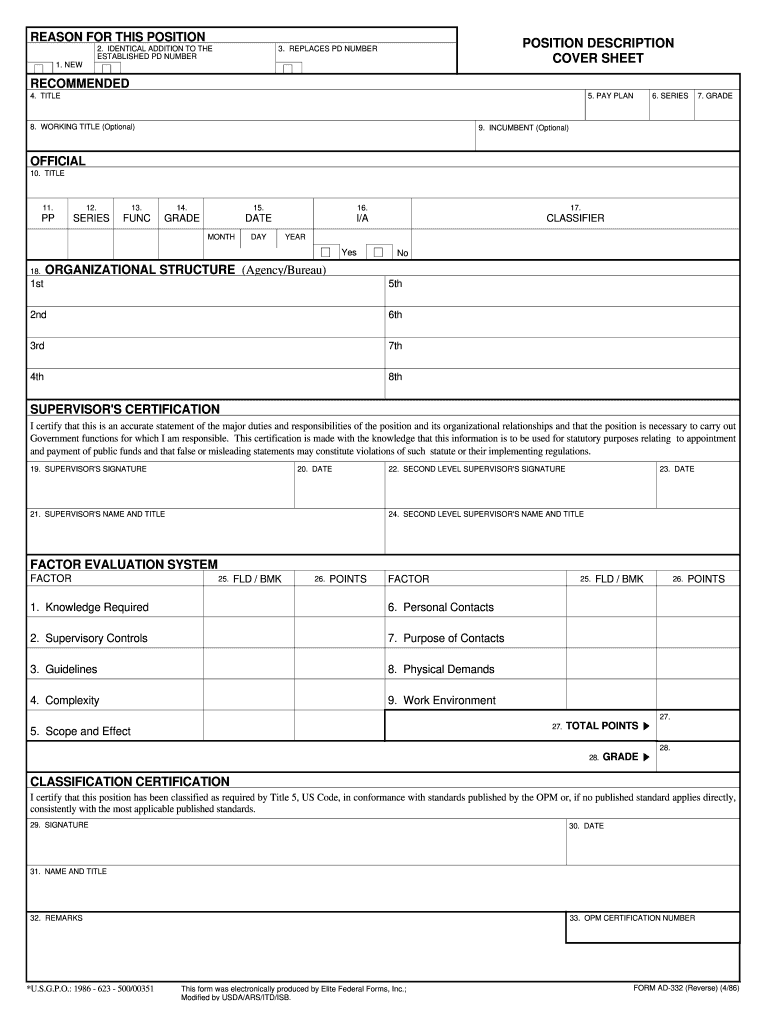
- Begin by entering the reason for the position in the 'Reason for this position' section. This should clearly outline the purpose for which the position is being created or modified.
- Fill in the 'Position Description Cover Sheet,' ensuring to include the new position title, pay plan, series, and grade. Each entry should reflect the accurate classification level of the new position.
- In the 'Organizational Structure' section, indicate the hierarchy of the position by specifying the agency or bureau and other relevant organizational details.
- Complete the 'Supervisor's Certification' by having the immediate supervisor certify that the information provided is accurate. They will need to sign and date this section.
- Proceed to the 'Factor Evaluation System' section. This requires evaluating various factors such as knowledge required, complexity, and work environment. Fill in the corresponding points accurately.
- In the 'Classification Certification' part, a classifier must certify the position's classification, providing their signature and date as required.
- Finally, review the completed form for any missing information or errors. Once satisfied, save your changes, and you can download, print, or share the form as needed.
Complete your documents online today for a smoother process and timely submissions.
Experience a faster way to fill out and sign forms on the web. Access the most extensive library of templates available.
Related content
I certify that this is an accurate statement of the major duties and responsibilities of...
FORM AD-332 (Revised 10/12). Resource Clerk. GS. 1101. 04. 11. 15. 2013. C. Lucero. 11...
This is a guidance document for the FDAAA DTC Television Ad Pre-Dissemination Review...
Get answers to your most pressing questions about US Legal Forms API.
What is the USDA definition of an animal?
According to the USDA, an animal includes any warm-blooded animal, such as mammals and birds, which is protected under various welfare laws and guidelines. This definition helps ensure that animals receive humane treatment in agricultural, research, and commercial settings. Familiarity with the USDA definition is essential for those working with livestock, particularly when engaging with programs like USDA AD-332.
What are non USDA species?
Non USDA species refer to animals and plants that do not fall under the jurisdiction or the regulations of the USDA. This category may include exotic animals or those that are strictly regulated by other agencies. Knowing which species are non USDA can help you navigate compliance and understand the limitations and opportunities within your agricultural practices.
What are the USDA poultry grades?
USDA poultry grades include A, B, and C, with Grade A being the highest, denoting birds that meet stringent quality standards. These grades reflect factors like appearance, fat covering, and flesh quality. By understanding USDA poultry grades and their implications, you can make informed decisions while considering products relevant to USDA AD-332.
What animals are not covered by the Animal Welfare Act?
The Animal Welfare Act does not cover several animal categories, such as farm animals raised for food production and certain reptiles and amphibians. Animals that fall outside the scope of federal legislation often face different welfare standards and regulations. It's crucial to be informed about these exclusions to ensure compliance with all applicable laws, including those related to the USDA AD-332.
What is a USDA covered species?
A USDA covered species includes animals and plants eligible for protection or assistance under USDA regulations, including those defined in USDA AD-332. This designation is critical for farmers and conservationists aiming to maintain biodiversity and comply with agricultural guidelines. Understanding these species helps ensure that you're engaging in responsible farming practices.
What is the USDA cover crop incentive?
The USDA cover crop incentive encourages farmers to plant specific crops that improve soil health, reduce erosion, and enhance biodiversity. This program offers financial benefits and resources to support farmers in their sustainable practices. By utilizing the USDA AD-332 feature, you can access information and tools related to these incentives and boost your agricultural sustainability.
What is the highest USDA grade?
The highest USDA grade is USDA Prime, which reflects exceptional quality and tenderness of meat. This grade is assigned to beef that has abundant marbling and is sourced from young, well-fed cattle. Familiarizing yourself with USDA grades, including USDA AD-332, can guide you in selecting top-tier agricultural products.
What is a covered species?
A covered species refers to specific types of animals that receive protection under certain regulations, including the USDA AD-332. These species must meet particular criteria established by the USDA for inclusion in programs supporting biodiversity and conservation efforts. Understanding covered species can help you stay compliant with relevant policies and ensure proper ethical treatment.
What happens if I don’t fill out the USDA Census of Agriculture?
If you don't fill out the USDA Census of Agriculture, your operation may not be accurately represented in essential agricultural data. This can lead to a lack of support for programs that benefit farmers and may affect funding allocations in your area. By completing the census, you ensure that your needs and the needs of your community are recognized.
What does the Census of Agriculture do?
The Census of Agriculture gathers comprehensive data about U.S. farms and ranches. It helps to assess the economic status and trends in agriculture, which influences funding and resources available to farmers. By contributing to the USDA AD-332, you play a pivotal role in shaping the future of agricultural policies.
Use professional pre-built templates to fill in and sign documents online faster. Get access to thousands of forms.
If you believe that this page should be taken down, please follow our DMCA take down process here.
This form is available in several versions. Select the version you need from the drop-down list below.