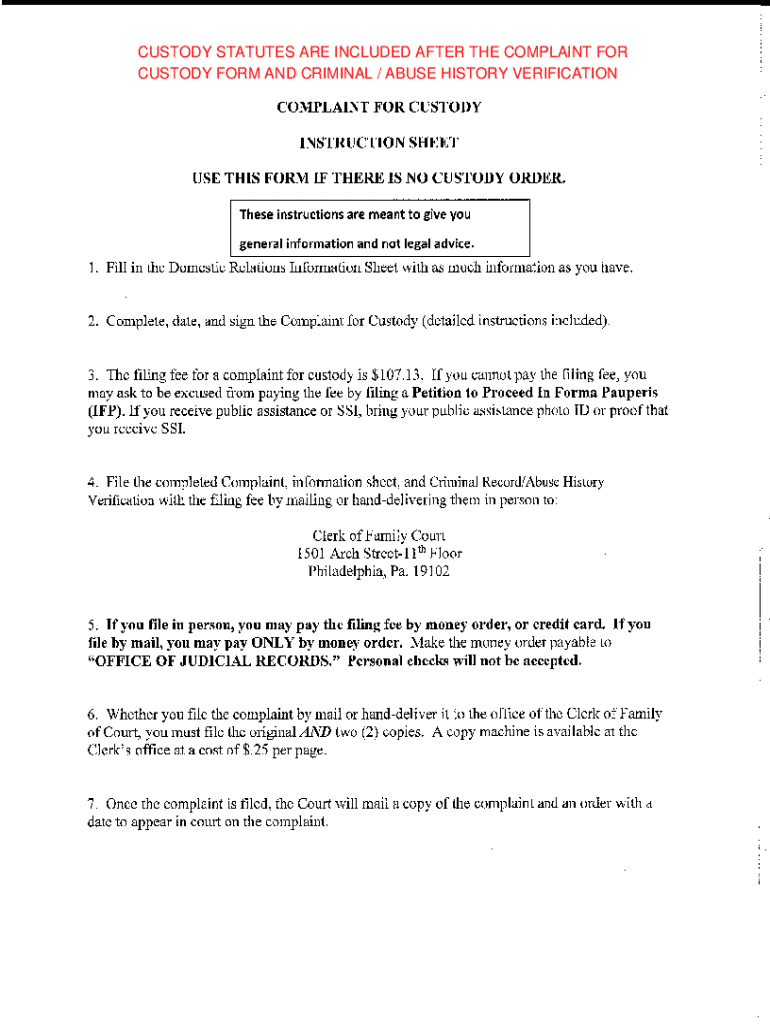
Instructions are meant to give you general information and not legal advice. 1. Fill in the Domestic Relations Information Sheet with as much information as you have. 2. Complete, date, and sign the Complaint for Custody (detailed instructions included). 3. The filing fee for a complaint for custody is $107.13. If you cannot pay the filing fee, you may ask to be excused from paying the fee by filing a Petition to Proceed In Forma Pauperis (IFP). If you receive public assistance or SSI, bring.
Loading

Open form follow the instructions

Easily sign the form with your finger

Send filled & signed form or save
How to fill out the PA Complaint For Custody - Philadelphia online
Filling out the PA Complaint For Custody form is an important step when seeking custody of a child in Philadelphia. This guide will provide you with clear and supportive instructions on how to complete this form accurately and efficiently, ensuring that you understand each component of the process.
Follow the steps to complete the PA Complaint For Custody form online.
- Use the ‘Get Form’ button to obtain the Complaint For Custody form and access it for your entries.
- Begin by filling in the Domestic Relations Information Sheet with all available information relevant to you and the children involved.
- Complete the Complaint for Custody by including the date and your signature, as well as relevant details about custody type sought.
- Note that the initial filing fee is $107.13. If unable to pay, you may file a Petition to Proceed In Forma Pauperis to request a fee waiver.
- Submit the completed Complaint, information sheet, and Criminal Record/Abuse History Verification either by mailing or by delivering them in person to the Clerk of Family Court.
- If filing in person, payment can be made by money order or credit card; by mail, use a money order made out to the 'Office of Judicial Records.'
- Ensure you file the original Complaint and two copies; a copy machine is available at the Clerk's office at a nominal cost.
- After filing, the Court will send a copy of your Complaint along with a notice of your court appearance date.
Start filling out your PA Complaint For Custody form online now to take the first step in securing custody arrangements.
Experience a faster way to fill out and sign forms on the web. Access the most extensive library of templates available.
Related content
To file a custody complaint, complete the form, pay $107.13 fee, file with the information...
Apr 21, 2022 — ... complaint, how to modify a child support or custody order, how...
Oct 1, 2017 — DHTS is responsible for establishing goals to reduce motor vehicle crashes...
Get answers to your most pressing questions about US Legal Forms API.
What is the definition of an unstable parent?
An unstable parent typically refers to one who cannot provide a consistent and secure environment for their child. This might include parents who demonstrate erratic behavior or have ongoing issues with substance abuse or mental health. The court assesses these factors when determining the best living situation for the child, often considering the emotional and psychological stability of custody arrangements.
What are violations of child custody in PA?
Violations of child custody in Pennsylvania often involve not following court orders regarding visitation, not allowing the other parent access to the child, or failing to comply with set arrangements. Such violations can lead to an adjustment of custody agreements and even legal consequences. It is essential to adhere to court orders to maintain a favorable custody standing.
How do I fight for custody in PA?
Fighting for custody in Pennsylvania involves preparing your case thoroughly and advocating for your rights. Start by filing a PA Complaint For Custody - Philadelphia and gathering evidence that supports your request. Consulting with a family law attorney can provide you with expert guidance throughout the legal process and help you strategize effectively.
How can a mother lose custody in PA?
A mother can lose custody in Pennsylvania due to factors like substance abuse, neglect, or inability to provide a stable living environment. Cases involving significant lifestyle changes, such as incarceration or mental health issues, may also result in custody loss. It is vital for any parent to understand these risks and prioritize their child's well-being.
What is the best evidence for child custody?
The best evidence for child custody cases in Pennsylvania includes documented incidents of abuse or neglect, character references, and reports from child welfare agencies. Additionally, maintaining records of communication with the other parent and demonstrating consistent involvement in the child's life significantly strengthen your case. A solid presentation of evidence will enhance your position in a PA Complaint For Custody - Philadelphia.
What makes a parent unfit for custody in PA?
In Pennsylvania, a parent may be deemed unfit for custody if they have a history of abuse, substance dependency, or neglect. Factors like mental health issues or the inability to provide a stable environment can also contribute. The court focuses on the best interests of the child, so demonstrating any of these concerns can play a significant role in custody decisions.
How do I start a custody case in PA?
To start a custody case in Pennsylvania, you need to file a PA Complaint For Custody - Philadelphia at your local court. First, gather essential documents, including your child's birth certificate and any relevant information about your circumstances. It is also helpful to consult with an attorney who specializes in custody cases to ensure you have a strong foundation for your claim.
What is the biggest mistake in a custody battle?
One of the biggest mistakes in a custody battle is failing to prioritize the child's best interests. Parents may become overly focused on winning, which can cloud their judgment. Additionally, poor communication and hostile behavior can harm your case. By remaining objective and seeking professional guidance, you can navigate the complexities of a PA Complaint For Custody - Philadelphia more effectively.
How can a parent lose custody in PA?
A parent can lose custody in Pennsylvania due to several factors, including neglect, abuse, substance misuse, or being unable to provide a stable environment. The court prioritizes the child's welfare above all else. A significant change in circumstances or behaviors can lead to a reconsideration of custody. It is crucial to remain informed about your rights and responsibilities as a parent.
What happens if a parent violates a custody order in PA?
If a parent violates a custody order in Pennsylvania, the other parent can file a petition with the court seeking enforcement of the order. The court may respond by modifying custody arrangements or imposing penalties on the violating parent. Such actions aim to protect the best interests of the child. Keeping records of the violations will strengthen your case.
Use professional pre-built templates to fill in and sign documents online faster. Get access to thousands of forms.
If you believe that this page should be taken down, please follow our DMCA take down process here.