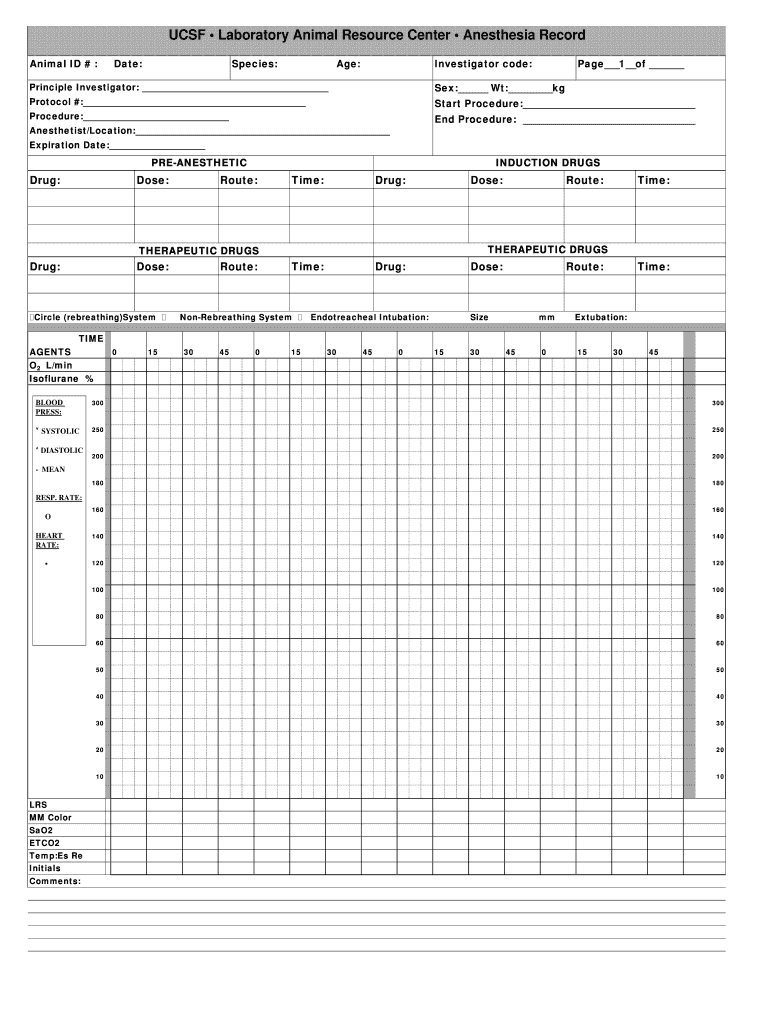
UCSF Laboratory Animal Resource Center Anesthesia Record Animal ID # : Date: Species: Age: Investigator code: Page 1 of Principle Investigator: Sex: Wt: kg Protocol #: Start Procedure: Procedure:.
Loading

Open form follow the instructions

Easily sign the form with your finger

Send filled & signed form or save
How to fill out the UCSF Laboratory Animal Resource Center Anesthesia Record online
The UCSF Laboratory Animal Resource Center Anesthesia Record is a crucial document for ensuring the safe and effective administration of anesthesia in laboratory animals. This guide provides a clear, step-by-step approach to completing this online form accurately.
Follow the steps to correctly fill out the anesthesia record form.
- Press the ‘Get Form’ button to obtain the anesthesia record form and open it in the online editor.
- Begin by entering the animal ID number in the designated field to uniquely identify the subject of the procedure.
- Record the date of the procedure in the space provided. This information is essential for documentation and tracking.
- Specify the species and age of the animal in the respective fields to ensure accurate record-keeping.
- Input the investigator code to attribute the work to the correct research team.
- In the fields for the principal investigator's name, enter the full name of the person overseeing the procedure.
- Indicate the sex and weight of the animal, ensuring that all physical details are correct for anesthesia considerations.
- Fill in the protocol number associated with the procedure to maintain compliance with regulatory standards.
- Document the start procedure and the specific procedure being conducted in the appropriate sections.
- Enter the anesthetist's name and location where the procedure is taking place for accountability.
- Record the expiration date of the anesthesia equipment used to ensure safety.
- Complete the pre-anesthetic section by detailing the drug and dose administered prior to induction.
- During the induction phase, fill in the required information concerning the drugs used, dosage, and timing.
- For each monitoring section, accurately record the time and relevant parameters such as blood pressure, respiratory rate, and heart rate.
- Once all fields are completed, ensure to save any changes made to the document.
Complete your documents online today to ensure the safety and compliance of your laboratory procedures.
Experience a faster way to fill out and sign forms on the web. Access the most extensive library of templates available.
Related content
by Y Seo · 2023 · Cited by 13 — In this study, the authors measure lung deposition...
UCSF • Laboratory Animal Resource Center • Anesthesia Record. Animal ID # : Date:...
The ADNI table of contents includes contact info, protocol synopsis, start-up, screening...
Get answers to your most pressing questions about US Legal Forms API.
How do I get anesthesia records?
To obtain anesthesia records, you can contact your facility's veterinary or anesthesia department directly. They can provide you with the necessary documentation in compliance with relevant guidelines. Additionally, utilizing resources from US Legal Forms can help streamline your request for the UCSF Laboratory Animal Resource Center Anesthesia Record.
What is recorded in the anesthesia record?
The anesthesia record includes all relevant information such as the anesthetic agent used, patient vital signs, and the duration of anesthesia. It provides a comprehensive overview of the anesthesia management throughout the surgical process. Keeping a detailed approach to the UCSF Laboratory Animal Resource Center Anesthesia Record is essential for high-quality care.
What is the intra op anesthesia record?
The intra op anesthesia record captures real-time data regarding the anesthesia provided while the surgical procedure takes place. It documents the medications, adjustments made, and the animal's responses throughout the procedure. This record is integral to the UCSF Laboratory Animal Resource Center Anesthesia Record for ensuring compliance and promoting best practices.
What is the anesthesia record for surgery?
The anesthesia record for surgery is a comprehensive log that details all aspects of anesthesia administration and monitoring during surgical procedures. This includes medications, dosages, and the patient's condition throughout the surgery. Accurately maintaining this record is vital to fulfilling the standards of the UCSF Laboratory Animal Resource Center Anesthesia Record.
What is intraoperative anesthesia?
Intraoperative anesthesia refers to the management and administration of anesthesia during a surgical procedure. It ensures the animal's comfort and safety while facilitating the surgical team's work. Understanding this process is key for proper documentation in the UCSF Laboratory Animal Resource Center Anesthesia Record.
What do the contents of the anesthesia record include?
The anesthesia record includes detailed documentation of pre-operative assessments, medications given, dosages administered, and monitoring parameters. It can also encompass any complications encountered during the procedure. This comprehensive documentation is essential for the UCSF Laboratory Animal Resource Center Anesthesia Record, ensuring a high standard of care.
What are the things that we have to check in the intraoperative record?
In the intraoperative record, it's crucial to check vital signs, anesthesia medications administered, and any notable events during the procedure. Additionally, ensure that the monitor settings are documented clearly. A thorough review of these elements helps maintain compliance with the UCSF Laboratory Animal Resource Center Anesthesia Record standards, which prioritize animal welfare and procedural accuracy.
What items are recorded in an anesthesia log?
In an anesthesia log, several crucial items are tracked, including the type of anesthetic agent used, dosages, and the duration of anesthesia. The UCSF Laboratory Animal Resource Center places a strong emphasis on precise entries to facilitate both animal welfare and research integrity. Any adverse reactions or complications that occur during the procedure are also meticulously noted.
What information is recorded on the anesthetic log?
The anesthetic log typically includes essential details such as the drug dosages administered and the times of administration. At the UCSF Laboratory Animal Resource Center, each entry is critical for maintaining accurate records of anesthesia protocols during procedures. Additionally, any observations related to the animal’s response to anesthesia may also be documented.
What is the anesthesia record?
The anesthesia record serves as a comprehensive documentation of the anesthesia procedure performed on laboratory animals. This record includes vital information such as the types of anesthesia used, dosages administered, and monitoring data throughout the procedure. Keeping an accurate UCSF Laboratory Animal Resource Center Anesthesia Record is essential for ensuring animal welfare and compliance with regulations. You can find templates and guidelines for maintaining these records on the UCSF platform to help streamline your documentation process.
Use professional pre-built templates to fill in and sign documents online faster. Get access to thousands of forms.
If you believe that this page should be taken down, please follow our DMCA take down process here.