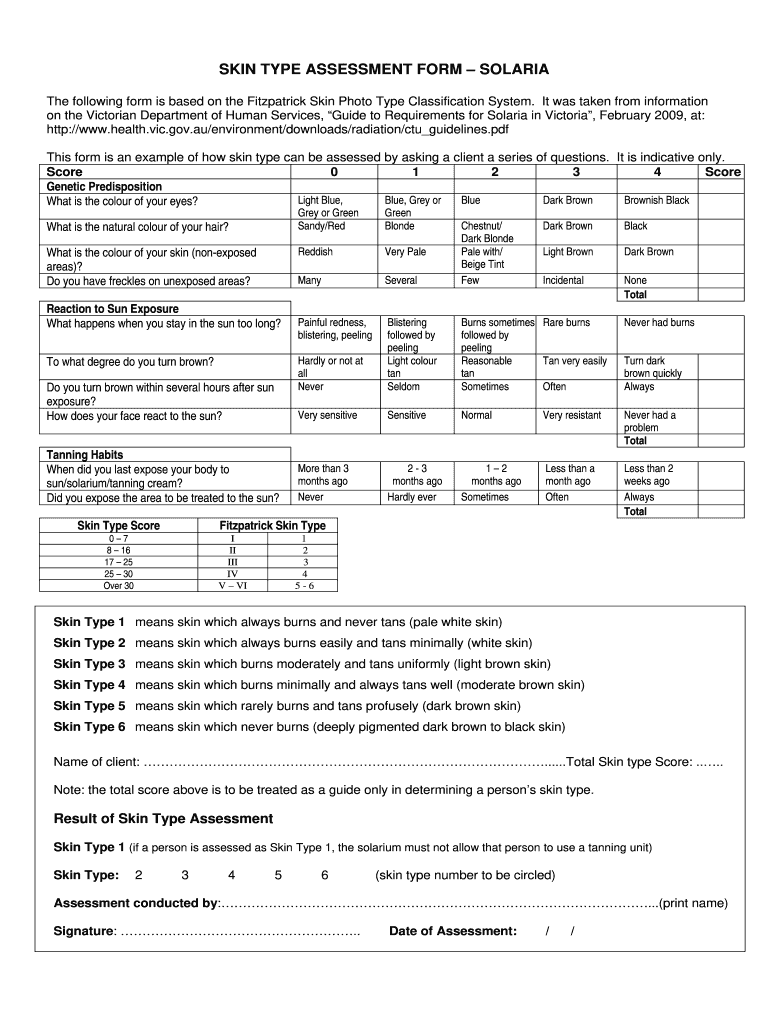
SKIN TYPE ASSESSMENT FORM SOLARIA The following form is based on the Fitzpatrick Skin Photo Type Classification System. It was taken from information on the Victorian Department of Human Services Guide to Requirements for Solaria in Victoria February 2009 at http //www. health. vic*gov*au/environment/downloads/radiation/ctuguidelines. pdf This form is an example of how skin type can be assessed by asking a client a series of questions. It is indicative only. Score Genetic Predisposition Light Blue Blue Grey or Blue Dark Brown Brownish Black What is the colour of your eyes Grey or Green Sandy/Red Do you turn brown within several hours after sun exposure How does your face react to the sun Tanning Habits When did you last expose your body to sun/solarium/tanning cream Did you expose the area to be treated to the sun Skin Type Score Painful redness blistering peeling Blistering followed by peeling Light colour tan Seldom Burns sometimes Rare burns Reasonable Tan very easily Sometimes O....
Loading

Open form follow the instructions

Easily sign the form with your finger

Send filled & signed form or save
How to fill out the Solaria Skin Type Assessment Form online
The Solaria Skin Type Assessment Form is essential for evaluating your skin type to ensure safe tanning practices. This guide will assist you in filling out the form online, ensuring you provide the necessary information accurately and effectively.
Follow the steps to complete the assessment form.
- Press the ‘Get Form’ button to access the Solaria Skin Type Assessment Form and open it in your preferred online editor.
- Begin by entering your personal information, specifically your name, to ensure the assessment is individualized. Look for the designated field and input your full name as requested.
- Proceed to the section regarding genetic predisposition. Answer the question about your eye color by selecting the option that best describes your eyes from the list provided.
- Next, address how your skin typically reacts to sun exposure. Choose the option that resonates most with your tanning habits and past experiences with sun or solarium exposure.
- Fill in the fields related to your tanning habits. Indicate when you last used a solarium or tanning cream, and answer whether the area to be treated was exposed to the sun.
- Complete the section about your skin's reaction to prolonged sun exposure. Reflect on your experiences and select the most applicable response regarding painful redness or blistering.
- Continue by providing information about your natural hair color, skin color (non-exposed areas), and the presence of freckles. This information is vital for accurate skin type assessment.
- Once all questions are answered, review your responses to ensure accuracy. The system may prompt you to add your total skin type score — refer to the scoring guidelines provided in the form.
- Finally, confirm the results by ticking your skin type based on your total score. Ensure that the assessment is reviewed and signed by the person conducting the evaluation, alongside the date of assessment.
- Once completed, make sure to save your changes. You will have options to download, print, or share the filled form for your records.
Complete your Solaria Skin Type Assessment Form online today to ensure a safe tanning experience.
Experience a faster way to fill out and sign forms on the web. Access the most extensive library of templates available.
Related content
by A Chandrasena · 2013 · Cited by 8 — Every client has a skin-type assessment...
The Annex includes a sample client consent form. ... Claims of health benefits should not...
Aug 8, 2025 — Body type +15% - It is mainly given to units with a shroud effect among...
Get answers to your most pressing questions about US Legal Forms API.
How to check for skin type?
To check for skin type, use a systematic approach with the Solaria Skin Type Assessment Form. Start by observing the skin's response to different environmental factors, such as humidity and temperature. Additionally, assess oiliness, dryness, and sensitivity levels. This thorough evaluation leads to an accurate categorization of skin type, which is vital for personalized skincare recommendations.
How do you describe skin in an assessment?
When describing skin in an assessment, focus on specific features like color, texture, elasticity, and moisture. Use the Solaria Skin Type Assessment Form to ensure consistency in your descriptions. Be clear and precise, providing a complete picture of the skin's condition. This will facilitate better communication with colleagues and aid in customer understanding.
How do you document skin condition?
To document a skin condition, start with a comprehensive overview using the Solaria Skin Type Assessment Form. Record details such as texture, moisture levels, and color variations. Make sure to highlight any changes or patterns observed during the assessment. This thorough documentation provides valuable context for future assessments and treatment plans.
What are the 5 elements of skin assessment?
The five elements of skin assessment include inspection, palpation, history, areas of concern, and diagnosis. Utilizing the Solaria Skin Type Assessment Form can help in organizing these elements methodically. Each element provides insights into the skin's health and helps identify potential issues. By thoroughly addressing each aspect, you can ensure accurate and comprehensive evaluations.
How to document skin assessment?
To document a skin assessment effectively, utilize the Solaria Skin Type Assessment Form. Begin by noting the patient's history and any relevant medical background. Next, systematically analyze the skin for its characteristics, abnormalities, and overall condition. Recording this information in a clear format allows for better tracking and comparison during follow-ups.
How do you document normal skin findings?
When documenting normal skin findings, focus on clarity and detail. Use the Solaria Skin Type Assessment Form to record observations of skin texture, hydration, and color. Ensure you note any specific areas of concern and classify them appropriately. This structured approach helps in effective monitoring of skin health over time.
What are 5 factors affecting skin integrity?
Five key factors affecting skin integrity are hydration, nutrition, irritants, environmental exposure, and genetics. Each element can greatly influence your skin's overall health and appearance. Understanding these factors is easier with the Solaria Skin Type Assessment Form, allowing you to identify what might be impacting your skin.
How to do a skin type test?
Performing a skin type test involves observing your skin under different conditions and assessing its reactions. The Solaria Skin Type Assessment Form guides you through a series of questions and observations, helping you determine your specific skin type accurately. This information is essential for selecting suitable skincare products.
What are the 5 factors included in a skin assessment?
The 5 factors encompass skin type, hydration level, elasticity, pigmentation, and texture. Each factor plays a crucial role in determining the overall condition of your skin. By using the Solaria Skin Type Assessment Form, you can effectively assess these crucial elements for better skincare tailored to your needs.
How do you complete a skin assessment?
To complete a skin assessment, start by documenting your skin history and current concerns. Next, utilize tools such as the Solaria Skin Type Assessment Form to analyze your skin’s properties. This structured approach provides a clear outline of your skin type and recommendations for improving skin health.
Use professional pre-built templates to fill in and sign documents online faster. Get access to thousands of forms.
If you believe that this page should be taken down, please follow our DMCA take down process here.