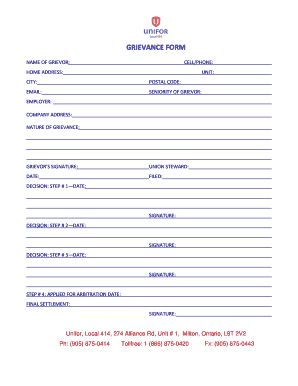
RD: DATE: FILED: DECISION: STEP # 1 DATE: SIGNATURE: DECISION: STEP # 2 DATE: SIGNATURE: DECISION: STEP # 3 DATE: SIGNATURE: STEP # 4: APPLIED FOR ARBITRATION DATE: FINAL SETTLEMENT: SIGNATURE: Unifor, Local 414, 274 Alliance Rd, Unit # 1, Milton, Ontario, L9T 2V2 Ph: (905) 875-0414 Tollfree: 1 (866) 875-0420 Fx: (905) 875-0443.
Open form follow the instructions
Easily sign the form with your finger
Send filled & signed form or save
How to fill out the Canada Unifor Local 414 Grievance Form online
Filing a grievance is an important step in addressing workplace issues. This guide will walk you through the process of completing the Canada Unifor Local 414 Grievance Form online, ensuring clarity and ease as you navigate each section of the form.
Follow the steps to complete the grievance form successfully.
- Click ‘Get Form’ button to obtain the form and open it in the editor. This will allow you to access the necessary fields to complete your grievance form.
- Begin by entering your name in the 'Name of grievor' field. This is essential as it identifies the person submitting the grievance.
- Next, provide your cell phone number in the 'Cell/Phone' field. This information is crucial for communication purposes.
- Input your home address in the 'Home Address' section, including the unit number if applicable, to ensure your grievance is processed correctly.
- Fill in the 'City' and 'Postal Code' fields to provide your locale for records.
- Enter your email address in the designated field for electronic communication.
- Specify your seniority level as the 'Seniority of grievor.' This can affect the handling of your grievance based on the duration of your employment.
- State the name of your employer in the 'Employer' field and follow it with the 'Company Address.' This helps to identify where the grievance is directed.
- Describe the nature of your grievance in the 'Nature of Grievance' section. Be as detailed as possible to facilitate understanding.
- Sign the form in the 'Grievor’s Signature' field to validate your grievance.
- If applicable, write the name of your union steward who is assisting you in the grievance process.
- Indicate the date of filing in the 'Filed' section.
- The decision-making process will require signatures and dates for each decision step outlined; ensure all necessary fields are filled appropriately.
- Complete the final sections regarding arbitration and settlement by filling in the relevant dates and signatures as required.
- Once all fields have been completed, you can save your changes, download, print, or share the form as necessary.
Complete your grievance form online today to ensure your voice is heard.
Experience a faster way to fill out and sign forms on the web. Access the most extensive library of templates available.
Related content
OSE/UAW-1 (R3/87). Complete instructions for initiating a grievance and requirements for...
personnel development activity, grievance activity, and concerns surfaced through joint...
Pyramid Forms. ... good sugar and well boiling greatly mitigate, if not altogether prevent...
Get answers to your most pressing questions about US Legal Forms API.
What are forms of grievance?
Typically, four types of grievances in the workplace are raised by employees: Complaints about unsatisfactory working conditions. Concerns or disputes relating to payment or benefits. Frustration with too much work. Feeling unhappy due to bullying, harassment, discrimination in the workplace or other factors.
What is an example of a union grievance?
Examples include discipline, demotion, harassment, improper classification or denial of earned overtime. Investigate and help the member with the grievance. If the person refuses to grieve, many contracts let the union grieve on behalf of the local.
What are the three types of grievances?
What are the three types of grievances? Individual Grievances. When an individual employee grieves against a management action like demotion based on bias, non payment of salary, workplace harassment etc. Group Grievances. ... Union Grievances.
What is a grievance form in the workplace?
A grievance is generally defined as a claim by an employee that he or she is adversely affected by the misinterpretation or misapplication of a written company policy or collectively bargained agreement. To address grievances, employers typically implement a grievance procedure.
What are the 4 types of grievances?
Typically, four types of grievances in the workplace are raised by employees: Complaints about unsatisfactory working conditions. Concerns or disputes relating to payment or benefits. Frustration with too much work. Feeling unhappy due to bullying, harassment, discrimination in the workplace or other factors.
What are the most common grievance procedures?
5 employee grievance process steps Informal meeting with supervisor. Before filing a grievance, encourage employees to talk with their manager first. ... Formal grievance in writing. Consider creating a grievance form for employees to fill out. ... Evaluate the grievance. ... Conduct a formal investigation. ... Resolution.
How do I write a grievance letter to the union?
Basic rules keep your letter to the point. You need to give enough detail for your employer to be able to investigate your complaint properly. ... keep to the facts. ... never use abusive or offensive language. ... explain how you felt about the behaviour you are complaining about but don't use emotive language.
What is an example of a grievance?
Examples of this type of grievance include: discipline, demotion, classification disputes, denial of benefits, etc. The steward should file the grievance, not the employee on his/her own, as it is in the interest of everyone in the union that the grievance be handled properly.
Use professional pre-built templates to fill in and sign documents online faster. Get access to thousands of forms.
If you believe that this page should be taken down, please follow our DMCA take down process here.
This form is available in several versions. Select the version you need from the drop-down list below.