FESTING WOOD BORING BEETLES, CARPENTER ANTS AND CARPENTER BEES) IS REPORTED, IT SHOULD BE ASSUMED THAT SOME DEGREE OF DAMAGE IS PRESENT. IF VISIBLE DAMAGE IS REPORTED, IT DOES NOT IMPLY THAT DAMAGE SHOULD BE REPAIRED OR REPLACED. THIS REPORT IS NOT A STRUCTURAL DAMAGE REPORT. THE ABOVE NAMED FIRM’S INSPECTORS ARE NOT ENGINEERS OR BUILDERS, AND YOU MAY WISH TO CALL A QUALIFIED ENGINEER OR EXPERT IN THE BUILDING TRADE TO ASCERTAIN THEIR OPINION AS TO WHETHER THERE IS STRUCTURAL DAMAGE TO THIS PR.
Open form follow the instructions
Easily sign the form with your finger
Send filled & signed form or save
How to fill out the MS Official Wood Destroying Insect Report online
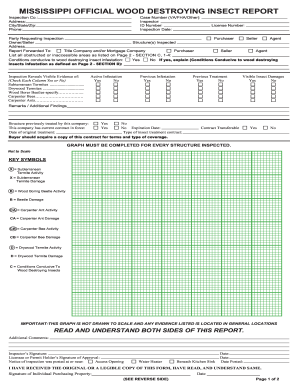
The MS Official Wood Destroying Insect Report is an essential document that provides an overview of any wood-destroying insect activity within a structure. Completing this report online can streamline the inspection process and ensure accurate information is submitted for review.
Follow the steps to effectively complete the report online.
- Press the ‘Get Form’ button to access the online version of the MS Official Wood Destroying Insect Report and open it in your preferred editor.
- Fill in the inspection company details, including the company name, address, city/state/zip, and phone number. Ensure accuracy as this information identifies the inspector.
- Enter the case number, inspector's name, ID number, and inspection date. This section is vital for tracking the report and referencing it for future inquiries.
- Input the license number of the inspector, ensuring compliance with local regulations.
- Specify the party requesting the inspection by selecting from purchaser, seller, or agent. This indicates who is interested in the report findings.
- Detail the structure(s) inspected by providing the owner's name, address, and, if applicable, the details of the title company or mortgage company to which the report is being forwarded.
- List all obstructed or inaccessible areas as specified in Section C. This step is crucial to document any limitations encountered during the inspection.
- Indicate if conditions conducive to wood destroying insect infestations are present by selecting yes or no, and provide an explanation if applicable.
- Check the columns for visible evidence of specific wood-destroying insects, including subterranean termites, drywood termites, wood borer beetles, carpenter bees, and carpenter ants. This ensures thorough documentation of potential issues.
- Confirm whether there is active infestation, previous infestation, previous treatment, and visible insect damage, selecting yes or no as appropriate. Each of these items is critical for assessing the property's condition.
- Include additional remarks or findings that may be relevant to the report. This might cover observations that did not fit into previous categories.
- Complete the graph provided, ensuring all structures inspected are accurately represented. Remember, this graph does not need to be drawn to scale.
- Have the inspector sign the document, along with any other authorized individuals as necessary, and ensure the date is recorded.
- Finalized users can save changes, download, print, or share the completed form, ensuring they retain a legible copy for their records.
Begin completing your MS Official Wood Destroying Insect Report online today for a thorough and accurate assessment.
Experience a faster way to fill out and sign forms on the web. Access the most extensive library of templates available.
Related content
THIS REPORT CERTIFIES AS TO THE PRESENCE, ABSENCE, PREVIOUS INFESTATION AND DAMAGE CAUSED...
Jun 23, 2025 — The Pioneer Scout Camp Terminal Entries are a series of entries found on...
Get answers to your most pressing questions about US Legal Forms API.
What does evidence of termite damage look like?
Evidence of termite damage may manifest as hollowed-out wood, buckling walls, or mud tubes along foundation walls. It is crucial to inspect these signs closely and reference the MS Official Wood Destroying Insect Report to understand potential implications. Engaging a professional for a comprehensive evaluation is advisable.
What is considered bad termite damage?
Bad termite damage typically refers to structural damage that compromises the integrity of the building. This can include extensive tunneling and weakened wood supports. If a property shows these signs, the MS Official Wood Destroying Insect Report can help determine the severity and suggest appropriate actions.
How to read a termite inspection report?
Reading a termite inspection report requires attention to detail in its structure. Focus on the observations, conclusions, and recommendations sections. Familiarizing yourself with the MS Official Wood Destroying Insect Report format can make this process easier and clearer.
How to identify wood destroying insects?
Identifying wood destroying insects involves looking for specific signs like damage patterns in wood, holes, or frass (insect droppings). If you suspect an infestation, the MS Official Wood Destroying Insect Report can help you understand what to look for and how to address it. Consult an expert for confirmation.
How to read a termite inspection?
To read a termite inspection, start by looking for sections that outline areas inspected and findings. Clarity in the report indicates whether there are signs of infestation. The MS Official Wood Destroying Insect Report can serve as a guideline for understanding the terminology used in these inspections.
Who can fill out an NPMa 33 form?
The NPMa 33 form can be filled out by a licensed pest control operator, who is trained to perform termite inspections. This form provides a standardized approach to reporting and is often tied to the MS Official Wood Destroying Insect Report. Be sure to engage a qualified professional for accurate completion.
Is it worth buying a house with termite damage?
Purchasing a house with termite damage can be a risky decision. If you find extensive damage, it may lead to costly repairs. However, if the damage is minimal and identifiable, use the MS Official Wood Destroying Insect Report to weigh the risks against potential savings.
How to write a termite report?
Writing a termite report involves documenting the findings of a thorough inspection. Begin by noting the date, location, and property details. Include specific observations regarding the presence of termites or signs of damage, referencing the MS Official Wood Destroying Insect Report format for accuracy.
How do you identify wood destroying insects?
Identifying wood destroying insects typically involves looking for signs such as small holes in wood, frass, or mud tunnels. Professional inspectors utilize their expertise to conduct a thorough assessment of your property. Obtaining an MS Official Wood Destroying Insect Report from a certified organization ensures that you receive an accurate analysis and recommendations for treatment. Early detection helps mitigate damage.
What is considered a wood destroying organism?
A wood destroying organism includes various pests and fungi that damage wood structures. This category comprises not just insects, but also decay fungi that can weaken wood over time. By understanding these organisms, you can take proactive measures to protect your home. Acquiring an MS Official Wood Destroying Insect Report can help identify these organisms and guide necessary actions.
Use professional pre-built templates to fill in and sign documents online faster. Get access to thousands of forms.
If you believe that this page should be taken down, please follow our DMCA take down process here.