Loading
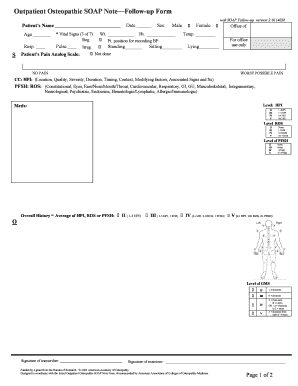
Get Aao Outpatient Osteopathic Soap Note Follow-up Form 2002-2026
How it works
-

Open form follow the instructions
-

Easily sign the form with your finger
-

Send filled & signed form or save
How to fill out the AAO Outpatient Osteopathic SOAP Note Follow-Up Form online
This guide provides clear instructions for completing the AAO Outpatient Osteopathic SOAP Note Follow-Up Form online. By following these steps, users can ensure that all necessary information is accurately recorded.
Follow the steps to effectively fill out the form online.
- Click the ‘Get Form’ button to access the form and open it in your preferred online editor.
- Begin by entering the date on the form, followed by the patient's name, age, and vital signs, including temperature and weight where applicable.
- Fill in the patient's pain analog scale by selecting the appropriate level of pain they are experiencing.
- Provide details in the Chief Complaint (CC) and History of Present Illness (HPI) sections. Include factors like location, quality, severity, duration, and associated signs.
- Indicate the Review of Systems (ROS) and Past Family Social History (PFSH) information as required, selecting appropriate levels of detail for each.
- Record the medications the patient is currently taking and any relevant treatment plans, including exercise or dietary recommendations.
- Complete the examination methods used, noting the severity of somatic dysfunction as necessary.
- Fill in any diagnostic codes and written diagnoses as applicable based on the examination results.
- Indicate the complexity, assessment, and plan information, detailing any discussions or additional follow-up needed.
- Once all fields are completed, save your changes, and download, print, or share the completed form as required.
Complete your documentation efficiently by filling out the AAO Outpatient Osteopathic SOAP Note Follow-Up Form online today.
Related links form
When making subjective statements, include pertinent evidence. For example: “Client appears nervous as evidenced by fidgeting of hands, not maintaining eye-contact, and shortness of breath during our session.”