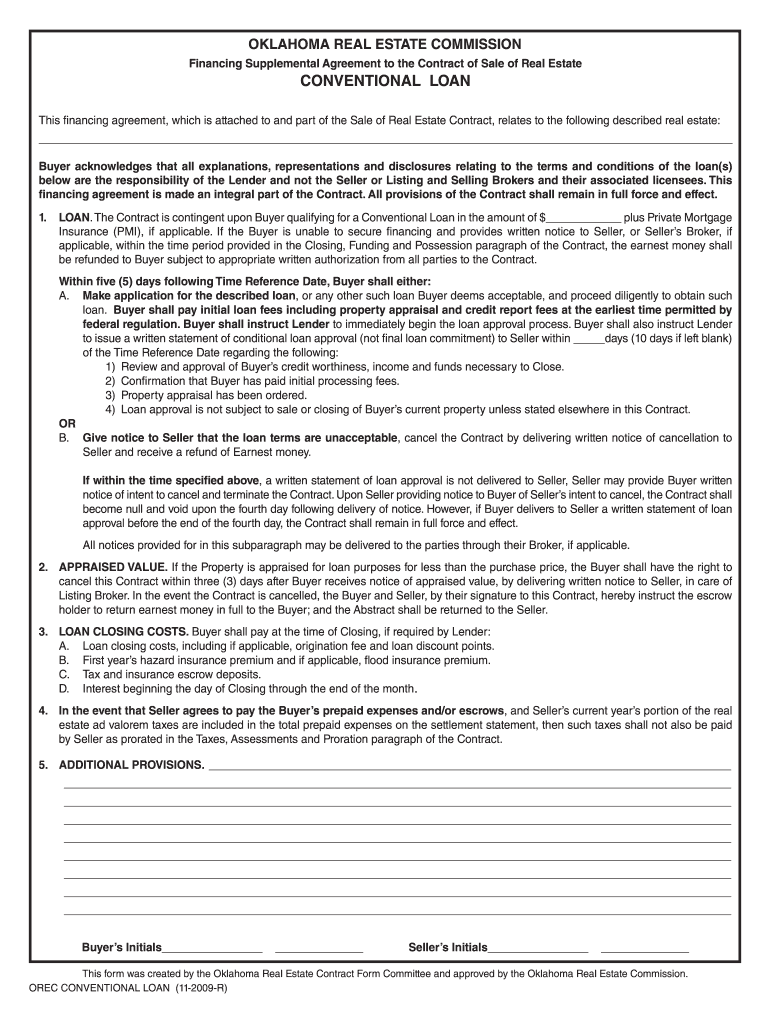
Al Estate Contract, relates to the following described real estate: _______________________________________________________________________________________________________________ Buyer acknowledges that all explanations, representations and disclosures relating to the terms and conditions of the loan(s) below are the responsibility of the Lender and not the Seller or Listing and Selling Brokers and their associated licensees. This financing agreement is made an integral part of the Contract. Al.
Loading

Open form follow the instructions

Easily sign the form with your finger

Send filled & signed form or save
How to fill out the OREC Conventional Loan online
Filling out the OREC Conventional Loan online is an important step in the purchase process for real estate. This comprehensive guide provides detailed instructions on each section of the form, ensuring you are well-equipped to complete it accurately and efficiently.
Follow the steps to successfully complete the form.
- Click 'Get Form' button to obtain the OREC Conventional Loan and open it in your editor.
- In the first section of the form, you will need to enter the amount of the loan you are seeking. This includes any applicable Private Mortgage Insurance (PMI). Make sure to specify the exact figure in the designated field.
- Acknowledge the responsibility of the lender regarding terms and conditions by checking the appropriate box, indicating you understand that the seller and brokers are not liable.
- Instruct your lender to begin loan approval by selecting available options and filling out your details within five days following the time reference date. Be sure to provide necessary documents and responses regarding creditworthiness and initial fees.
- Check and provide a written statement of conditional loan approval to the seller within the specified timeframe. Input dates and necessary validations to avoid delays.
- If the loan terms are unacceptable, provide written notice to the seller as instructed. This may involve filling out a cancellation notice and ensuring it is delivered properly.
- If the appraisal comes in lower than the purchase price, you have the right to cancel the agreement. Make sure to document this within three days of receiving the appraisal notice.
- Calculate and input any closing costs, including origination fees and insurance premiums, which should be paid at the closing. Verify these fees thoroughly before submission.
- Review additional provisions that may be applicable to your agreement in the designated section. Ensure you leave no fields blank and clarify any required information.
- Once all sections are completed, save your changes. You can then download, print, or share the OREC Conventional Loan form as needed.
Complete your documents online for a streamlined real estate transaction.
Experience a faster way to fill out and sign forms on the web. Access the most extensive library of templates available.
Related content
Login to the License Portal to access all Contract Forms. Contract Guide RESIDENTIAL...
Loan Guarantee. A loan guarantee is a loan provided by the government and guaranteed by...
Get answers to your most pressing questions about US Legal Forms API.
Why do realtors prefer conventional over FHA?
Realtors often prefer OREC Conventional Loans because they typically allow for quicker closings and involve fewer restrictions. Conventional loans usually appeal to a wider range of buyers and are less dependent on government regulations. This can simplify the transaction process and provide more flexibility in negotiations, benefiting both sellers and buyers.
Does RESPA only apply to residential property?
RESPA primarily focuses on residential properties, which means it governs most home mortgages, including OREC Conventional Loans. However, it does not extend its protections to commercial properties or loans taken out for investment purposes. Being aware of RESPA's limitations can help you recognize your rights during home buying, ensuring you remain informed throughout the process.
Which of the following does RESPA not apply to?
RESPA does not apply to all types of financing. For instance, it does not cover bridge loans or construction loans, which might include OREC Conventional Loans in certain scenarios. It's essential to know the specific types of loans affected by RESPA, so you can make informed decisions regarding your mortgage options. This understanding can help you save time and align your needs with the right financial products.
What loans are exempt from RESPA?
RESPA, or the Real Estate Settlement Procedures Act, does not cover certain types of loans. For instance, OREC Conventional Loans that are for temporary financing or loans secured by vacant land are typically exempt. Additionally, loans for business or commercial purposes also fall outside RESPA's jurisdiction. Understanding these exemptions can help you navigate your financing options better.
Are all conventional loans 20% down?
Not all OREC Conventional Loans require a 20% down payment. Many conventional loans allow for a lower down payment, sometimes as low as 3% to 5%. It's essential to research different lenders and programs to find the best option for your financial situation. Additionally, your down payment can affect your interest rate and mortgage insurance requirements.
How much do you need to put down for a conventional loan?
Conventional mortgage down payment Conventional loans require as little as 3% down (this is even lower than FHA loans). For down payments lower than 20% though, private mortgage insurance (PMI) is required. (PMI can be removed after 20% equity is earned in the home.)
What are the disadvantages of a conventional mortgage?
Conventional Loan: Cons Higher credit-score threshold and lower debt-to-income ratio to meet than with FHA loan. PMI insurance with < 20% down payment. Meeting strict eligibility requirements overall.
What is the downside of a conventional loan?
Tougher credit score requirements than for government loan programs. Conventional loans often require a credit score of at least 620, which leaves out some homebuyers. Even if you qualify, you will likely pay a higher interest rate than if you had good credit.
What is a conventional mortgage loan?
“Conventional” just means that the loan is not part of a specific government program. Conventional loans typically cost less than FHA loans but can be more difficult to get.
What's the difference between a conventional loan and a regular loan?
Conventional loans are home loans offered by private lenders without any direct government backing. In other words, unlike FHA loans, they aren't insured or guaranteed by a government agency. You need to have a higher credit score, lower debt-to-income (DTI) ratio and usually a slightly higher down payment to qualify.
Use professional pre-built templates to fill in and sign documents online faster. Get access to thousands of forms.
If you believe that this page should be taken down, please follow our DMCA take down process here.