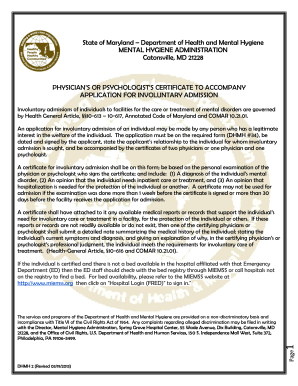
Of Physician or Psychologist) (Name of Facility or Office Address) (Telephone Number) certify that on ____/____/20____, I personally examined: Name of Individual: ___________________________________ (Last) _______________________________ (First) _______ (MI) Address of Individual: ____________________________ ___________________________ ______ _________________ _________________ (Street) (City) (State) (County) (Telephone Number) ______________________________ _______ ________________.
Open form follow the instructions
Easily sign the form with your finger
Send filled & signed form or save
How to fill out the MD DHMH 2 online
Filling out the MD DHMH 2 form is a crucial step in the involuntary admission process for individuals requiring mental health care. This guide provides a clear and supportive approach to completing the form accurately and efficiently, ensuring that you understand each component.
Follow the steps to fill out the MD DHMH 2 online.
- Press the ‘Get Form’ button to access the MD DHMH 2, allowing you to open the document in your online editor.
- In the first section, enter the name of the physician or psychologist certifying the application, along with their facility or office address and telephone number.
- Provide the date of the examination and enter the individual's name, including last name, first name, and middle initial.
- Fill out the individual's address, including street, city, state, county, and telephone number, followed by their birth date, age, race, sex, marital status, and social security number.
- Input the name of the next of kin, their relationship to the individual, and their address and telephone number for further contact.
- Clearly state the diagnosis of the individual's mental disorder, describing symptoms and current medications along with doses.
- Indicate any emergency medications if applicable, and check the boxes to affirm necessary statements regarding the individual's condition and care needs.
- Finally, the certifying physician or psychologist must include their signature, along with the date and time of signing to complete the form.
Complete the MD DHMH 2 form online to ensure timely processing of your application.
Experience a faster way to fill out and sign forms on the web. Access the most extensive library of templates available.
Related content
A certificate for involuntary admission shall be on this form; be based on the personal...
A high-quality health care system that produces the best possible health for all...
Aug 1, 2017 — THE SHIPPERS LISTED HAVE BEEN CERTIFIED BY REGULATORY AUTHORITIES IN THE...
Get answers to your most pressing questions about US Legal Forms API.
What are the criteria for involuntary admission?
The criteria for involuntary admission in Maryland, as specified by MD DHMH 2, include a significant mental health condition that poses a danger to the individual or others. Additionally, the person must be unable to provide for their basic needs due to their mental condition. A mental health professional will evaluate these criteria, ensuring that the decision to admit someone involuntarily is made with care and consideration for their rights. Understanding these criteria can help families navigate difficult decisions regarding mental health care.
How to fill out a physician order form?
Filling out a physician order form requires careful attention to detail to ensure clarity and compliance with MD DHMH 2 regulations. Begin by providing the patient's basic information, including demographics and medical history, followed by the specific orders your patient requires. Ensure that all sections are completed accurately, as any missing information can delay treatment. If you need assistance with the forms or the process, uslegalforms can provide resources and templates to help streamline this task.
How to get someone involuntarily committed in Maryland?
To involuntarily commit someone in Maryland, you typically need to follow the protocols set by MD DHMH 2. Start by contacting a qualified mental health professional who can evaluate the individual’s condition. If the evaluation confirms a need for commitment, the professional will initiate the necessary legal procedures, which can include filing a petition with the court. This process aims to balance the rights of the individual with the need for treatment and safety.
What are the rules for involuntary psychiatric holds in Maryland?
In Maryland, involuntary psychiatric holds, often referred to as emergency evaluations, have strict guidelines outlined by MD DHMH 2. A person may be held involuntarily if they pose a danger to themselves or others, or if they cannot provide for their own basic needs due to mental illness. It's crucial to initiate the process through a qualified medical professional, who will assess the individual's situation. Understanding these rules can help ensure that the rights of those affected are respected while attending to their urgent mental health needs.
What are the requirements for an involuntary psychiatric hold?
For an involuntary psychiatric hold in Maryland, specific criteria must be met, including the presence of a mental illness and a clear danger to oneself or others. Documentation from mental health professionals is crucial in establishing these criteria. The MD DHMH 2 provides detailed guidelines that help families navigate this complex process and secure necessary assistance.
Who is most likely to be admitted or admitted for psychiatric hospitalization?
Typically, individuals with severe mental health disorders, such as schizophrenia or bipolar disorder, are more likely to be admitted for psychiatric hospitalization. Those who exhibit dangerous behavior or significant impairment in functioning face a higher likelihood of admission. The MD DHMH 2 highlights the importance of ensuring timely intervention for safety and recovery.
How to get someone mental help when they refuse in Maryland?
When someone refuses mental health treatment in Maryland, you can explore various intervention options. Options include seeking advice from a mental health professional or involving family members to encourage acceptance of help. If the situation is urgent, the MD DHMH 2 process allows for involuntary commitment if there’s a direct threat to the individual or others.
What is the mental health law in Maryland?
Maryland's mental health law provides a framework for ensuring individuals receive appropriate mental health treatment when needed. Under MD DHMH 2, the law outlines the criteria for involuntary commitments, protections for individuals, and procedural steps to secure appropriate care. These laws aim to balance individual rights with the necessity of mental health intervention.
How to get someone committed in MD?
To initiate the process of involuntary commitment in Maryland, you can file a petition with the court, which often requires input from mental health professionals. You will need to show that the person poses a danger to themselves or others. The MD DHMH 2 offers guidance on steps to take, including gathering necessary documentation to support your case.
What are the reasons for involuntary psychiatric hospitalization?
Involuntary psychiatric hospitalization is often necessary when an individual exhibits severe mental health symptoms. Common reasons include suicidal thoughts, severe depression, or psychotic behavior. The goal of the MD DHMH 2 process is to ensure safety and stabilize the individual's mental health through immediate care and treatment.
Use professional pre-built templates to fill in and sign documents online faster. Get access to thousands of forms.
If you believe that this page should be taken down, please follow our DMCA take down process here.