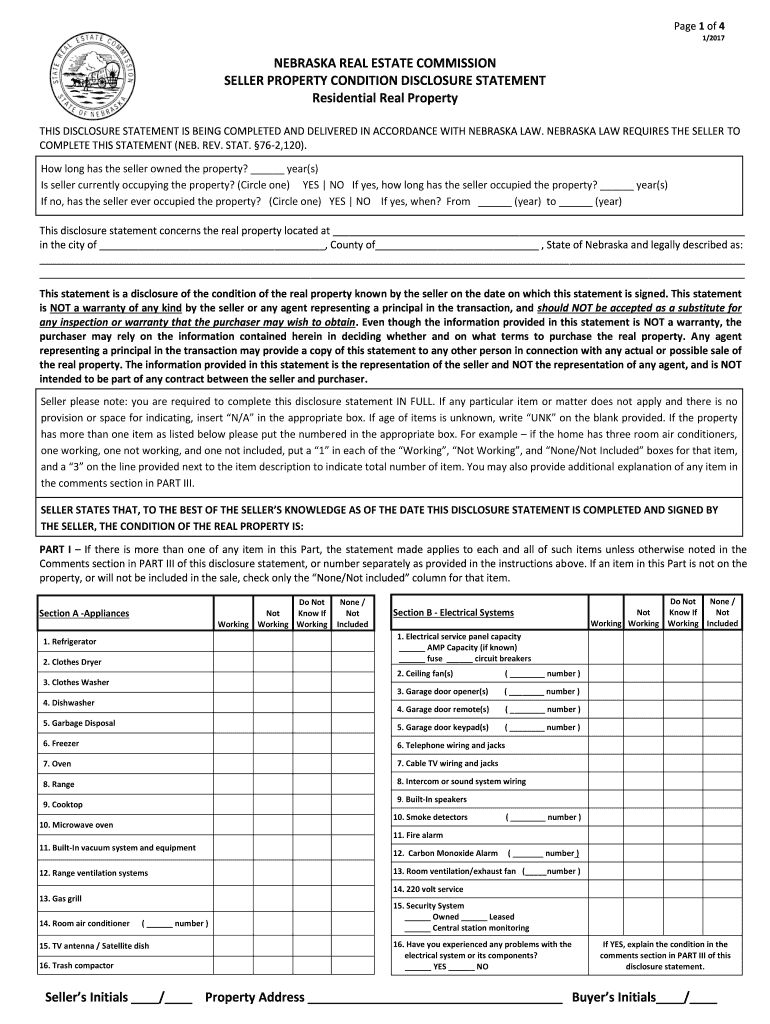
CE WITH NEBRASKA LAW. NEBRASKA LAW REQUIRES THE SELLER TO COMPLETE THIS STATEMENT (NEB. REV. STAT. §76-2,120). How long has the seller owned the property? ______ year(s) Is seller currently occupying the property? (Circle one) YES | NO If yes, how long has the seller occupied the property? ______ year(s) If no, has the seller ever occupied the property? (Circle one) YES | NO If yes, when? From ______ (year) to ______ (year) This disclosure statement concerns the real property located at _______.
Loading

Open form follow the instructions

Easily sign the form with your finger

Send filled & signed form or save
How to fill out the NE Residential Real Property online
This guide provides a clear and comprehensive approach to completing the Nebraska Residential Real Property form online. It aims to assist users of all experience levels in navigating each section effectively.
Follow the steps to successfully complete the disclosure statement.
- Press the ‘Get Form’ button to access the form and open it in your editor.
- Begin with Part I, where the seller must confirm ownership duration and occupancy status of the property. Provide specific years for ownership and occupancy as needed.
- Fill in the address details of the property, including city, county, and state. Ensure the information matches official records.
- Proceed to the various sections detailing different components of the property. For appliances, electrical systems, heating and cooling systems, and more, indicate the condition of each item using the provided options.
- In Part II, address structural conditions. Answer questions about the roof condition, flooding, and any structural issues. Provide explanations for any 'Yes' responses in the comments section.
- Complete Environmental Conditions, Title Conditions, and Other Conditions by answering each relevant question. Each section includes a series of 'Yes,' 'No,' and 'Do Not Know' options.
- Move to Part III for additional comments regarding earlier items. Use this section to clarify any points or provide further details as needed.
- Finish by certifying the disclosure statement by signing and dating the document. The statement may require multiple pages based on responses.
- Once completed, save your changes to the document. Download, print, or share the completed form with relevant parties as needed.
Complete your NE Residential Real Property disclosure statement online today.
Experience a faster way to fill out and sign forms on the web. Access the most extensive library of templates available.
Related content
General Information ; Nebraska Delinquent Real Property List ; Real Property Valuation...
Class or subclass of real property means a collection of properties that share one or more...
Jun 10, 2015 — environmental impacts and GHG emissions associated with the Federal real...
Get answers to your most pressing questions about US Legal Forms API.
How do people avoid property tax?
Homeowners can avoid or lessen property taxes by utilizing exemptions and credits designed for qualifying individuals. One common method is through the homestead exemption, available to seniors or low-income residents. Knowing your options is crucial for effectively managing your NE Residential Real Property expenses.
Who qualifies for the Nebraska property tax credit?
The Nebraska property tax credit is available to homeowners who meet specific eligibility criteria, such as income limits and ownership status. Typically, those over 65 or individuals with disabilities have better chances of qualifying. Familiarizing yourself with the requirements can help you maximize potential savings on your NE Residential Real Property.
What is a 458 form in Nebraska?
A 458 form is used in Nebraska to apply for the homestead exemption, which benefits eligible homeowners through property tax reductions. By filing this form, you confirm your eligibility based on factors such as age, income, and disability status. This form can be a valuable tool for managing your financial obligations related to NE Residential Real Property.
What county in Nebraska has the highest property taxes?
Sarpy County is often cited as having the highest property tax rates in Nebraska. This can be attributed to the rapid growth and increased demand for services in the area. Homeowners investing in NE Residential Real Property in Sarpy County should prepare for the implications of these higher tax responsibilities.
What is the problem with property taxes in Nebraska?
One challenge with property taxes in Nebraska is their rising rates, which can strain homeowners financially. Many property owners express concern about assessed values increasing, leading to higher tax bills. Understanding the dynamics of NE Residential Real Property tax assessments can help you better navigate these financial challenges.
What age do you stop paying property tax in Nebraska?
In Nebraska, reaching age 65 may qualify you for certain tax reductions or exemptions on your property taxes. It is important to apply for these benefits with your local assessor's office to ensure you receive them. Remember, reaching this age does not automatically nullify your tax obligations on NE Residential Real Property.
How to avoid property tax in Nebraska?
To avoid or reduce property taxes in Nebraska, homeowners can take advantage of designated exemptions or credits. For instance, the homestead exemption may apply if you meet specific qualifications, such as age or income requirements. Consulting with a legal advisor on NE Residential Real Property can provide tailored strategies for reducing your tax burden.
At what age do you stop paying property taxes in Nebraska?
In Nebraska, individuals may start to qualify for property tax exemptions or reductions at age 65. However, they must apply for these benefits through their county assessor's office. It’s crucial to keep in mind that simply reaching this age does not automatically stop property tax payments on your NE Residential Real Property.
Why are property taxes so high in NE?
Property taxes in Nebraska can be high due to various factors, including the need for robust public services and the state's reliance on local funding. Additionally, property assessments for NE Residential Real Property can influence tax rates significantly. While high taxes can be a concern, they also contribute to community resources and infrastructure. Knowing how these taxes are structured can empower property owners to make better decisions.
Why does Nebraska have such high property taxes?
Nebraska's property taxes are often attributed to the funding of essential public services like education and infrastructure. Local governments rely heavily on property taxes to meet their budgetary needs. The valuation of NE Residential Real Property plays a significant role in these rates, as higher property values lead to increased taxes. For homeowners, understanding this system can help in budget planning.
Use professional pre-built templates to fill in and sign documents online faster. Get access to thousands of forms.
If you believe that this page should be taken down, please follow our DMCA take down process here.