Loading
Get Pk Annexure 3: Planning Commission Feasibility Study Requirements 2016-2026
How it works
-

Open form follow the instructions
-

Easily sign the form with your finger
-

Send filled & signed form or save
How to fill out the PK Annexure 3: Planning Commission Feasibility Study Requirements online
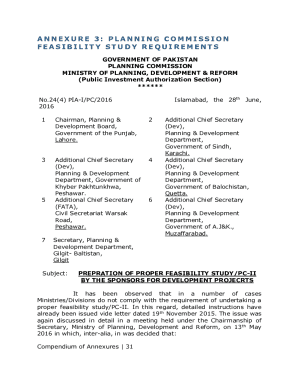
Filling out the PK Annexure 3: Planning Commission Feasibility Study Requirements is an important task for ensuring compliance with project planning standards in Pakistan. This guide provides clear, step-by-step instructions to assist users in completing this form efficiently and accurately.
Follow the steps to complete the form seamlessly.
- Click ‘Get Form’ button to obtain the form and open it in your preferred online editor.
- Review the introductory section of the form, which outlines the purpose and requirements of the feasibility study. Ensure you have the necessary information and documents ready for submission.
- Fill out the applicant's information section with accurate details about the project sponsors and relevant organizations, making sure to use complete names and titles.
- Proceed to the project description section. Provide a clear and detailed summary of the project, outlining its objectives, scope, and potential impact.
- Complete the feasibility criteria section, ensuring that each point aligns with the guidelines specified by the Planning Commission. This may include financial thresholds and research data relevant to the project.
- Verify that all attached documents, such as previous feasibility studies or supporting research, are recent and comply with the requirements of the Planning Commission.
- Review the filled form carefully for accuracy and completeness. Make any necessary changes before proceeding.
- Once satisfied with the information provided, save your changes. You can then download, print, or share the form as required by your project submission process.
Complete your documents online to ensure your project meets all necessary planning requirements.
The 5 types of feasibility study are Scheduling Feasibility, Operational Feasibility, Legal Feasibility, Economic Feasibility, and Technical Feasibility.