Loading
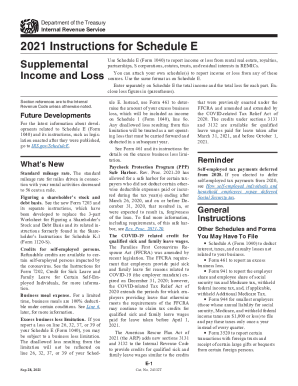
Get Irs Instruction 1040 - Schedule E_dsa
This website is not affiliated with IRS
How it works
-

Open form follow the instructions
-

Easily sign the form with your finger
-

Send filled & signed form or save
How to fill out the IRS Instruction 1040 - Schedule E_DSA online
Filling out the IRS Instruction 1040 - Schedule E_DSA can be a straightforward process if you follow the right steps. This guide will provide you with detailed instructions to help you accurately complete the form online.
Follow the steps to successfully fill out the IRS Schedule E_DSA.
- Use the ‘Get Form’ button to obtain the form and open it in your editor.
- Begin with Part I, where you will report income and expenses from rental real estate. Enter the street address, city or town, state, and ZIP code for each property.
- On line 1b, enter the appropriate code that corresponds to the type of property. Use the guidance provided for different classifications.
- Report the number of days each property was rented at fair rental value and the number of days of personal use on line 2.
- In Part I, on line 3, report your rental income from real estate, ensuring to include income from renting rooms or other spaces.
- Enter your expenses in the appropriate columns. Deduct ordinary and necessary expenses, including mortgage interest, taxes, repairs, and other relevant costs.
- Move to Parts II and III if applicable, to report income or loss from partnerships, S corporations, estates, and trusts.
- If you have excess business losses, use Form 461 to calculate. Any adjustments should be made before completing Schedule E and include totals where appropriate.
- After finishing all parts, make sure to review for accuracy. Save your changes, download, print, or share the completed form as needed.
Complete your documents online for a smooth filing experience.
Schedule E is for “supplemental income and loss,” and not earned income. Earned income is income generated from business activities. Supplemental income is considered passive income, such as collecting rent. Of course, as a landlord, you know that rental income is anything but passive.