Loading
Get Florida Hearing Request - The Accused Madam
How it works
-

Open form follow the instructions
-

Easily sign the form with your finger
-

Send filled & signed form or save
How to fill out the Florida Hearing Request - The Accused Madam online
Filling out the Florida Hearing Request - The Accused Madam can seem daunting, but this guide will walk you through the process step by step. By understanding each section and the information required, you will be prepared to successfully submit your request online.
Follow the steps to complete your hearing request accurately.
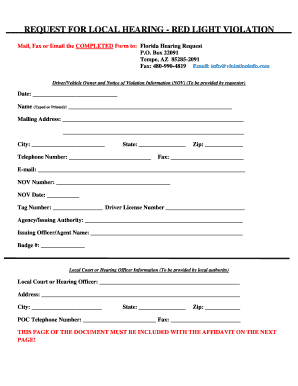
- Click ‘Get Form’ button to obtain the form and open it in the editor.
- Start by entering the date on the designated line provided at the top of the form.
- In the 'Name (Typed or Printed)' field, clearly type or print your full name.
- Fill in your mailing address in the space provided, including city, state, and zip code.
- Provide your telephone number for contact purposes.
- If applicable, enter your fax number and email address in the corresponding fields.
- Locate your Notice of Violation (NOV) number on the document and fill it in.
- Write the NOV date, tag number, and driver license number in the available fields.
- Identify and enter the agency/issuing authority information in the provided areas.
- Fill in the name of the issuing officer/agent and their badge number.
- Next, provide the local court or hearing officer information that pertains to your case.
- In the section for the affidavit, clearly print your name and the county where you wish to request the hearing.
- Affirm that you understand the stipulations and potential consequences outlined in the affidavit.
- Sign the document on the designated line and print your name below.
- Record the date you complete the affidavit.
- Once all sections of the form are filled out, you can save your changes, download, print, or share the completed form.
Complete your form online with confidence today!
On motion and on such terms as are just, the court may relieve a party or a party's legal representative from a final judgment, order, or proceeding for the following reasons: (1) mistake, inadvertence, surprise, or excusable neglect; (2) newly discovered evidence which by due diligence could not have been discovered ...