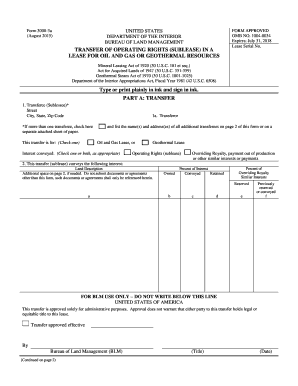
VED OMB NO. 1004-0034 Expires: July 31, 2018 Lease Serial No. Mineral Leasing Act of 1920 (30 U.S.C. 181 et seq.) Act for Acquired Lands of 1947 (30 U.S.C. 351-359) Geothermal Steam Act of 1970 (30 U.S.C. 1001-1025) Department of the Interior Appropriations Act, Fiscal Year 1981 (42 U.S.C. 6508) Type or print plainly in ink and sign in ink. PART A: TRANSFER 1. Transferee (Sublessee)* Street City, State, Zip Code 1a. Transferor *If more than one transferee, check here separate attached sheet .
Open form follow the instructions
Easily sign the form with your finger
Send filled & signed form or save
How to fill out the DoI 3000-3a online
Filling out the DoI 3000-3a form, which facilitates the transfer of operating rights in oil and gas or geothermal resource leases, can seem daunting. This guide provides clear, step-by-step instructions to help users complete the form online with confidence.
Follow the steps to fill out the DoI 3000-3a effectively.
- Press the ‘Get Form’ button to access the form and open it in the editing interface.
- In Part A, begin with the transferee (sublessee) information. Enter their name, street address, city, state, and zip code. If there are multiple transferees, check the box provided and list additional names and addresses on an attached sheet.
- Next, fill out the transferor's details. This includes their name as it appears on the current lease.
- Indicate whether the transfer pertains to an oil and gas lease or a geothermal lease by checking the appropriate box.
- In the section for interests conveyed, check the relevant boxes to specify what interests are being transferred, such as operating rights or overriding royalty interests.
- Describe the land affected by the transfer in Item 2. Include the land description details and percentages related to the interest being transferred.
- Proceed to Part B, where the transferor must certify ownership of the interest and declare the transfer to the specified transferee. Ensure that both parties sign the appropriate signatures, with the transferor signing three original copies.
- Review the completed form for accuracy and completeness before filing it. Ensure that any required filing fee is included.
- Finally, save the completed form to your device, and consider downloading, printing, or sharing it as necessary.
Take the next step and complete your DoI 3000-3a form online today!
Experience a faster way to fill out and sign forms on the web. Access the most extensive library of templates available.
Related content
Upon approval of a transfer of operating rights (sublease), the sublessee is responsible...
by A Lin · Cited by 7 — Abstract: This paper describes the current planning and design...
Oct 21, 2013 — Os questionários devem sempre ser preenchidos primeiramente em papel...
Get answers to your most pressing questions about US Legal Forms API.
What is the difference between record title and operating rights?
Record title represents the legal ownership of oil and gas rights, while operating rights give the holder the authority to explore and produce resources. Record title is often associated with the original leaseholder, whereas operating rights can be transferred or assigned separately. Understanding these terms is pivotal when dealing with agreements and rights related to DoI 3000-3a.
How do I transfer overriding royalty interest?
To transfer overriding royalty interest, you'll need to execute a formal assignment document that legally conveys the rights from one party to another. This often requires careful consideration of any existing agreements and compliance with regulatory requirements. For assistance navigating this process, consider using uslegalforms as a reliable platform offering pre-formatted documents suitable for managing your relations regarding DoI 3000-3a.
What is an overriding royalty interest?
An overriding royalty interest is a type of interest that allows its holder to receive payments from oil or gas production, bypassing expenses related to the production process. This creates an attractive income stream for investors. If you're exploring opportunities in relation to DoI 3000-3a, it's crucial to consider overriding royalty interests as a viable financial strategy.
What is the difference between royalty and overriding royalty?
The primary difference between royalty and overriding royalty lies in the source and calculation of payments. While both represent payments for extraction, a royalty generally comes from the lease terms, whereas an overriding royalty is taken out before costs, based on production revenue. Understanding these distinctions can enhance your knowledge about terms relevant to DoI 3000-3a.
What is an assignment of overriding royalty interest?
An assignment of overriding royalty interest involves the transfer of rights to receive royalties that exceed typical royalty agreements. This assignment allows the new interest holder to benefit from production without incurring the operational costs. It is key for investors and stakeholders interested in maximizing their returns related to DoI 3000-3a.
What is the assignment of oil and gas interest?
The assignment of oil and gas interest refers to the legal transfer of rights to explore and produce oil and gas from one party to another. This process can involve various types of interests, including leases and royalties. For those dealing with DoI 3000-3a, grasping how these assignments work is essential for ensuring proper ownership and rights in oil and gas ventures.
What is the gross overriding royalty?
The gross overriding royalty is a payment mechanism that entitles the owner to receive income from production before any costs are deducted. This royalty often exists above the regular royalty arrangements and provides an additional income stream. It is important to understand these financial structures as they impact the economics of oil and gas projects covered under DoI 3000-3a.
How is a production payment similar to a royalty or overriding royalty?
A production payment is a financial arrangement similar to royalties and overriding royalties where payments are derived from the production of oil or gas. Like royalties, it allows the owner to receive a portion of the income generated from extraction activities. However, it is typically a limited duration agreement that depends on the production volume. Understanding the distinction can help you navigate terms related to DoI 3000-3a effectively.
How much is an oil lease worth?
The value of an oil lease varies widely depending on factors such as location and market conditions. Generally, leases can range from a few thousand to millions of dollars. Understanding the guidelines set by DoI 3000-3a can help individuals evaluate lease potential more accurately.
What is the rate of oil and gas lease?
The rate of oil and gas leases is influenced by multiple variables, including location, demand, and geological conditions. The DoI 3000-3a establishes competitive bidding processes, ensuring fair market rates. Being informed about current trends can assist landowners and investors in making well-rounded decisions.
Use professional pre-built templates to fill in and sign documents online faster. Get access to thousands of forms.
If you believe that this page should be taken down, please follow our DMCA take down process here.