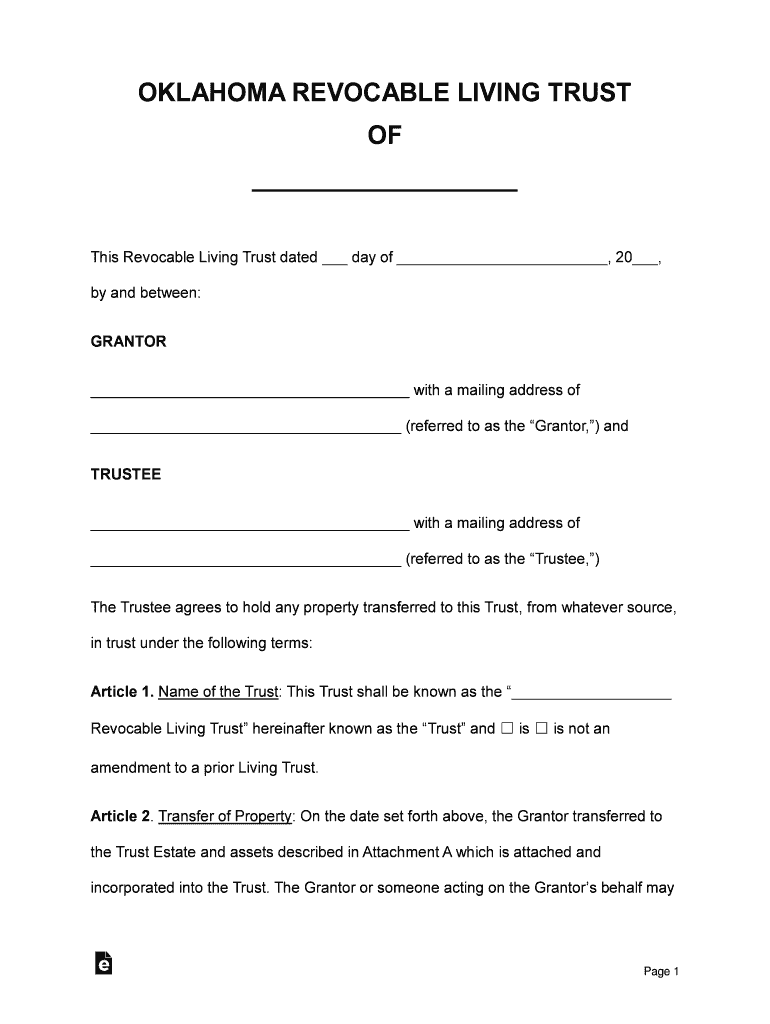
OKLAHOMA REVOCABLE LIVING TRUST OF This Revocable Living Trust dated day of , 20 , by and between: GRANTOR with a mailing address of (referred to as the Grantor,) and TRUSTEE with a mailing address.
Loading

Open form follow the instructions

Easily sign the form with your finger

Send filled & signed form or save
How to fill out the OK revocable living trust online
Creating an OK revocable living trust is an important step in managing your estate and ensuring your assets are distributed according to your wishes. This guide provides clear and supportive instructions for filling out the trust online, catering to users of all experience levels.
Follow the steps to successfully complete your trust online.
- Click the ‘Get Form’ button to obtain the OK revocable living trust form, which you can then open in your preferred online environment for editing.
- Begin by entering the date of the trust and the names of the Grantor and Trustee, along with their mailing addresses. Ensure accuracy, as these details are crucial for proper identification.
- In Article 1, specify the name of your trust. Indicate whether this trust is an amendment to a prior living trust if applicable.
- For Article 2, transfer property by listing it in Attachment A. You can include a description of assets transferred to the trust during your lifetime or by your will.
- Proceed to Article 3, noting the management of the trust estate during the Grantor's lifetime. Clarify how the Trustee can use income and principal and what happens in the event of the Grantor's incapacity.
- Fill in Article 4 to outline the distributions upon the Grantor's death. Specify individuals or organizations benefiting from the trust, including personal property recipients and pet caretakers.
- Article 5 addresses the payment of death taxes and administration expenses. Indicate how funds will be allocated for these purposes after the Grantor’s passing.
- Complete Article 6 regarding the estate of the Grantor, noting any investments that may be purchased with the trust funds.
- Fill out Articles 7 through 22 to address various powers and duties of the Trustee. These articles detail the governance and administrative powers, accounting requirements, and any exclusions applicable.
- Conclude by signing the trust in the designated areas for the Grantor, Trustee, and Successor Trustee. A self-proving affidavit is typically included; ensure witnesses sign where required.
- Finally, review all fields for completeness and accuracy. Save your changes, and choose the appropriate options to download, print, or share the completed form.
Start filling out your OK revocable living trust online now to secure your assets and ensure peace of mind.
Experience a faster way to fill out and sign forms on the web. Access the most extensive library of templates available.
Related content
irrevocable trust who have attained twenty-five (25) years of age of the existence of the...
In Oklahoma, trusts are deemed to be revocable unless the document creating the trust...
A trust may be revocable or irrevocable; in the United States, a trust is ... Oklahoma and...
Get answers to your most pressing questions about US Legal Forms API.
The Pros and Cons of Revocable Living Trusts
There are pros and cons to revocable living trusts. ... Some of the Pros of a Revocable Trust.It lets your estate avoid probate. ... It lets you avoid ancillary probate in another state. ... It protects you in the event you become incapacitated. ... It offers no tax benefits. ... It lacks asset protection.The Pros and Cons of Revocable Living Trusts - PWB\nwww.pwbcpas.com > pros-and-cons-of-revocable-living-trust
Who owns the property in a revocable trust?
As far as the Internal Revenue Service is concerned, trust property belongs to the grantor. The grantor names a trustee to manage the assets, but during their lifetime, most people name themselves in this position. A successor trustee is named to carry on when the grantor dies or becomes incapacitated.
Who has the legal title of the property in a trust?
The trustee of the trust holds legal title to the trust property. The trust beneficiaries hold beneficial title to the trust property.
Does a trustee own the assets in a trust?
The trustee acts as the legal owner of trust assets, and is responsible for handling any of the assets held in trust, tax filings for the trust, and distributing the assets according to the terms of the trust. Both roles involve duties that are legally required.
What is the purpose of a living revocable trust?
Key Takeaways. A revocable living trust is a trust document created by an individual that can be changed over time. Revocable living trusts are used to avoid probate and to protect the privacy of the trust owner and beneficiaries of the trust as well as minimize estate taxes.
What is the purpose of having a living revocable trust?
A revocable living trust is a trust document created by an individual that can be changed over time. Revocable living trusts are used to avoid probate and to protect the privacy of the trust owner and beneficiaries of the trust as well as minimize estate taxes.
Who owns the assets in a revocable trust?
A revocable trust is a part of estate planning that manages and protects the assets of the grantor as the owner ages. The trust can be amended or revoked as the grantor desires and is included in estate taxes.
Drawbacks of a Living Trust
Paperwork. Setting up a living trust isn't difficult or expensive, but it requires some paperwork. ... Record Keeping. After a revocable living trust is created, little day-to-day record keeping is required. ... Transfer Taxes. ... Difficulty Refinancing Trust Property. ... No Cutoff of Creditors' Claims.
What happens to property in a trust after death?
When the grantor, who is also the trustee, dies, the successor trustee named in the Declaration of Trust takes over as trustee. The new trustee is responsible for distributing the trust property to the beneficiaries named in the trust document. ... Notify beneficiaries that the trust exists, if necessary.
How does a living revocable trust work?
A revocable trust is a trust whereby provisions can be altered or canceled dependent on the grantor or the originator of the trust. During the life of the trust, income earned is distributed to the grantor, and only after death does property transfer to the beneficiaries of the trust.
Use professional pre-built templates to fill in and sign documents online faster. Get access to thousands of forms.
If you believe that this page should be taken down, please follow our DMCA take down process here.