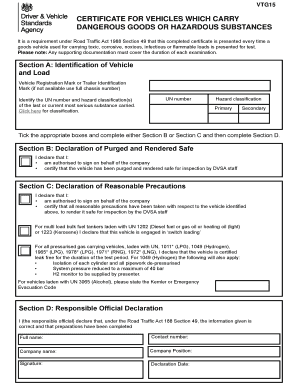
VTG15CERTIFICATE FOR VEHICLES WHICH CARRY DANGEROUS GOODS OR HAZARDOUS SUBSTANCES It is a requirement under Road Traffic Act 1988 Section 49 that this completed certificate is presented every time.

How it works
  • Open form

    Open form follow the instructions

  • Easily sign form

    Easily sign the form with your finger

  • Share form

    Send filled & signed form or save

How to fill out the Vtg15 online

The Vtg15 is a critical certificate required for vehicles carrying dangerous goods or hazardous substances. This guide will provide you with clear, step-by-step instructions on how to complete the form online efficiently and accurately.

Follow the steps to complete the Vtg15 form online

  1. Click the ‘Get Form’ button to acquire the Vtg15 document and open it in your online editing interface.
  2. In Section A, enter the vehicle registration mark or trailer identification mark. If neither is available, use the full chassis number. Next, identify the UN number which corresponds to the last or most serious substance currently carried. You can find the classification by clicking the appropriate link.
  3. Indicate the primary and secondary hazard classification by ticking the appropriate boxes. You will need to complete either Section B or Section C based on the circumstances related to your vehicle.
  4. If you are filling out Section B, you must declare that you are authorized to sign on behalf of the company and certify that the vehicle has been purged and rendered safe for inspection by DVSA staff.
  5. If you choose Section C, similarly declare your authority to sign for the company and confirm that all reasonable precautions have been executed to ensure the vehicle is safe for DVSA inspection. If applicable, provide additional declarations pertaining to multi-load bulk fuel tankers and pressurized gas carrying vehicles.
  6. Finally, complete Section D by entering the full name, contact number, company name, and company position of the responsible official. Ensure you provide a signature and the declaration date.
  7. After reviewing all information for accuracy, you have the option to save changes, download, print, or share the completed Vtg15 form.

Complete your Vtg15 document online today for efficient compliance.

Get form

Experience a faster way to fill out and sign forms on the web. Access the most extensive library of templates available.

Related content

Mid-State Distributor DBA Winebow - CT.gov

VTG 15. 6908. CAMBON LA PELOUSE CHATEAU. 750ML. 2011. 12 < 14%. 15.58. 185.00. HAUT MEDOC...

Learn more
Game By Game Stats

Weather: Overcast, 57F. STOREY, Jord faced 3 batters in the 4th. Kelly, J. faced 3 batters...

Learn more
Questions & Answers

Get answers to your most pressing questions about US Legal Forms API.

Contact support

What is dangerous goods transport documents?

Transport documents contain information including a description of the dangerous goods and the number of packages or receptacles in the load. Consignors who transport dangerous goods by road must ensure the prime contractor or driver has a transport document describing the dangerous goods.

When you use a DGN it gives the receiving authority complete, accurate and timely information about your consignment. So they have clear and precise details on how your goods should be handled.

Dangerous Goods Declarations (DG declaration): The DG declaration is a shipping document that certifies a dangerous good is classified, packaged and labeled in compliance with the International Maritime Organization's regulations (IMO).

The dangerous goods vehicle approval certificate In the UK, vehicles can be inspected at certain Driver and Vehicle Standards Agency ( DVSA ) Goods Vehicle Testing Stations. DVSA issues a certificate of approval, valid for one year, for vehicles that pass this inspection.

When is a Dangerous Goods Note (DGN) needed? You need a DGN if you're sending goods that classify as “Dangerous Goods” ing to the transportation regulations. A DGN must accompany the goods, so make sure to attach a copy.

A dangerous goods declaration is a legal document which may only be signed by a certified individual who confirms that the consignment of Dangerous goods is properly packaged, marked and labelled, and in proper condition for transport in ance with the applicable regulations.

What are the 9 classes of Dangerous Goods? Explosives. Flammable Gases. Flammable Liquids. Flammable solids. Oxidizing. Toxic & Infectious. Radioactive. Corrosives.

A dangerous good (also known as hazardous material or hazmat) is any substance or material that is capable of posing an unreasonable risk to health, safety, and property when transported in commerce.

Get This Form Now!

Use professional pre-built templates to fill in and sign documents online faster. Get access to thousands of forms.

If you believe that this page should be taken down, please follow our DMCA take down process here.

Get Vtg15