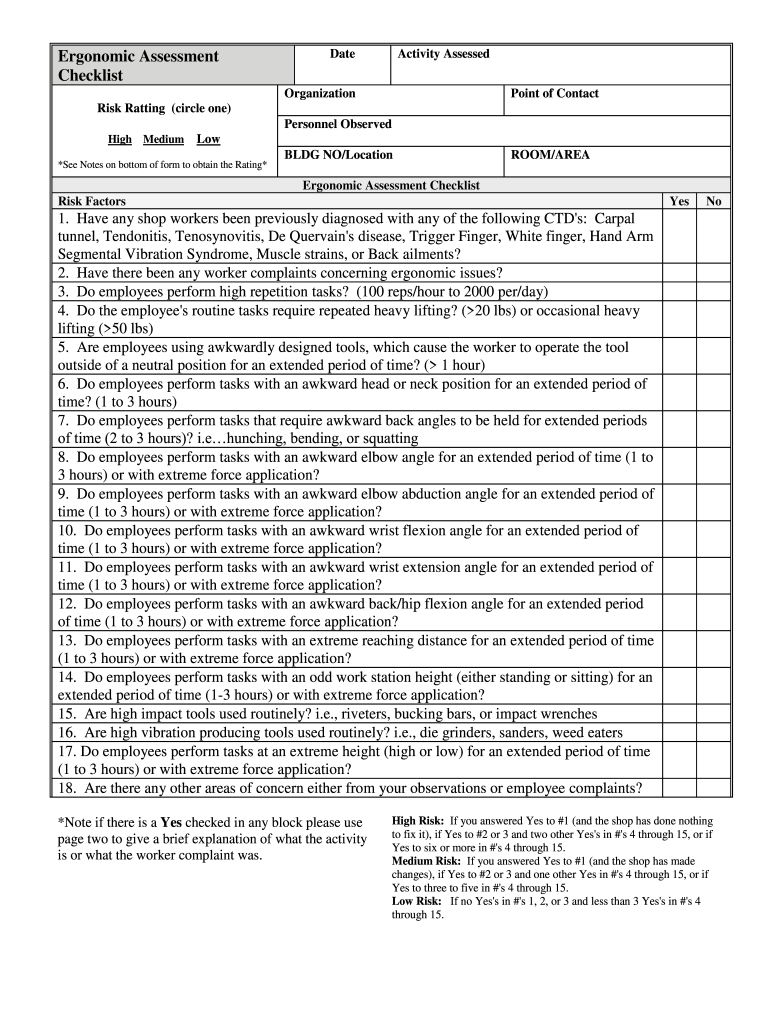
BLDG NO/Location ROOM/AREA Ergonomic Assessment Checklist Risk Factors Yes No 1. Have any shop workers been previously diagnosed with any of the following CTD's: Carpal tunnel, Tendonitis, Tenosynovitis, De Quervain's disease, Trigger Finger, White finger, Hand Arm Segmental Vibration Syndrome, Muscle strains, or Back ailments? 2. Have there been any worker complaints concerning ergonomic issues? 3. Do employees perform high repetition tasks? (100 reps/hour to 2000 per/day) 4. Do the empl.

Open form follow the instructions

Easily sign the form with your finger

Send filled & signed form or save
How to fill out the OSHA Ergonomic Assessment Checklist online
The OSHA Ergonomic Assessment Checklist is a crucial tool for evaluating workplace ergonomics and identifying potential risks to employees. This guide provides clear steps on how to complete this checklist online, ensuring that you assess ergonomic factors effectively and comprehensively.
Follow the steps to complete the OSHA Ergonomic Assessment Checklist online.
- Use the ‘Get Form’ button to access the OSHA Ergonomic Assessment Checklist and open it in the online editor.
- Begin by entering the date of the assessment and the organization name at the top of the form.
- Complete the section for 'Point of Contact' by writing the name of the person responsible for the assessment.
- In the 'Risk Rating' section, circle the applicable risk level: High, Medium, or Low.
- Fill in the 'BLDG NO/Location' and 'ROOM/AREA' to specify where the assessment is taking place.
- Proceed to the 'Risk Factors' section and answer each question with a 'Yes' or 'No' response, providing insight into the ergonomic conditions observed.
- If any risks are identified, use the second page to provide brief explanations for each 'Yes' answer, detailing the specific activities or complaints related to ergonomic issues.
- Once all sections are filled out, review the checklist to ensure all information is accurate and complete.
- Finally, save your changes, and choose to download, print, or share the completed assessment as needed.
Complete your OSHA Ergonomic Assessment Checklist online today to improve workplace safety.
Experience a faster way to fill out and sign forms on the web. Access the most extensive library of templates available.
Related content
Ergonomic Assessment Checklist. Risk Factors. Yes. No. 1. Have any shop workers been...
Obtain a fully adjustable chair. 2. Are your feet fully supported by the floor when you...
The competent person needs to know the key points of the OSHA Excavation Standard...
Get answers to your most pressing questions about US Legal Forms API.
How do you request an ergonomic assessment?
To request an ergonomic assessment, communicate your needs to your employer or safety officer. You can ask to use the OSHA Ergonomic Assessment Checklist as a starting point for discussions. Express your concerns about potential ergonomic issues, and propose a meeting to discuss a thorough assessment. This proactive approach can lead to improvements in workplace safety and comfort.
What are the 3 major ergonomic risk factors in OSHA?
The three major ergonomic risk factors include repetitive motion, awkward posture, and excessive force. These factors can lead to musculoskeletal disorders among employees. By applying the OSHA Ergonomic Assessment Checklist, employers can evaluate work conditions and implement adjustments to reduce these risks effectively. Taking action on these factors contributes to a safer workplace.
What are the OSHA requirements for ergonomics?
While there are no specific OSHA requirements solely addressing ergonomics, employers must comply with general safety standards. They must ensure that their employees have access to a safe working environment. Utilizing the OSHA Ergonomic Assessment Checklist can assist employers in identifying risks and developing strategies to improve workplace ergonomics.
What are the OSHA standards on ergonomics?
OSHA does not have specific ergonomic standards. However, they enforce general safety and health regulations that require employers to address workplace hazards. By using the OSHA Ergonomic Assessment Checklist, businesses can proactively identify ergonomic issues and take corrective actions. This can help create a healthier work environment while reducing the likelihood of injuries.
Are employers required to provide ergonomic assessments?
Employers are not mandated by OSHA to conduct ergonomic assessments; however, they are responsible for providing a safe and healthful workplace. Performing ergonomic assessments can help identify potential hazards and mitigate risks before they lead to injuries. Utilizing the OSHA Ergonomic Assessment Checklist can serve as a practical tool for employers seeking to enhance workplace ergonomics and ensure employee well-being.
How do you write an ergonomic report?
Writing an ergonomic report requires a clear structure and focused content. Begin by assessing the workplace using the OSHA Ergonomic Assessment Checklist, detailing the specific ergonomic hazards observed. Include recommendations for modifications to improve safety and comfort. A well-organized report will help communicate findings effectively and support management decisions.
What is OSHA #2255 principles of ergonomics formerly OSHA #2250?
OSHA #2255 outlines key principles that aim to reduce workplace injuries related to ergonomics. This document emphasizes the importance of adjusting tasks, workspaces, and tools to meet workers' needs. Following these principles can lead to higher productivity and lower worker compensation costs. By incorporating the OSHA Ergonomic Assessment Checklist, organizations can enhance their approach to ergonomics.
What are the 5 steps in conducting ergonomic assessment?
The five steps in conducting an ergonomic assessment start with identifying the work tasks and areas to evaluate. Next, utilize the OSHA Ergonomic Assessment Checklist to assess ergonomic risks. Third, involve employees for their perspective on comfort and safety. Then, analyze the data gathered to identify trends and risks. Lastly, provide recommendations and implement solutions to enhance workplace ergonomics.
What is an ergonomic example?
An ergonomic example includes modifications made to a workstation to improve comfort and efficiency. For instance, using an adjustable chair that supports the lower back is an ergonomic improvement. Additionally, computers should be positioned at eye level to reduce strain. These examples highlight the importance of using the OSHA Ergonomic Assessment Checklist for practical solutions.
What is an ergonomic report?
An ergonomic report is a document that summarizes the findings from an ergonomic assessment. It typically includes an analysis based on the OSHA Ergonomic Assessment Checklist, along with identified risks and suggested improvements. This report provides actionable insights for employers to enhance workplace safety. Ultimately, it helps create a healthier workspace for employees.
Use professional pre-built templates to fill in and sign documents online faster. Get access to thousands of forms.
If you believe that this page should be taken down, please follow our DMCA take down process here.