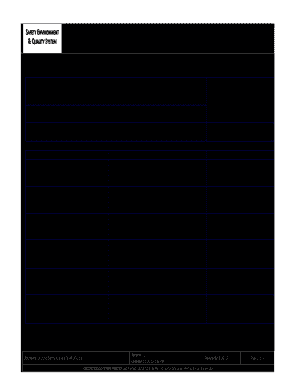
14.2 Job Safety Analysis TEMPLATE.doc FORM 14.2 JOB SAFETY ANALYSIS (JSA) TEMPLATE Signature of person completing analysis: Job Safety Analysis (Part 1) Department: Process: Date: Process number:.
Open form follow the instructions
Easily sign the form with your finger
Send filled & signed form or save
How to fill out the Safety Environment & Quality System Form 14.2 online
Completing the Safety Environment & Quality System Form 14.2 online is an essential task for ensuring workplace safety and quality. This guide provides clear instructions on how to accurately fill out the form, helping you manage safety environment and quality tasks effectively.
Follow the steps to complete your Safety Environment & Quality System Form 14.2.
- Click ‘Get Form’ button to obtain the form and open it in the online editor.
- Begin by entering your personal details in the designated fields. This includes your signature, the department you are representing, and the process name.
- Enter the date of analysis in the provided field, ensuring the format is correct for clarity.
- Fill in the process number and the area related to the job safety analysis to give context to the assessment.
- In the 'Procedure (in steps)' section, list each step of the procedure clearly. This should be a sequential description of the job tasks.
- Identify possible hazards associated with each step of the procedure. List them in the 'Possible Hazards' section to ensure all risks are considered.
- Provide controls for each hazard identified in the previous step. This can include safety measures, protective equipment, or procedural changes to minimize risk.
- Complete the second part of the form, detailing personal qualifications and experience relevant to the job.
- List the personnel, their duties, and responsibilities associated with the job to clarify roles.
- Document any training required to complete the work safely, ensuring that all personnel are adequately prepared.
- Include engineering details, certificates, or WorkCover approvals that might be necessary for the procedure.
- Mention relevant codes of practice and legislation that apply to this job safety analysis.
- Provide any details regarding maintenance checks for the plant or equipment involved in the procedure.
- Finally, confirm that the analysis has been circulated to all relevant personnel, enhancing communication around safety.
- Once all sections are filled, save your changes, and decide whether to download, print, or share the completed form as necessary.
Begin your journey to a safer workplace by completing the Safety Environment & Quality System Form 14.2 online today.
Experience a faster way to fill out and sign forms on the web. Access the most extensive library of templates available.
Related content
This chapter of the safety evaluation report (SER) provides the staff's review of the...
Administer the Permitted Equipment test and review the answers with the employee to assure...
by AACAS Numbera · 2006 · Cited by 15 — The laboratory is responsible for maintaining...
Get answers to your most pressing questions about US Legal Forms API.
What is the difference between ISO 45001 and ISO 18001?
ISO 45001 is the updated standard for occupational health and safety management systems, replacing ISO 18001. The key differences include a greater emphasis on leadership engagement and risk-based thinking. Transitioning to ISO 45001 is beneficial because it offers a more comprehensive framework for improving workplace safety. By using the Safety Environment & Quality System Form 14.2, organizations can facilitate this transition smoothly, ensuring compliance with the latest standards.
What is ISO 9001 vs 45001 vs 14001?
ISO 9001 focuses on quality management systems, aimed at ensuring consistent quality of products and services. ISO 45001 addresses occupational health and safety, supporting organizations in creating a safe workplace. On the other hand, ISO 14001 emphasizes environmental management. Implementing the Safety Environment & Quality System Form 14.2 can streamline compliance across all these standards, ensuring a holistic approach to quality, safety, and environmental performance.
What does HSE stand for in safety?
HSE stands for Health, Safety, and Environment, which encompasses practices and policies aimed at protecting workers and the surrounding environment. It is crucial for organizations to adopt HSE principles to foster safe working conditions and reduce environmental risks. Utilizing the Safety Environment & Quality System Form 14.2 can assist in establishing effective HSE protocols tailored to your organization’s needs.
What is the ISO for environmental safety?
ISO 14001 is the primary standard that focuses on environmental safety, providing frameworks for organizations to manage their environmental responsibilities effectively. This standard helps businesses minimize their environmental impact and enhance their sustainability practices. Through the application of the Safety Environment & Quality System Form 14.2, companies can ensure compliance with ISO 14001 and promote better environmental safety within their operations.
What is the ISO for safety and environment?
The ISO standards related to safety and the environment focus on best practices for organizations. Specifically, ISO 45001 addresses occupational health and safety, while ISO 14001 provides guidelines for environmental management systems. By integrating the Safety Environment & Quality System Form 14.2, businesses can align with these ISO standards, improving their safety and environmental performance.
How many sections does the Safety and Environmental Management System SEMS II rule that is based on API RP 75 have?
The Safety and Environmental Management System SEMS II, which utilizes API RP 75, consists of several key sections designed to ensure comprehensive safety measures. This rule includes management system elements that help companies establish effective safety, environmental, and quality protocols. By implementing the Safety Environment & Quality System Form 14.2, organizations can easily navigate through these sections to enhance their compliance and operational safety.
What are the 14 controls of ISO 27001?
The 14 controls of ISO 27001 encompass various security measures that are essential for safeguarding information. These controls include asset management, access control, and incident management, among others, all aligned with your Safety Environment & Quality System Form 14.2. Implementing these controls effectively strengthens your organization’s security posture.
What is the annex A?
Annex A of ISO 27001 provides a comprehensive list of controls that organizations can implement to protect their information security. It includes various security measures that align with your Safety Environment & Quality System Form 14.2. Understanding and applying these controls helps meet the standard's requirements and enhances overall security.
What is a 14.2 2 system change control procedures?
A 14.2 2 system change control procedure outlines the framework for managing changes in your information security processes. This includes tracking all changes to the Safety Environment & Quality System Form 14.2 for consistency and compliance. Effective documentation and controls ensure that changes do not introduce new vulnerabilities or risks.
What is the correct order of change control procedures regarding changes to systems and networks?
The correct order of change control procedures starts with planning the change based on your Safety Environment & Quality System Form 14.2. Then, assess the risks associated with the proposed change, followed by approval from relevant stakeholders. Lastly, implement the change, monitor its impact, and document the process for future reference.
Use professional pre-built templates to fill in and sign documents online faster. Get access to thousands of forms.
If you believe that this page should be taken down, please follow our DMCA take down process here.