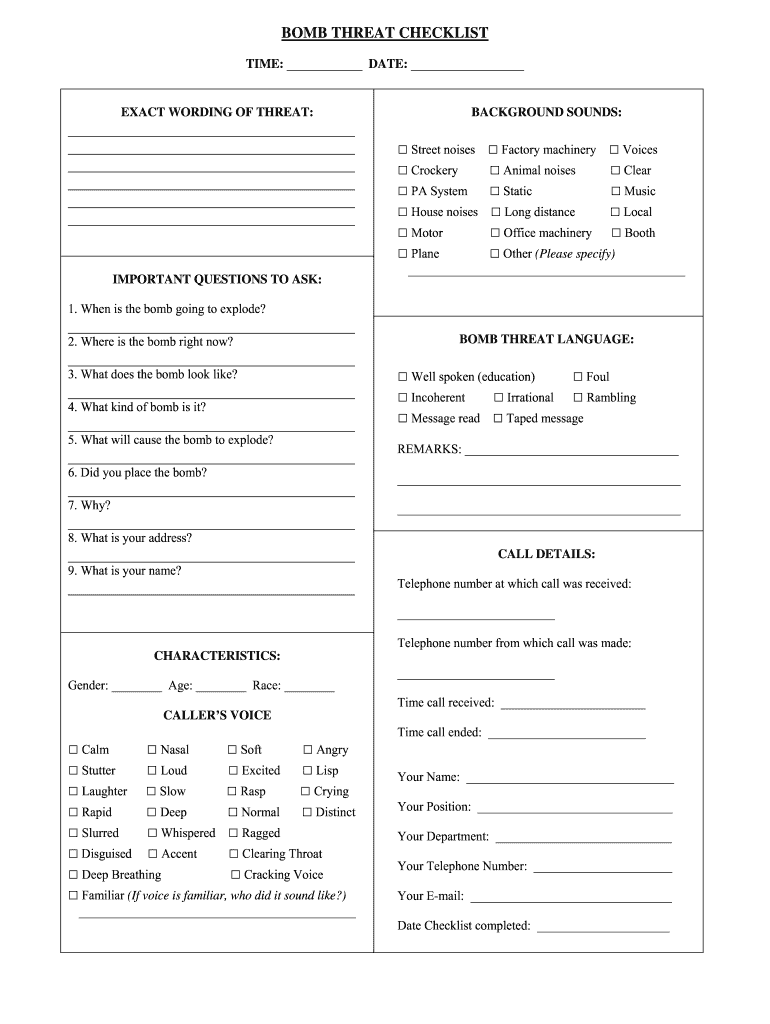
___________ ______________________________________ ______________________________________ ______________________________________ IMPORTANT QUESTIONS TO ASK: BACKGROUND SOUNDS: □ Street noises □ Crockery □ PA System □ House noises □ Motor □ Plane □ Factory machinery □ Voices □ Animal noises □ Clear □ Static □ Music □ Long distance □ Local □ Office machinery □ Booth □ Other (Please specify) ____________________________________________ 1. When is the bomb goi.
Loading

Open form follow the instructions

Easily sign the form with your finger

Send filled & signed form or save
How to fill out the Darthmouth Bomb Threat Checklist online
Filling out the Darthmouth Bomb Threat Checklist is essential for ensuring the safety of all individuals present in a given environment. This guide will provide you with clear, step-by-step instructions to assist you in completing the form thoroughly and accurately.
Follow the steps to complete the Darthmouth Bomb Threat Checklist online successfully.
- Press the ‘Get Form’ button to access the document and open it in the designated editor.
- In the first section, note the time and date of the bomb threat in the spaces provided.
- Record the exact wording of the threat in the designated area. Be precise and include as much detail as possible.
- In the 'important questions to ask' section, mark the background sounds you hear during the call. If you notice additional sounds not listed, specify them in the provided space.
- Fill in the answers to the important questions about the bomb, including when it will explode, where it is located, what it looks like, and what might cause it to explode.
- Indicate the type of language used by the caller in the 'bomb threat language' section by checking the appropriate box.
- If applicable, provide additional remarks and answer the questions regarding the caller's identity and intentions.
- Complete the 'call details' section by filling in the telephone numbers related to the call.
- Describe the characteristics of the caller such as gender, age, and race, as well as any details about their voice.
- Enter your personal information, including your name, position, department, contact number, email, and the date you completed the checklist.
- Once you have filled in all necessary fields, you can save changes, download, print, or share the completed form.
Complete the Darthmouth Bomb Threat Checklist online today to help ensure a prompt and effective response.
Experience a faster way to fill out and sign forms on the web. Access the most extensive library of templates available.
Related content
Dec 17, 2024 — Criminals and terrorists frequently use explosives to damage property...
BOMB THREAT CHECKLIST. TIME: ______ DATE: EXACT ... BOMB THREAT LANGUAGE: □ Well spoken...
One of them will be the heir, but the. Commander has a complicated procedure for naming...
Get answers to your most pressing questions about US Legal Forms API.
What is the protocol for a bomb threat?
The protocol for a bomb threat consists of specific actions that need to be taken immediately upon receiving the threat. It involves following your Darthmouth Bomb Threat Checklist, which provides instructions for notifying security personnel, evacuating affected areas, and relaying information to law enforcement. Each step in the protocol is designed to minimize panic and ensure a coordinated response from all parties involved.
What is the standard operating procedure for a bomb threat?
The standard operating procedure for a bomb threat typically involves several key steps. First, ensure the safety of all individuals in the vicinity, then assess the situation by referencing the Darthmouth Bomb Threat Checklist. This procedure may include evacuating the area, informing the authorities, and performing a systematic search of the premises. Always prioritize safety and provide clear communication to emergency response teams.
What is a bomb threat checklist?
A bomb threat checklist is a vital tool that helps individuals and organizations respond to bomb threats effectively. It includes a set of procedures and questions designed to gather critical information during a bomb threat situation. By using the Darthmouth Bomb Threat Checklist, you can ensure that you follow the right steps to protect yourself and others while coordinating with law enforcement.
What should you do in case you receive a bomb threat?
If you receive a bomb threat, remain calm and get as much information as possible from the caller. Stay on the line and note any details, such as the caller's voice and the time of the call. After hanging up, immediately report the threat to local authorities and follow your Darthmouth Bomb Threat Checklist. This checklist will guide you through the next steps, ensuring everyone's safety.
What 5 questions should you ask in response to a bomb threat?
When facing a bomb threat, it is vital to ask specific questions to gather useful information. You should inquire about the location of the bomb, the time it is set to detonate, the type of device, the caller's identity, and their motive. These questions can help authorities assess the risk and respond accordingly. Utilizing the Darthmouth Bomb Threat Checklist can assist you in remembering these critical questions during a high-pressure situation.
What are the 4 C's bomb threat?
The 4 C's in a bomb threat context stand for Confirm, Call, Clear, and Contain. First, confirm the threat's credibility by gathering as much information as possible. Next, call the authorities to report the threat and provide them with the details. Then, clear the area of individuals to ensure safety, and finally, contain the situation until help arrives. For more effective management, refer to the Darthmouth Bomb Threat Checklist.
What is the code black for bomb threat?
Code Black for a bomb threat signifies a serious and potentially dangerous situation. This alert communicates the need for heightened security measures and immediate procedures to ensure safety. By using the Darthmouth Bomb Threat Checklist, you can enhance your preparedness and response to any situation categorized under this alarming code.
What is the code color for bomb threat?
The code color for a bomb threat is often referred to as Code Black. This universally recognized code signals the presence of a potential explosive threat and prompts immediate action. By employing the Darthmouth Bomb Threat Checklist, organizations can streamline their response under this critical code, making the process more effective.
What does Code Black mean?
Code Black generally refers to a situation involving a bomb threat or real explosive danger. This term is commonly used in educational institutions and multiple facilities to alert staff and students of imminent risks. Being prepared with a comprehensive guide like the Darthmouth Bomb Threat Checklist empowers individuals to respond appropriately and minimize panic.
What does Code Black mean in security?
In the context of security, Code Black typically indicates a bomb threat or potential explosive situation. When this code is announced, it instructs security personnel to follow specific protocols to ensure the safety of everyone present. By having a clear plan, such as the Darthmouth Bomb Threat Checklist, organizations can effectively respond to these serious incidents.
Use professional pre-built templates to fill in and sign documents online faster. Get access to thousands of forms.
If you believe that this page should be taken down, please follow our DMCA take down process here.