Iciary % The trustee who accepts the trusteeship of the trust created by the Last Will and Testament of (Insured Name) will be the designated beneficiary. If the trust is terminated or if no trustee is qualified to receive the proceeds within six months of the insured’s death, the proceeds will be paid to the owner or owner’s estate. F. ADDITIONAL DISCLOSURES AND PROVISIONS The beneficiary designation is not to be used to elect an optional mode of settlement. If multiple payments are desi.
Loading

Open form follow the instructions

Easily sign the form with your finger

Send filled & signed form or save
How to fill out the ING Beneficiary Designation online
Filling out the ING Beneficiary Designation form is an important step in securing the future for your loved ones. This guide provides clear, step-by-step instructions to help you complete the form accurately and efficiently.
Follow the steps to complete the ING Beneficiary Designation form online.
- Press the ‘Get Form’ button to access the ING Beneficiary Designation form, allowing you to open it in an editing interface.
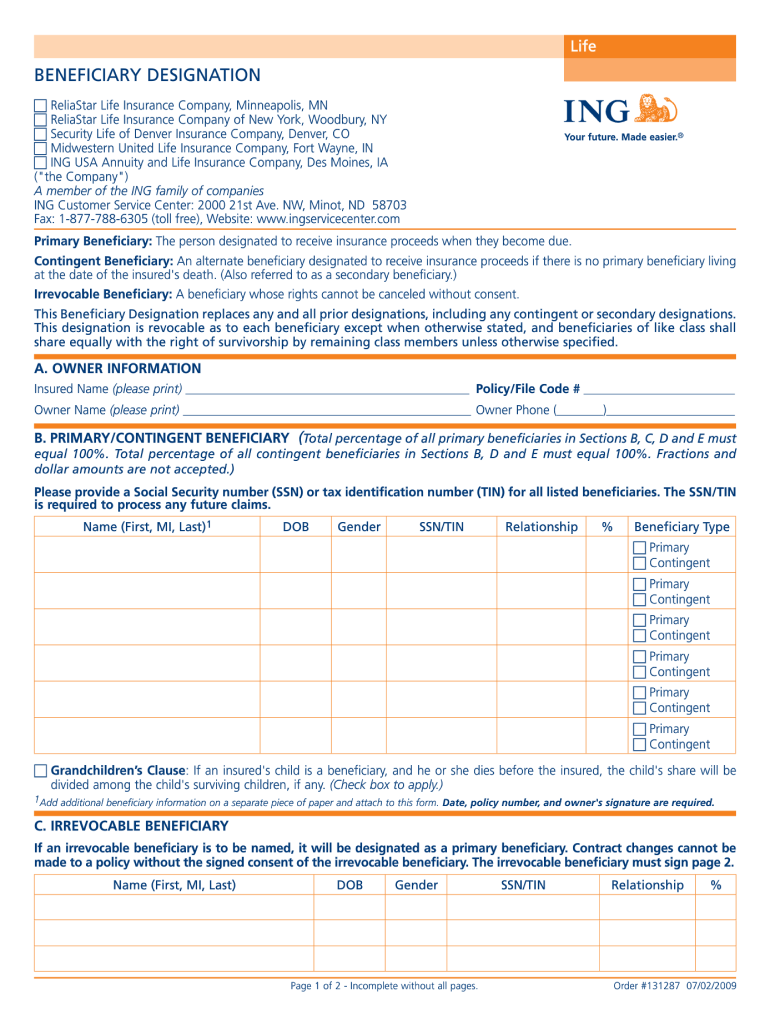
- Provide the insured's name clearly, as it appears on the insurance policy, along with the policy or file code number in the designated fields.
- Enter the owner's name and phone number, ensuring the information is accurate to facilitate communication regarding the policy.
- In the Primary/Contingent Beneficiary section, list the names of individuals you wish to designate, ensuring the total percentage for all primary beneficiaries equals 100% and the total for contingent beneficiaries also equals 100%. Remember to include their Social Security number or tax identification number.
- Specify the relationship of each beneficiary to the insured and select whether they are a primary or contingent beneficiary.
- If applicable, check the box for the Grandchildren’s Clause to specify that if a child beneficiary predeceases the insured, their share will go to their surviving children.
- If naming any irrevocable beneficiaries, provide their details in the specified section and remember that their consent is required for any changes.
- If designating a trust as a beneficiary, fill out the appropriate trust information and ensure to attach necessary documentation.
- Review all provided information for accuracy, and once complete, sign and date the form as the owner. If necessary, include the signature of any irrevocable beneficiary.
- After completing all sections of the form, save your changes and prepare to download, print, or share the beneficiary designation as required.
Complete your ING Beneficiary Designation online today to secure the future for your beneficiaries.
Experience a faster way to fill out and sign forms on the web. Access the most extensive library of templates available.
Related content
Beneficiary Designation. Initial Designation. Change to Designation. Mail or Fax completed...
This designation is revocable as to each beneficiary except when otherwise stated, and...
Jan 4, 2017 — Each beneficiary will receive his or her own Form. RRB1099R. If you...
Get answers to your most pressing questions about US Legal Forms API.
Should my child be primary or contingent beneficiary?
Deciding whether to make your child a primary or contingent beneficiary depends on your overall estate plan. If you want your child to inherit before anyone else, list them as the primary beneficiary in your ING Beneficiary Designation. However, if you prefer to designate another individual as primary and use your child as a backup, then a contingent status may be appropriate. Consider your family situation and future needs when making this decision.
What is an example of a designated beneficiary?
An example of a designated beneficiary is naming a spouse as the primary recipient of your life insurance policy in your ING Beneficiary Designation. This clearly outlines your intent for distribution upon your passing. It establishes who will receive the benefits directly, streamlining the claims process for your loved ones.
How do I fill out a beneficiary designation?
To fill out a beneficiary designation, begin by specifying the type of benefits you are designating, such as insurance or retirement accounts. In your ING Beneficiary Designation form, list the beneficiaries, either by name or class, and provide any required details. Taking your time to ensure accuracy will help avoid any future legal complications.
What is an example of a beneficiary designation by class?
An example of a beneficiary designation by class is designating 'all grandchildren' in your ING Beneficiary Designation. This ensures that all your grandchildren, regardless of how many there are or how many may be born in the future, will be included as beneficiaries. It simplifies distribution and reflects your intention to include your whole family.
Who is considered a Class A beneficiary?
A Class A beneficiary typically includes immediate family members, such as a spouse or children, who are prioritized in your ING Beneficiary Designation. This classification ensures that those closest to you receive the benefits first. When you designate a Class A beneficiary, you can manage your estate's distribution effectively.
What is an example of naming a beneficiary by class?
When naming a beneficiary by class, you could specify 'my siblings' as the beneficiaries in your ING Beneficiary Designation. This approach allows all your siblings to inherit equally, creating a straightforward process. Such designations are beneficial as they automatically include any future siblings without needing to amend the designation.
What is an example of a class beneficiary designation?
A class beneficiary designation involves naming a group of individuals rather than specifying each person. For instance, if you name 'my children' as beneficiaries under an ING Beneficiary Designation, all your children would share the benefits equally. This method simplifies the process and adapts easily as family dynamics change, ensuring your wishes are met without frequent updates.
What is the best way to designate beneficiaries?
The best way to designate beneficiaries is to clearly outline your intentions on your estate planning documents. Use the ING Beneficiary Designation to specify who should receive your assets after your passing. Ensure you keep this information updated, especially after major life changes such as marriage or divorce. Using a trusted platform like US Legal Forms can simplify this process, helping you create and maintain clear beneficiary designations.
Who should I not name as a beneficiary?
When designating beneficiaries, avoid naming individuals who might have trouble managing the inherited assets, such as young children or individuals with financial difficulties. Additionally, consider the emotional dynamics within your family; conflicts can arise if certain relatives feel excluded. Rely on the features offered by the ING Beneficiary Designation to make informed choices that reflect your intentions.
Can you change your beneficiary online?
Absolutely, changing your beneficiary online is straightforward with the ING Beneficiary Designation process. Once logged into your account, you can navigate to the beneficiary section and make necessary adjustments. Ensure you follow the provided instructions carefully to avoid any mistakes. This flexibility helps you keep your estate planning up to date.
Use professional pre-built templates to fill in and sign documents online faster. Get access to thousands of forms.
If you believe that this page should be taken down, please follow our DMCA take down process here.