OTAP Financial Planning Worksheet for Career Transition at: http://www.turbotap.org/export/sites/default/transition/resources/PDF/financial_planning_worksheet_fil lable.pdf Apply for VA Benefits and assess their impact on future financial obligations: www.ebenefits.va.gov Notes: Date applied for eBenefits: Evaluate the benefits (e.g. financial, promotions, leadership, etc.) associated with continuing your military service in either the Reserves or National Guard (if applicable). Contac.
Open form follow the instructions
Easily sign the form with your finger
Send filled & signed form or save
How to fill out the Individual Transition Plan online
Completing the Individual Transition Plan (ITP) online is a crucial step toward a successful transition from military to civilian life. This comprehensive guide will lead you through the process, ensuring you provide all necessary information and fulfill the required components effectively.
Follow the steps to complete your Individual Transition Plan online.
- Click 'Get Form' button to access the Individual Transition Plan and open it in your document editor.
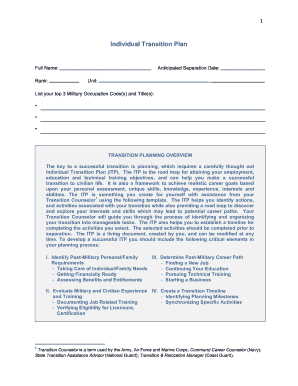
- Fill in your full name and rank at the top of the form. Ensure accuracy as this information will be associated with your transition records.
- Enter your anticipated separation date and current unit. Keep this information updated as it is crucial for your planning process.
- List your top three Military Occupation Code(s) and title(s). Carefully select the codes that best represent your military experience.
- Begin the Transition Planning Overview section by reviewing the key components that will guide your transition, including employment objectives and personal assessment.
- In the Personal Assessment section, identify your post-military personal and family requirements, including medical care and financial obligations. Use the notes section to elaborate on any specific circumstances.
- Evaluate your military and civilian experience in the designated section. Document all relevant training, licenses, and credentials to highlight your qualifications.
- Determine your post-military career path, selecting your desired career field and appropriate transition path based on your personal goals.
- Complete the Education section, where you will identify your desired field of study, research potential institutions, and outline your educational financing options.
- Prepare your transition timeline by filling in important milestones and deadlines related to your transition activities.
- Once all sections are completed, review your Individual Transition Plan for accuracy. Save your changes, and download or print a copy for your records. Consider sharing the completed document with your transition counselor for additional support.
Take the first step towards a successful transition by completing your Individual Transition Plan online today.
Experience a faster way to fill out and sign forms on the web. Access the most extensive library of templates available.
Related content
The ITP planning guide is designed to help students and their families in planning for the...
The ITP is a section of the IEP that outlines transition goals and services for the...
Aug 10, 2025 — The processes of the cycle must not to be interpreted as a fixed plan and...
Get answers to your most pressing questions about US Legal Forms API.
What is an example of a transition goal for an IEP?
An example of a transition goal for an IEP could be achieving workplace readiness skills by participating in a job shadowing program during the senior year. This goal emphasizes practical experience, aiming to improve the student's employability upon graduation. Additionally, the goal may include specific steps, such as developing a resume and practicing interview techniques. These transition goals are critical as they empower students to gain confidence and ability for independent living.
What is the Army Individual Transition plan?
The Army Individual Transition Plan serves military personnel transitioning from active duty to civilian life by providing guidance and resources. This structured approach includes career counseling, education benefits, and mentorship opportunities, tailored to each service member's goals. By following the Army Individual Transition Plan, veterans can navigate the complexities of civilian life effectively. Utilizing specialized services like those offered by UsLegalForms can streamline this process and ensure a smoother transition.
What is the difference between IEP and ITP?
The main difference between an IEP and an ITP lies in their focus and purpose. An IEP, or Individualized Education Program, primarily targets the educational needs of a student with disabilities throughout their school years. In contrast, an Individual Transition Plan concentrates on preparing students for life after graduation, emphasizing skills needed for employment and independent living. Understanding both components allows stakeholders to address educational needs and future aspirations effectively.
What is an IEP transition plan?
An IEP transition plan is a component of the Individualized Education Program designed to facilitate the transition of students with disabilities from school to adult life. This plan becomes essential as students approach their final years in high school, detailing specific transition goals and services. The IEP transition plan not only prepares students for further education or employment but also links them to essential community resources. Understanding this plan is vital for both parents and educators working to support students effectively.
What is an individualized transition plan?
An individualized transition plan, or ITP, is a strategic framework that focuses on helping students with disabilities prepare for life after school. It outlines specific goals, services, and supports tailored to each student's unique needs. The ITP is crucial for smooth transitions into adult life, ensuring that students gain necessary skills and resources. This plan fosters independence and enhances one’s ability to navigate post-school opportunities.
Which form is the individual transition plan checklist?
The Individual Transition Plan checklist typically consists of a standardized form that details the essential components needed for effective transition planning. This form outlines necessary assessments, goals, and resources to ensure a comprehensive transition for individuals. Utilizing tools and forms from US Legal Forms can help you create a thorough checklist that meets all necessary requirements for successful documentation.
How do you document a transition plan?
To document an Individual Transition Plan, start by gathering information about the individual’s current skills, needs, and future goals. You should include input from educators, parents, and the individual themselves to ensure their interests and aspirations are reflected. Organize this information into a structured format that outlines specific steps and strategies for achieving the desired outcomes. This documentation can be enhanced with templates available on platforms like US Legal Forms to streamline the process.
How to format a transition plan?
To format a transition plan effectively, start with a clear title that reflects the plan's purpose, followed by an introduction that summarizes its intent. Use headings and bullet points to organize information, making it easy to follow. List your goals, timelines, and actions in a structured layout to create a user-friendly Individual Transition Plan that can be easily updated as needed.
How do you complete a transition plan?
To complete a transition plan, begin by reviewing your goals and ensuring they align with your desired outcomes. Then, fill in the specific actions needed to meet each goal, along with realistic timelines. Lastly, seek feedback from mentors or professionals to refine your Individual Transition Plan and ensure you have all necessary resources in place.
What does a transition plan consist of?
A transition plan consists of several key components: the individual's goals, necessary actions to reach those goals, a timeline for each action, and available resources for support. Additionally, the plan should identify potential challenges and outline strategies to overcome them. The strength of an Individual Transition Plan lies in its clarity and adaptability to meet the individual's evolving needs.
Use professional pre-built templates to fill in and sign documents online faster. Get access to thousands of forms.
If you believe that this page should be taken down, please follow our DMCA take down process here.