Loading
Get Domestic Stock
How it works
-

Open form follow the instructions
-

Easily sign the form with your finger
-

Send filled & signed form or save
How to fill out the Domestic Stock online
Filing a Domestic Stock form online is a straightforward process that ensures the efficient management of your corporation’s dissolution. This guide will provide clear instructions on completing the necessary sections with confidence and clarity.
Follow the steps to complete the Domestic Stock form online.
- Press the ‘Get Form’ button to access the Domestic Stock form and open it in your chosen form editor.
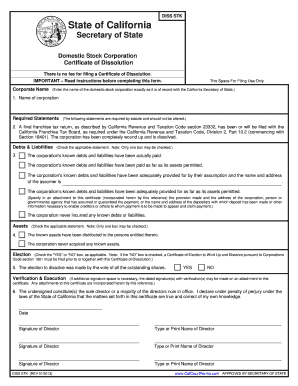
- Enter the name of the domestic stock corporation exactly as it appears in the records of the California Secretary of State in the 'Corporate Name' section.
- In the Required Statements section, confirm that a final franchise tax return has been filed or will be filed. This ensures compliance with the California Revenue and Taxation Code.
- In the Debts & Liabilities section, select the applicable statement regarding the corporation's debts. Ensure that only one box is checked to reflect the corporation’s status accurately.
- Proceed to the Assets section and check the appropriate statement concerning the corporation’s assets. Again, ensure that only one box is selected to reflect the current situation of the corporation.
- Answer the election question by checking the 'YES' or 'NO' box based on whether the election to dissolve was made by the vote of all outstanding shares.
- For Verification & Execution, ensure that the undersigned directors sign and print their names as required. This confirms the accuracy of the information provided.
- Once all fields are filled out, review the information for completeness and accuracy. After confirmation, you can save the changes, download the form, print it, or share it as needed.
Complete your documents online today for a smooth filing experience.
Different Types of Stocks Common Stock. Common stock is, well, common. ... Preferred Stock. Preferred stock represents some degree of ownership in a company but usually doesn't come with the same voting rights. ... Different Classes of Stock.